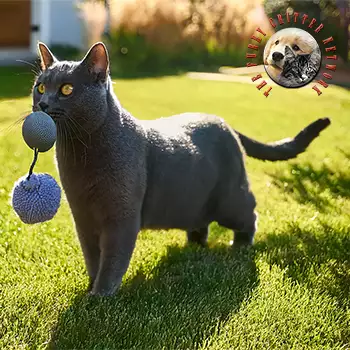

Wearable activity monitors designed for cats attach to the collar and track daily movement patterns, rest cycles, and calorie expenditure estimates. For the Chartreux — a breed that can gain weight gradually without obvious visual cues due to their naturally stocky build and dense coat — activity monitoring provides an objective data layer that supplements your own observations. A sudden decline in daily activity or a shift in sleep patterns can signal health issues days or weeks before outward symptoms become apparent.
Most cat activity monitors use accelerometers and proprietary algorithms to classify movement into categories such as active play, walking, resting, and eating. The accuracy of these classifications varies by product, and no consumer device matches clinical-grade measurement, but the real value lies in trend analysis over time rather than absolute daily numbers. A Chartreux that typically logs four hours of active time per day dropping to two hours for several consecutive days warrants investigation even if the cat otherwise appears normal.
Some monitors extend beyond simple activity tracking to include ambient temperature readings, which can be useful for detecting fever, and scratching or grooming frequency, which may flag skin irritation or stress-related overgrooming. Companion apps that store historical data and generate trend reports make it easier to share meaningful information with your veterinarian during checkups.
Battery life and device weight are practical considerations. Cat collar attachments should weigh no more than about half an ounce to avoid affecting the cat's comfort or movement. Devices with rechargeable batteries eliminate the ongoing cost of replacements but require periodic removal for charging, during which monitoring gaps occur. Coin-cell battery models may last longer between changes but generate more waste over time.