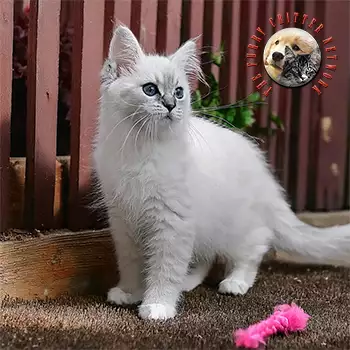

Play Style & Drive

The Burmilla inherits a balanced blend of playfulness from its Burmese parent and a relaxed composure from its Chinchilla Persian lineage. The result is a cat that engages enthusiastically in play sessions but does not demand constant stimulation the way some high-energy breeds do. Burmillas tend to be curious and investigative, enjoying toys that mimic the movement patterns of small prey — fluttering, darting, and hiding motions trigger their hunting instincts effectively.

Play sessions are typically moderate in duration, with most Burmillas engaging actively for 10 to 20 minutes before transitioning to observation or rest. This makes them well suited to structured play sessions two or three times per day rather than continuous free play. Understanding this pattern helps you select toys that deliver maximum engagement within that active window rather than relying on toys that require sustained high energy.

Burmillas are also notably dexterous with their paws, often batting at small objects, reaching under furniture to retrieve hidden toys, and manipulating items with surprising precision. This paw dexterity makes them excellent candidates for puzzle toys, treat-dispensing balls, and any toy that rewards manipulation. They tend to prefer toys they can interact with directly over passive toys that simply sit on the floor.

Social play is important for this breed as well. Burmillas bond closely with their owners and often prefer interactive play — where a human is actively involved — over solitary amusement. Wand toys, laser pointers used responsibly, and toss-and-fetch games with small soft toys tap into this social play drive and strengthen the bond between cat and owner.

Interactive & Puzzle Toys

Interactive toys that require problem-solving are among the best investments for a Burmilla's mental health. Puzzle feeders — boards or boxes with compartments that require the cat to slide, lift, or paw out treats — provide cognitive stimulation that mimics the foraging behavior cats would engage in naturally. Starting with simple puzzles and gradually increasing complexity keeps your Burmilla challenged without causing frustration.

Treat-dispensing balls and wobble toys that release kibble as they are batted around combine physical activity with food motivation. These are particularly useful for Burmillas that eat too quickly, as they slow down food intake while providing exercise and mental engagement. Adjustable difficulty settings — larger or smaller openings for treat release — allow you to calibrate the challenge as your cat becomes more proficient.

Electronic interactive toys that move unpredictably or respond to the cat's touch can hold a Burmilla's attention for extended periods. Motorized toys that dart out from under covers, robotic mice that change direction when contacted, and track-based ball toys all provide stimulation when you are not available for hands-on play. However, electronic toys should supplement rather than replace interactive play with their owner, as the social component of play is important for this people-oriented breed.

Rotation is key to maintaining interest. Cats, including Burmillas, habituate to familiar toys and lose interest over time. Keep a selection of toys in rotation — offering three or four at a time and swapping them out every few days — to maintain novelty. Storing toys in a sealed container with a pinch of catnip can refresh their appeal when they are reintroduced.

Wand Toys & Chase Play

Wand toys are arguably the single most effective play tool for Burmillas. The combination of an owner's hand controlling the movement, a flexible wand transmitting that motion, and an enticing attachment at the end creates a prey simulation that engages the full hunting sequence — stalk, chase, pounce, and capture. This complete behavioral cycle is deeply satisfying for cats and provides both physical exercise and psychological fulfillment.

When selecting a wand toy, look for a handle that is comfortable to grip during extended play, a flexible rod or string that allows fluid movement, and an attachment that produces appealing motion and sound. Feathered attachments mimic bird movement and are particularly effective when swooped through the air. Fabric or ribbon attachments slither convincingly along the ground, imitating small ground prey. Having several different attachments allows you to vary the play experience.

Technique matters as much as the toy itself. Move the attachment away from your Burmilla rather than toward it, mimicking prey trying to escape. Vary speed and direction — short bursts of rapid movement followed by pauses create the suspense-and-chase dynamic that triggers predatory excitement. Allow your cat to catch the toy periodically to prevent frustration, and always end the session with a successful capture followed by a small treat to complete the hunt-catch-eat cycle.

Safety considerations include storing wand toys out of reach between sessions, as unsupervised cats can become entangled in strings or swallow feathers and small attachments. Inspect attachments regularly for loose parts that could be ingested, and replace worn components promptly. Never use your hands or feet as play targets, as this teaches the cat that human body parts are acceptable prey — a habit that is difficult to reverse once established.

Catnip & Scent-Based Toys

Approximately 50 to 70 percent of cats respond to catnip, and Burmillas are no exception to this genetic lottery. If your Burmilla is catnip-sensitive, incorporating catnip-infused toys into the rotation provides a unique form of stimulation that triggers rolling, rubbing, pouncing, and general euphoric behavior lasting about 10 to 15 minutes per exposure. The response is harmless and non-addictive, though cats become temporarily desensitized after a session and typically need 30 minutes to two hours before responding again.

Silver vine and valerian root are alternative plant-based attractants that affect some cats who do not respond to catnip. Silver vine in particular has been shown to elicit a response in a higher percentage of cats than catnip alone, and combining the two can amplify the effect. Valerian root has a strong odor that many humans find unpleasant, so valerian-infused toys are best used in well-ventilated areas or stored in sealed containers between uses.

Scent-based toys work well as enrichment tools when paired with puzzle feeders or hidden around the home for your Burmilla to discover. Scattering a few catnip-filled mice or silver vine sticks in different rooms encourages exploration and mimics the experience of discovering resources in a natural environment. This scavenger-hunt approach is particularly effective for indoor cats that may otherwise lack environmental novelty.

Quality varies significantly among scent-based toys. Look for toys filled with whole-leaf catnip or coarsely ground material rather than fine dust, which loses potency quickly. Refillable toys that allow you to replace the catnip or silver vine are more economical and maintain their effectiveness longer than sealed toys that cannot be refreshed. Store loose catnip and silver vine in airtight containers in a cool, dark location to preserve their active compounds.

Comfort & Companion Toys

Not all toys need to stimulate the hunting instinct. Comfort toys — soft, plush items that a cat carries, kneads, or sleeps with — serve an emotional role, particularly for Burmillas that are left alone during the day. Some cats develop attachments to specific stuffed animals or fabric toys, carrying them from room to room and grooming them as they would a companion. These objects provide security and can help reduce anxiety in cats that are prone to separation stress.

Kickable toys — elongated plush toys roughly the size of a cat's body — allow your Burmilla to engage in the bunny-kick behavior where they grip the toy with their front paws and kick with their hind legs. This behavior is a natural part of the feline prey-capture sequence and provides a satisfying physical outlet. Look for kick toys with a durable outer shell that can withstand repeated clawing and biting without releasing stuffing or small parts.

Heated plush toys or toys with removable microwaveable inserts can provide comfort for kittens transitioning to a new home, senior cats seeking warmth, or any Burmilla that gravitates toward heat sources. Some heated companion toys also include a simulated heartbeat mechanism, which can be calming for newly adopted cats adjusting to their environment. These features are most useful during the initial weeks of adoption and may become less necessary as the cat settles in.

Inspect comfort toys regularly for wear. Loose threads, exposed stuffing, and detached embellishments such as plastic eyes or noses are choking and intestinal obstruction hazards. Replace toys that show significant wear, and choose products with embroidered features rather than glued-on parts whenever possible.

DIY & Budget Options

Some of the most engaging toys for a Burmilla cost little or nothing. A crumpled ball of paper, a cardboard box with holes cut in the sides, or a paper bag with the handles removed can provide extended entertainment. Burmillas are particularly fond of boxes and enclosed spaces, and a simple cardboard box placed on the floor will often be explored, slept in, and played with for days before losing its appeal. Replacing it with a different-sized box restarts the cycle.

Homemade puzzle feeders can be constructed from household items. A muffin tin with kibble placed in the wells and covered with tennis balls or ping-pong balls creates an effective foraging challenge. A toilet paper roll with the ends folded shut and a few treats inside becomes a destructible puzzle toy. An egg carton with treats hidden in the compartments encourages paw-fishing behavior that Burmillas find particularly satisfying given their natural dexterity.

Fabric scraps tied to a stick or dowel create a serviceable wand toy, and a length of twine dragged slowly across the floor under a blanket mimics hidden prey movement. These improvised toys should always be used under supervision, as loose strings and small fabric pieces can be ingested. The advantage of DIY toys is that they can be easily discarded and replaced, maintaining novelty without ongoing expense.

Environmental enrichment extends beyond physical toys. Rearranging furniture occasionally, providing access to different rooms on a rotating basis, or placing a bird feeder outside a window your Burmilla frequents all contribute to mental stimulation. Hide-and-seek games where you call your cat from different rooms, training sessions using small treats as rewards, and even leaving a nature documentary playing on a screen can enrich your Burmilla's daily experience at no cost.

Always consult a qualified professional before making any health-related decisions. This content is provided for informational reference only and should not replace professional guidance specific to your animal.