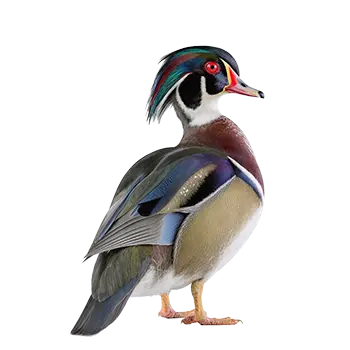

Wood Ducks are among the most unique waterfowl species to house in captivity because they are perching ducks, meaning they naturally roost in trees, nest in elevated cavities, and possess sharp claws that allow them to grip bark and branches. Any enclosure designed for Wood Ducks must account for this arboreal tendency in addition to the aquatic access that all waterfowl require. A housing setup that provides only ground-level shelter and a flat pond misses a fundamental aspect of the species' behavioral repertoire and will produce stressed, unhealthy birds.
The minimum recommended enclosure size for a pair of Wood Ducks is approximately two hundred square feet of total ground area, but larger is always better for a species that is naturally active, nervous, and prone to flight when startled. Wood Ducks are strong fliers, and unless they are pinioned or wing-clipped, the enclosure must be fully covered with netting or wire to prevent escape. Many experienced keepers prefer covered aviaries over open pens precisely because Wood Ducks are among the most flight-capable of commonly kept waterfowl and will exploit any gap in overhead containment.
Water access is non-negotiable. Wood Ducks require a pond, pool, or water feature deep enough for swimming, dabbling, and bathing, which means a minimum depth of twelve to eighteen inches over at least part of the water area. The water surface should be large enough for the birds to swim freely and take off from the water if they are flighted within a covered aviary. Shallow edges or graduated entry points allow easy access and exit, which is especially important for ducklings and birds that may become temporarily weakened by illness or injury.
Shade and wind protection are essential components of the enclosure. Wood Ducks in the wild inhabit wooded swamps and forested waterways where dense canopy provides shelter from sun, rain, and wind. Captive enclosures should include both natural shade from trees or shrubs and constructed shade structures such as roofed shelters or shade cloth panels. Exposure to sustained direct sun without retreat options causes heat stress, while unprotected exposure to cold wind and driving rain during winter increases energy expenditure and disease susceptibility.