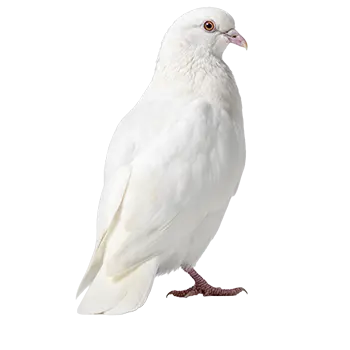

Enrichment for White Doves looks fundamentally different from enrichment for parrots, and this distinction is where many well-meaning owners go astray. Parrots are climbers and manipulators that interact with objects using powerful beaks and dexterous feet. Doves are ground-dwelling foragers with delicate beaks and feet that are designed for walking and perching rather than gripping and manipulating. Filling a dove enclosure with parrot toys will result in a cage full of ignored objects and a bird no better off than before. Effective dove enrichment works with the species' natural behaviors rather than against them.
The core behavioral drives of a White Dove center on foraging, bathing, preening, nesting, and social interaction. In the wild, doves spend hours each day walking along the ground searching for scattered seeds and small food items. They bathe regularly in shallow water or dust, preen meticulously after bathing, and engage in courtship and bonding behaviors with their mates. These are the behaviors that enrichment products and activities should support and stimulate. A dove that can express these natural behaviors in captivity is a mentally healthy dove.
Boredom and understimulation manifest differently in doves than in parrots. While a bored parrot may scream, pluck feathers, or destroy cage fixtures, a bored dove tends to become lethargic, inactive, and withdrawn. It may sit on the same perch for hours without moving, eat less, and lose condition gradually. Because the signs are subtle rather than dramatic, owners sometimes mistake chronic boredom for contentment. A dove sitting quietly on its perch all day is not necessarily happy. It may simply have nothing to do.
The enrichment plan for a White Dove should change regularly. Even the most engaging activity loses its novelty over time, and a static environment becomes invisible to the bird. Rotating enrichment items on a weekly basis, rearranging cage furniture periodically, and introducing new foraging challenges at unpredictable intervals keeps the environment stimulating without overwhelming the bird. The goal is a gentle rotation that offers something new to investigate without creating the stress of a completely unfamiliar surroundings.