
Housing Requirements

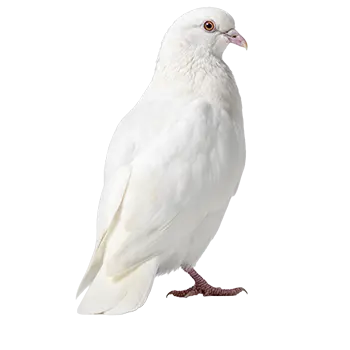
White Doves are horizontal fliers that navigate their environment with short bursts of level flight rather than the vertical climbing and acrobatic maneuvering typical of hookbill species. This fundamental behavioral characteristic has direct implications for enclosure design. A cage or aviary that prioritizes horizontal floor space and width over height will always serve a dove better than a tall, narrow enclosure designed for parrots. Understanding how doves actually use space is the starting point for every housing decision that follows.

Doves are also ground-oriented birds. In the wild, they spend significant portions of their day on the ground foraging for seeds, walking, and dust bathing. A suitable enclosure must provide accessible floor space that the bird can use comfortably, which means avoiding designs where perches, dishes, and accessories crowd the lower portions of the cage. The floor area should remain relatively open and uncluttered, with perches positioned at mid-height and higher to give the bird options for resting and roosting without sacrificing its ground-level territory.

Temperature tolerance is another consideration that shapes housing choices. White Doves are descended from the Rock Dove and are reasonably adaptable to a range of temperatures, but they are not cold-hardy in the way that feral pigeons can be. Indoor housing should maintain temperatures between sixty and eighty degrees Fahrenheit, and outdoor enclosures in temperate climates must provide protected, draft-free shelter during cold months. Sudden temperature swings are more dangerous than consistent cool temperatures, and any housing arrangement should buffer the bird from rapid environmental changes.

Social needs factor heavily into housing decisions as well. Doves are flock birds that suffer when housed in isolation without adequate human interaction or avian companionship. A single dove kept as a pet requires daily out-of-cage time and consistent social engagement with its owner to remain psychologically healthy. Pairs or small groups housed together need enough space to establish personal zones and retreat from one another when social pressure becomes uncomfortable. Overcrowding is a reliable source of chronic stress in doves and should be avoided through generous space allocation.

Cage Size and Design

The minimum cage size for a single White Dove is thirty-two inches wide, twenty inches deep, and twenty inches tall, though larger is always better and strongly recommended. For a pair, the minimum width should increase to at least forty-two inches to allow both birds adequate personal space. These measurements represent true minimums for birds that receive daily supervised time outside the cage. Doves that spend most of their time confined need substantially larger enclosures to maintain physical and psychological health.

Bar spacing is a critical safety parameter. Dove heads are proportionally small, and bar spacing wider than half an inch creates a risk of the bird inserting its head between bars and becoming trapped, which can result in injury or strangulation. Cages designed for finches or canaries typically have appropriate bar spacing, while many cages marketed for medium parrots have spacing that is dangerously wide for doves. Horizontal bar orientation is less important for doves than for hookbills, since doves do not climb cage bars, but it does no harm and can help with accessory attachment.

Cage shape should be rectangular. Round cages offer less usable space than their footprint suggests, provide no corners where a dove can feel secure, and make it difficult to position perches and accessories effectively. A simple rectangular cage with a flat top provides the most functional interior space and is easiest to outfit with perches, dishes, and other necessities. Flat-topped cages also allow for stacking storage or mounting accessories above the cage, maximizing use of the surrounding room space.

Door design matters more than many first-time owners anticipate. Doves are not as manually dexterous as parrots and cannot open spring-loaded doors, but a large door makes it much easier to reach all areas of the cage for cleaning, rearranging perches, and retrieving the bird when needed. Some flight cages feature full-width front doors or removable panels that simplify maintenance considerably. A cage that is difficult to clean thoroughly will eventually become a health hazard regardless of how well the bird is otherwise cared for.

Tray design and accessibility determine how easy it is to maintain hygienic conditions. A pull-out tray that extends fully from the cage frame allows complete substrate replacement without disturbing the bird. Trays should be made of durable, non-porous material that resists staining and can be disinfected. A grate positioned between the bird and the tray prevents contact with droppings but is not strictly necessary for doves, which naturally spend time on the cage floor, and some keepers prefer to remove the grate and provide a clean substrate surface for ground foraging.

Indoor Flight Enclosures

For owners with the space to accommodate one, an indoor flight enclosure represents a significant upgrade over a standard cage. Flight enclosures, sometimes marketed as flight cages or indoor aviaries, provide enough room for doves to fly short distances within the enclosure itself, dramatically improving daily exercise and quality of life. A minimum length of four feet is needed to allow even brief flight, and six feet or longer is ideal for a pair of doves.

Prefabricated indoor flight cages are available from several manufacturers in modular panel designs that can be assembled and disassembled without tools. These modular systems allow owners to customize dimensions to fit available room space and expand the enclosure over time. Build quality varies widely, however, and cheaper models may have sharp edges at panel joints, weak latches, or flimsy frames that bow under their own weight. Inspecting welds, joints, and hardware before purchase, or reading detailed user reviews, helps identify products that will hold up to years of daily use.

Custom-built enclosures offer the greatest flexibility and can be designed to integrate with existing room architecture. Walk-in flight enclosures built into a corner of a spare room or a section of a sunroom provide the most naturalistic environment possible indoors. Frame materials for custom builds include powder-coated steel, aluminum, and PVC, each with distinct advantages in durability, weight, and cost. The mesh or wire used should be welded or woven stainless steel or galvanized-after-welding material with appropriate spacing, and the coating should be confirmed as non-toxic, since some zinc-heavy galvanization processes can produce surfaces that are harmful if ingested.

Placement of an indoor flight enclosure within the home requires thought. Doves benefit from natural daylight but should not be positioned in direct sunlight for extended periods, as overheating is a real risk in a confined space. Avoid rooms with heavy foot traffic that would cause constant startle responses, kitchens where cooking fumes and temperature fluctuations are common, and areas near exterior doors where drafts are frequent. A quiet living room or dedicated bird room with windows that admit indirect light is typically the best setting.

Outdoor Aviaries and Lofts

Outdoor aviaries and dove lofts offer the most space-generous housing option and allow birds to experience natural sunlight, fresh air, and seasonal environmental variation. A well-designed outdoor aviary provides a quality of life that indoor housing cannot fully replicate, though it also introduces risks from weather, predators, and disease exposure that must be managed through thoughtful construction and maintenance.

Aviary construction starts with a predator-proof framework. The structure must be fully enclosed on all sides, including the top and bottom, with welded wire mesh of no greater than half-inch spacing. Hardware cloth is preferred over standard chicken wire, which is too flimsy to resist determined predators like raccoons, cats, hawks, and snakes. The mesh should extend at least twelve inches underground or be attached to a solid floor to prevent digging predators from gaining access. All doors and access panels must close securely with latches that cannot be manipulated by raccoons, whose dexterity is frequently underestimated.

A covered, enclosed shelter section within the aviary is essential. This sheltered area protects birds from rain, wind, extreme heat, and cold, and provides a sense of security that encourages normal roosting and nesting behavior. The shelter should be insulated in climates that experience winter temperatures below freezing and ventilated enough to prevent humidity buildup during warm months. Many designs position the shelter at one end of the aviary, with the open flight area extending outward, giving birds the choice to remain sheltered or move into the open section as conditions and mood dictate.

Dove lofts represent a specialized housing style borrowed from pigeon keeping traditions. A loft is essentially a small building or large box structure with interior perching, nesting compartments, and controlled ventilation, typically elevated off the ground on legs or a platform. Lofts work well for breeding pairs and small flocks, offering excellent predator protection and ease of management. The compact design makes daily cleaning, health inspection, and bird handling more convenient than in a large walk-in aviary. However, lofts provide less flight space, and birds housed in lofts benefit from regular access to a larger flight area or supervised free-flight time.

Flooring choices in outdoor aviaries affect both hygiene and the birds' natural behavior. Concrete pads are the easiest to sanitize but offer no drainage and can become dangerously hot in direct sun. Pea gravel over a layer of landscape fabric provides good drainage and is easy to rake clean, though it must be replaced periodically. Grass or natural earth flooring allows the most natural ground foraging behavior but is the most challenging to keep sanitary and may harbor parasites. Many experienced dove keepers use a combination, with concrete in the sheltered section for easy cleaning and gravel or natural substrate in the open flight area.

Substrate and Flooring

The substrate lining the bottom of an indoor cage or aviary floor serves practical purposes beyond simple aesthetics. It absorbs moisture from droppings, makes cleaning faster and more thorough, and in some cases provides an additional surface for natural behaviors like ground foraging. Choosing the right substrate involves balancing absorbency, safety, dust production, and ease of replacement.

Paper-based substrates are the most universally recommended option for indoor dove cages. Plain newsprint, unprinted butcher paper, or paper towels laid flat on the cage tray are inexpensive, easy to replace daily, and allow owners to monitor droppings for changes in color, consistency, or volume that might indicate health problems. Paper substrates produce no dust and pose no ingestion risk. The primary drawback is that paper must be changed frequently, ideally daily, because it becomes saturated quickly and does not control odor once wet.

Carefresh and similar recycled paper bedding products offer higher absorbency than flat paper and provide a softer, more naturalistic floor surface. These products absorb moisture effectively and control odor for longer periods between changes, making them a practical choice for owners who cannot change substrate daily. However, fine particles from paper bedding can become dusty as the bird walks through it, and some doves may attempt to eat small pieces, creating an impaction risk if consumption is significant. Monitoring the bird's behavior with any new substrate during the first week of use is a sensible precaution.

Corn cob bedding and walnut shell substrates are sometimes marketed for bird cages but are generally unsuitable for doves. Both materials promote fungal growth when damp, and corn cob bedding in particular is notorious for harboring aspergillus spores, a serious respiratory pathogen for birds. Sand was traditionally used for dove and pigeon enclosures and remains an option for outdoor aviaries with good drainage, but in indoor cages it produces fine dust, is heavy to change, and can harbor bacteria if not replaced very frequently.

Cage liners made from washable, reusable fabric are an environmentally conscious alternative that some dove keepers adopt. Custom-cut fleece or cotton cage liners can be washed and reused many times before replacement, reducing both waste and ongoing cost. The liner must be secured so the bird cannot burrow under it or become entangled, and it must be washed frequently in a bird-safe detergent free of fragrances and softeners. Fabric liners work best as a supplement to disposable paper in a rotation system, with paper used on busy days and fabric liners deployed when more absorbency is needed.

Ventilation and Climate Control

Proper air circulation within and around a dove enclosure is one of the most overlooked aspects of housing, yet it directly influences respiratory health, feather condition, and overall comfort. Doves produce fine feather dust as part of their normal preening process, and in an enclosed indoor environment this dust accumulates rapidly. Without adequate ventilation, airborne particulates concentrate around the cage and can irritate the bird's respiratory system over time, as well as aggravating allergies in human household members.

Air purifiers equipped with HEPA filtration are a worthwhile investment for any room housing doves. Positioning a quality air purifier near but not directly adjacent to the cage helps capture feather dust, dander, and airborne microbial particles without creating drafts that would chill the bird. Ionizing air purifiers should be avoided, as the ozone they produce even in small quantities is a potent respiratory irritant for birds. Standard HEPA models with activated carbon pre-filters offer the safest and most effective air quality improvement.

Humidity management is important in both indoor and outdoor settings. Doves do best in moderate humidity between forty and sixty percent. Excessively dry air, common in heated homes during winter, causes dry skin, flaky feathers, and irritated respiratory membranes. A room humidifier can address this, though it should be kept clean to prevent mold and bacteria from being dispersed into the air. Conversely, humidity above seventy percent promotes mold growth on cage surfaces, substrate, and food, and creates conditions favorable for respiratory infections.

Drafts are a more immediate threat than ambient temperature for doves. A bird can tolerate moderately cool temperatures of fifty-five to sixty degrees Fahrenheit without difficulty, but a direct draft of cold air across the roosting area will chill the bird and suppress its immune function. Cage placement should avoid positions between windows and doors where cross-drafts occur, directly beneath air conditioning vents, and near exterior walls in poorly insulated homes. In outdoor aviaries, the sheltered section must be designed to block prevailing wind while still allowing sufficient air exchange to prevent stagnant, humid conditions.

Multi-Bird and Colony Housing

White Doves are social birds that generally coexist peacefully in pairs and small groups, making multi-bird housing both practical and enriching for the animals. However, social harmony in a shared enclosure depends on adequate space, balanced sex ratios, and enough resources that no individual is forced to compete for essentials. Poor planning in any of these areas can turn a peaceful colony into a source of chronic stress and aggression.

Space requirements scale with flock size, but not linearly. Each additional bird in a shared enclosure needs its own territorial buffer zone, access to food and water that is not monopolized by dominant individuals, and a perching spot where it can rest without being crowded. As a practical guideline, adding each new bird to a colony requires approximately six to eight additional square feet of floor space in the enclosure, with proportional increases in the number of feeding stations, water sources, and perch positions. Multiple food and water stations distributed throughout the enclosure prevent dominant birds from resource guarding.

Sex ratios deserve careful management. An excess of males in a colony will produce persistent territorial squabbling and harassment of females, particularly during breeding season. A balanced ratio of one male to one female works best for breeding pairs, while mixed-sex flocks should maintain roughly equal numbers or a slight female majority. All-male groups can coexist if none have been previously paired with females, but introducing a hen to an established bachelor group will disrupt the social equilibrium. Owners who do not intend to breed should consider same-sex housing or consult with an avian veterinarian about non-invasive reproductive management.

Introduction of new birds to an established group requires a gradual process. A quarantine period of at least thirty days in a separate enclosure allows observation for signs of illness before the new bird contacts existing flock members. After quarantine, housing the newcomer in a cage within visual range of the established group for a week or more allows birds to become familiar with each other without physical contact. Supervised introductions in a neutral space, rather than placing the new bird directly into the established group's enclosure, reduce territorial aggression and give all parties an opportunity to establish social boundaries without the stress of defending home territory.

Nesting provisions in colony housing must be abundant enough to prevent competition. Each breeding pair needs its own nesting area, positioned far enough from neighboring nests that territorial boundaries do not overlap. Open platform nests, nest boxes, and basket-style nests all work for doves, and providing more nesting sites than there are pairs gives each pair options and reduces conflict over preferred locations. Non-breeding birds in the colony should also have access to sheltered roosting spots that are distinct from nesting areas, ensuring that their rest is not disrupted by breeding activity.

Always consult a qualified professional before making any health-related decisions. This content is provided for informational reference only and should not replace professional guidance specific to your animal.