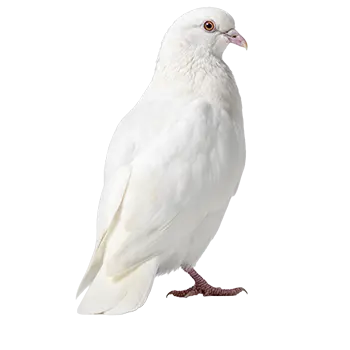

Essential Accessories Overview

Outfitting a White Dove enclosure with the right accessories transforms a bare cage into a functional, comfortable habitat that supports the bird's physical health and behavioral needs. Unlike hookbill species whose accessory requirements center on chew-resistant hardware and complex toys, dove accessories lean toward simplicity, stability, and hygiene. Every item placed in or near the enclosure should serve a clear purpose, whether nutritional, environmental, or behavioral, and should be evaluated for safety before introduction.

The essential accessory checklist for a White Dove setup includes food dishes, a water dispenser or dish, appropriate perches, a bathing dish, grit and mineral holders, lighting, a cage cover, and cleaning supplies. Beyond these fundamentals, a travel carrier, grooming tools, and a gram scale for weight monitoring round out the collection of items that every dove owner will eventually need. Investing in quality versions of these basics from the start is more cost-effective than replacing cheap products that deteriorate quickly or prove inadequate.

Material safety is a thread that runs through every accessory decision. Doves peck at and rest on every surface in their environment, so all materials within reach must be non-toxic and free of harmful coatings, dyes, or chemical treatments. Stainless steel, food-grade ceramic, untreated natural wood, and bird-safe plastics are the core material options that can be trusted. Any accessory with visible rust, chipped paint, fraying fabric, or degraded plastic should be removed immediately and replaced.

Accessory placement within the cage requires thought beyond simply finding an open spot. Dishes should be positioned where droppings from higher perches cannot contaminate food or water. Perches should be spaced to allow comfortable flight between them without forcing tight turns that risk wing injury. The floor area should remain sufficiently open for the dove to walk and forage. Overcrowding a cage with accessories, even useful ones, defeats the purpose of providing a comfortable living space.

Feeders and Water Dispensers

The feeding and watering setup for a White Dove should accommodate the bird's ground-feeding instincts while maintaining hygienic conditions that prevent contamination. Doves eat by pecking seeds from a surface, which means they are comfortable with both floor-level dishes and elevated hopper-style feeders. The choice between these styles comes down to cleanliness, convenience, and how the cage is configured.

Open ceramic crocks positioned on the cage floor or on a low platform are the most naturalistic feeding option and the one most doves take to immediately. Heavy ceramic dishes resist tipping, which is important because doves will step onto the rim of a dish and their shifting weight can overturn lightweight containers. The dish diameter should be wide enough for the bird to see and reach all the food without having to bury its head deeply. A diameter of four to five inches works well for a single dove, with larger dishes appropriate for pairs or groups.

Hopper-style seed feeders that mount to the cage wall offer superior hygiene by dispensing seed from a covered reservoir into a small trough, reducing exposure to droppings and cage debris. These feeders are particularly useful in multi-bird setups or in cages where floor space is at a premium. The trough opening must be wide enough for a dove's head to access comfortably, and the seed reservoir should be transparent or easily opened for monitoring seed levels and freshness. Clogging is a potential issue with hopper feeders, especially when the seed mix contains varying sizes, so regular checks ensure the bird always has access to food.

Water delivery deserves equal attention. A heavy ceramic water dish at floor level is simple and effective, but doves will sometimes bathe in their drinking water, contaminating it rapidly. Tube-style water bottles with a ball-valve spout eliminate this problem but require training for the dove to learn how to use them, and not all doves will accept them. A compromise approach uses a covered water dispenser that allows drinking access through a small opening while preventing full-body bathing. Regardless of the delivery method chosen, water must be changed at least twice daily and the container sanitized regularly to prevent algae and bacterial growth.

Separate containers for grit and mineral supplements should be provided alongside the food and water setup. A small, shallow dish dedicated to mineral grit, positioned away from the main food and water, allows the bird to self-regulate its grit intake without contaminating its food supply. This dish should be checked weekly and refreshed as needed, as droppings and dust will accumulate in any open dish over time.

Perches and Platforms

Perch selection for a White Dove is driven by the same principle that guides all dove accessory choices: the product must match the bird's anatomy and behavior rather than general bird-keeping conventions borrowed from parrot care. Doves have relatively weak feet compared to hookbills and do not grip perches with the same tenacity. A dove's foot wraps around a perch and rests there rather than clamping down, which means perch diameter and surface texture have a direct impact on comfort and foot health.

The ideal perch diameter for a White Dove allows the foot to wrap approximately three-quarters of the way around the surface, with the front and rear toes not quite meeting underneath. For most adult White Doves, this translates to a diameter between five-eighths and one inch. Perches that are too narrow force the toes to overlap, creating pressure points, while perches that are too wide flatten the foot and stress the tendons. Providing a range of diameters across different perches in the cage exercises the foot muscles and prevents the repetitive strain injuries that arise from constant contact with a single diameter.

Natural branch perches are the gold standard for dove enclosures. Their irregular shape, varying diameter along their length, and textured bark surface provide the most comfortable and foot-healthy resting surface available. Suitable wood species include manzanita, dragonwood, apple, willow, and poplar, all of which are non-toxic and durable enough for extended use. Branches should be cleaned and baked at a low temperature before installation to kill any parasites or mold present on wild-harvested wood. Many pet supply retailers sell pre-sanitized natural perches, which offer convenience at a modest premium.

Flat platform perches fill a role that round perches cannot. Doves naturally rest on flat surfaces like ledges, windowsills, and broad branches, and a platform perch replicates these resting spots within the cage. Wooden platforms roughly four by six inches provide enough surface for the bird to stand, turn, and settle comfortably. Some owners attach low rims or lips to the platform edges to give the bird a sense of enclosure without restricting access. Platform perches placed at multiple heights encourage movement between levels and give the bird options for resting in different parts of the cage.

Sandpaper perch covers and concrete conditioning perches are marketed as nail-trimming aids but should be avoided for doves. The abrasive surface damages the thin, delicate skin on a dove's feet and can cause irritation, sores, and bumblefoot infections over time. Natural wood perches with textured bark provide gentle, passive nail maintenance without the risks associated with abrasive surfaces. If nail trimming is needed, it should be done manually with proper bird nail clippers under good lighting rather than relying on a perch to do the job continuously.

Lighting and UV Accessories

Lighting is one of the most consequential yet frequently neglected accessories in a dove enclosure. White Doves, like all birds, perceive light differently from humans. Their visual system extends into the ultraviolet spectrum, and they rely on UV light for accurate color perception, social signaling, and the synthesis of vitamin D3 in the preen gland. A dove housed exclusively under standard household lighting lives in a visually diminished world and may develop vitamin D deficiency over time, even when its diet appears adequate.

Full-spectrum lighting designed for avian use replicates the UV components of natural sunlight that window glass filters out. A quality avian lamp produces light in both the UVA and UVB ranges at intensities appropriate for indoor use. UVA light restores the full visual experience for the bird, allowing it to see colors and patterns on its own plumage and on other birds that are invisible under artificial light. UVB light enables vitamin D3 synthesis, which is essential for calcium metabolism and skeletal health. Without UVB exposure, a dove cannot efficiently absorb dietary calcium regardless of how much is present in the food.

Lamp placement matters as much as lamp quality. The light source should be positioned above and slightly to one side of the enclosure at a distance specified by the manufacturer, typically twelve to eighteen inches from the closest perch. Placing the lamp too close risks UV overexposure and heat stress, while placing it too far away reduces UV intensity below effective levels. The lamp should illuminate a portion of the cage rather than the entire space, allowing the bird to move into and out of the light zone as it chooses. This gradient approach mimics natural conditions, where a bird can seek shade when it has had enough sun.

Photoperiod management through lighting timers helps regulate the dove's circadian rhythm and hormonal cycles. White Doves do best with approximately twelve hours of light and twelve hours of darkness, adjusted slightly with the seasons if desired. A programmable timer on the cage light and a cage cover to block ambient room light during dark hours creates a reliable day-night cycle that supports sleep quality, hormonal balance, and behavioral stability. Irregular photoperiods caused by late-night television, bright room lights left on past the bird's bedtime, or inconsistent cage covering contribute to chronic sleep deprivation and stress.

Travel Carriers and Transport

Every dove owner needs a suitable carrier, even those who do not anticipate regular travel. Veterinary visits, emergency evacuations, and temporary relocations during home maintenance or pest treatment all require a safe, secure way to transport the bird. Having a carrier ready and the bird accustomed to it before an urgent situation arises eliminates the stress of last-minute scrambling and reduces transport-related anxiety for both bird and owner.

Carrier design for doves should prioritize security, ventilation, and visibility. A small, hard-sided carrier with a secure latch, ventilation holes or mesh panels on multiple sides, and a removable perch at an appropriate height meets the basic requirements. The carrier should be just large enough for the bird to stand, turn, and settle without excess space that would allow the bird to be thrown around during vehicle movement. Carriers designed for small parrots or for cat and small dog transport in the smallest size often work well for doves, provided the ventilation openings are too small for the bird to push its head through.

Soft-sided carriers and fabric bird bags are available and offer lighter weight and easier storage, but they provide less physical protection than rigid carriers and can be compressed or crushed in transit. For short veterinary trips in a personal vehicle, a soft carrier may be adequate, but for any longer journey, public transit, or air travel, a rigid carrier with a secure door is the safer choice. The carrier floor should be lined with a towel or paper for traction, as smooth plastic floors cause the bird to slide during acceleration and braking.

Acclimating the dove to its carrier before it is actually needed makes transport events far less stressful. Leaving the carrier open in the room near the cage for several days allows the bird to investigate it as a neutral object. Placing treats inside encourages voluntary entry. Once the bird enters the carrier willingly, brief closed-door sessions of increasing duration build the association between the carrier and calm, positive experience. A bird that panics in its carrier is at risk of injury and arrives at its destination in a state of extreme stress that complicates veterinary examination or any other handling that follows.

Temperature management during transport requires planning. Birds are vulnerable to both overheating in parked cars and chilling in cold weather. The carrier should never be left in an unattended vehicle, even briefly. In cold weather, wrapping the carrier in a towel or blanket during the walk from building to car and from car to destination provides insulation. In hot weather, ensuring adequate airflow and shade within the vehicle prevents heat stress. A small towel draped partially over the carrier to reduce visual stimulation without blocking airflow often calms a nervous bird during transit.

Grooming Supplies

White Doves are fastidious self-groomers and require far less hands-on grooming intervention than many companion bird species. Their preening behavior maintains feather alignment, distributes natural oils, and removes debris without human assistance. However, a few grooming supplies should be on hand for the occasions when the bird needs help or when routine maintenance exceeds what the bird can manage on its own.

Nail trimmers designed for small birds or cats are the most commonly needed grooming tool. Dove nails grow continuously and, in captivity, may not wear down fast enough through normal perching activity to stay at a comfortable length. Overgrown nails catch on fabric, cage bars, and the bird's own feathers, and can curl into the foot pad if neglected. Small guillotine-style or scissor-style trimmers make clean cuts with minimal risk of crushing the nail, and a styptic powder or cornstarch should always be within reach during trimming sessions to stop any bleeding from an accidentally clipped quick.

A fine-mist spray bottle serves double duty as both a bathing tool and a feather conditioning aid. Doves that do not bathe frequently enough on their own, or those recovering from illness whose bathing should be managed, benefit from gentle misting that dampens the feathers enough to stimulate preening without saturating the bird. Using lukewarm plain water without any additives or feather conditioning products keeps the process simple and safe. Commercial feather sprays marketed for birds are generally unnecessary for doves that bathe regularly and eat a nutritionally complete diet.

A digital gram scale accurate to one gram is not strictly a grooming tool, but it belongs in the grooming supply category because regular weight monitoring is the most reliable way to detect early health changes. Weighing the bird at the same time each day, ideally first thing in the morning before feeding, provides a consistent baseline against which fluctuations can be measured. A weight loss of more than ten percent of body weight over a period of days warrants veterinary attention, and only regular weighing will catch these changes before they become visually apparent.

Beak maintenance is rarely needed for White Doves that have access to appropriate food, grit, and hard surfaces to wipe their beaks on. However, birds with metabolic conditions, liver disease, or nutritional deficiencies may develop overgrown or misshapen beaks that require veterinary filing. Providing a rough-surfaced mineral block or a flat stone in the cage gives the bird a natural wiping surface that helps maintain normal beak shape and length through daily use.

Cleaning Supplies and Cage Maintenance

Maintaining a clean enclosure is one of the most impactful things an owner can do for a White Dove's long-term health. Respiratory infections, parasitic infestations, and bacterial diseases all thrive in unclean environments, and doves' ground-dwelling habits put them in direct contact with cage floor contaminants more than most other companion birds. A consistent cleaning routine supported by the right supplies keeps the environment safe without introducing chemical hazards of its own.

Bird-safe disinfectants are the cornerstone of cage cleaning. Standard household cleaners, bleach solutions, and products containing phenols, ammonia, or strong fragrances are all potentially toxic to birds and should never be used on cage surfaces, accessories, or dishes without thorough rinsing and complete drying afterward. Veterinary-grade avian disinfectants formulated specifically for bird environments are the safest option and are effective against the bacteria, viruses, and fungi most commonly encountered in cage settings. These products are available through avian supply retailers and veterinary offices.

A daily cleaning routine should include removing and replacing soiled substrate, washing food and water dishes with hot water and a mild dish soap, wiping down perches and surfaces where droppings have accumulated, and removing any uneaten fresh food. This daily maintenance takes only a few minutes and prevents the accumulation of waste that would require intensive scrubbing later. Weekly cleaning should include a more thorough wipe-down of all cage bars, accessories, and hardware with a bird-safe disinfectant, followed by complete rinsing and drying before the bird is returned to the cage.

A monthly deep clean involves disassembling the cage as completely as practical, soaking removable components in a disinfectant solution, scrubbing all surfaces including corners and joints where grime accumulates, and inspecting every component for wear, rust, or damage. This is also the appropriate time to rotate or replace perches, inspect toys and enrichment items for deterioration, and evaluate the overall condition of the cage structure. Cages that show rust, bent bars, or compromised welds should be repaired or replaced before they create a safety hazard.

Steam cleaners offer a chemical-free alternative for cage sanitization that many bird owners find invaluable. A small handheld steam cleaner produces superheated steam that kills bacteria and loosens dried droppings without any chemical residue. Steam is particularly effective for cleaning natural wood perches, textured surfaces, and cage corners that are difficult to reach with a cloth. The cage must be completely dry and cool before the bird is returned, and the bird should be removed to a safe location during the steaming process to prevent burns from steam contact.

Always consult a qualified professional before making any health-related decisions. This content is provided for informational reference only and should not replace professional guidance specific to your animal.