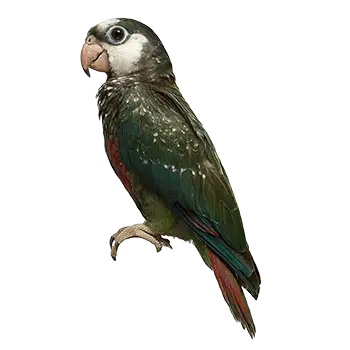

The White-Capped Pionus is a medium-sized parrot measuring approximately nine to ten inches in length, but its housing requirements extend well beyond what its compact frame might suggest. These birds are active climbers and benefit from horizontal cage space that allows them to move laterally across perches and cage bars rather than simply fluttering up and down. The minimum recommended cage size for a single White-Capped Pionus is twenty-four inches wide by twenty-four inches deep by thirty inches tall, though larger is always preferable when space and budget allow.
A cage measuring thirty inches or more in each dimension provides a significantly better quality of life, allowing room for multiple perches at varying heights, several toys, food and water stations, and still leaving open space for the bird to move freely without navigating an obstacle course. Birds housed in cramped enclosures often develop behavioral problems including feather picking, excessive screaming, and lethargy, even when they receive regular out-of-cage time. The cage is the bird's home base where it spends the majority of its hours, and undersizing it compromises both physical and psychological wellbeing.
Cage shape matters as much as raw volume. Rectangular cages are strongly preferred over round or decorative novelty shapes. Round cages eliminate corners, which parrots use as secure resting spots, and the converging bars at the top of a round cage can trap toes and tail feathers. Tall, narrow cages waste vertical space that the bird rarely uses while restricting the horizontal movement that provides actual exercise. A cage that is wider than it is tall, or at least equal in width and height, delivers the most usable interior space for a Pionus parrot.
For owners who can dedicate an entire room or a large section of a room to their bird, indoor flight cages and small aviaries represent the gold standard in Pionus housing. Flight cages measuring four to six feet in length allow genuine short flights between perches, providing cardiovascular exercise that a standard cage cannot accommodate. These larger enclosures are particularly beneficial for White-Capped Pionus parrots that have limited supervised out-of-cage time due to household constraints.