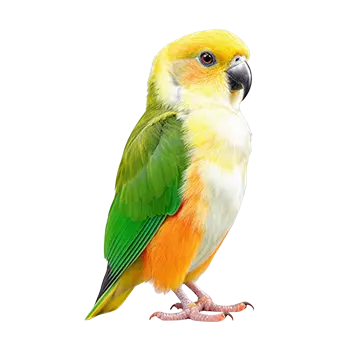

Why Technology Matters for Caique Care

The integration of consumer technology into companion bird care has moved from novelty to genuine utility over the past decade, and for a species as demanding and behaviorally complex as the White-Bellied Caique, the right devices provide monitoring capabilities, environmental control, and data collection that meaningfully improve care quality. Technology does not replace attentive, hands-on ownership, but it extends the owner's awareness into times and dimensions that direct observation cannot cover, particularly during work hours, overnight, and in the detection of gradual environmental changes that human senses are poorly equipped to notice.

The case for tech investment is especially strong with caiques because of the species' propensity for sudden, high-energy behavior that can lead to injury or escape, its sensitivity to environmental variables like temperature and air quality, and the diagnostic value of tracking subtle health indicators like weight trends and activity patterns over time. A camera reveals what happens in the cage during the eight hours the owner is at work. An environmental sensor detects the slow humidity drop that precedes respiratory symptoms. A digital scale catches the ten-gram weight decline that signals illness days before behavioral symptoms become visible.

The consumer pet technology market has expanded rapidly, and not all products deliver genuine value for avian applications. Many devices are designed for dogs and cats and perform poorly or irrelevantly in a bird care context. Smart feeders that dispense kibble on a schedule, GPS collars, and automated laser toys have no meaningful application for caged birds. The technology categories that do provide real benefit for caique owners are cameras and monitoring systems, environmental sensors, digital scales, smart lighting controllers, and air quality management devices, each addressed in the sections that follow.

Cost-benefit considerations should guide technology adoption decisions. A two-hundred-dollar camera system that prevents a single emergency veterinary visit has paid for itself, and a thirty-dollar digital scale that catches early weight loss has a return on investment measured in the bird's extended healthy lifespan. The technologies recommended in this guide are selected for their demonstrated practical value in avian care rather than for novelty or brand prestige.

Cameras and Remote Monitoring

A camera positioned to observe the cage and immediate surroundings is the single most valuable technology investment for a White-Bellied Caique owner who spends any portion of the day away from home. The behavioral information captured during unsupervised hours frequently reveals patterns invisible during the owner's presence, including daytime sleeping habits that suggest illness, repetitive behaviors that indicate stress, social interactions between multiple birds when the owner is not mediating, and the timing and intensity of vocalization bouts that neighbors may be reporting.

Camera selection for avian monitoring prioritizes several features over others. Resolution should be at least 1080p to distinguish behavioral details at the cage-to-camera distances typical of residential rooms, which usually range from four to ten feet. Night vision capability using infrared illumination is essential for monitoring the bird during its twelve-hour dark period without introducing visible light that disrupts sleep. Two-way audio allows the owner to speak to the bird remotely, which can soothe an agitated caique or interrupt undesirable behavior, though this feature should be used sparingly to avoid confusing the bird with a disembodied voice.

Motion detection and alert features add proactive monitoring capability. Cameras with configurable motion zones can be set to alert the owner's phone when movement is detected in or near the cage, which catches escape attempts, falls, and the arrival of other household pets in the bird's area. Activity-triggered recording stores only the clips where something is happening, conserving storage while preserving a searchable behavioral record. Some owners review these clips with their avian veterinarian during wellness visits, providing objective behavioral data that supplements the owner's subjective observations.

Camera placement requires balancing observation angle with the bird's territorial sensitivity. A camera mounted on the wall across from the cage at approximately the cage's height provides a full-face view of the interior without the distortion caused by overhead or extreme-angle positioning. The camera should be out of the bird's physical reach, as caiques will investigate, dismantle, and chew any object they can access. Wireless cameras eliminate the cable management challenges that wired models introduce, and battery-powered options provide flexibility for owners who rent or prefer not to modify wall surfaces.

Cloud storage versus local storage is a practical decision point. Cloud-subscribed cameras store footage on remote servers accessible from any device, providing retrieval security but incurring monthly fees and raising privacy considerations. Cameras with local storage on microSD cards avoid subscription costs and keep footage physically under the owner's control, but risk data loss if the card fails and typically limit accessible footage to whatever the card's capacity allows. Many modern cameras offer both options simultaneously, and a hybrid approach provides the best combination of accessibility and redundancy.

Environmental Sensors

Environmental sensors transform the abstract concept of habitat quality into quantifiable data that the owner can monitor, trend, and respond to before conditions deteriorate enough to affect the bird's health. For White-Bellied Caiques, the critical environmental parameters are temperature, humidity, and air quality, each of which has a defined comfort range rooted in the species' equatorial rainforest origins and a well-documented pathology associated with chronic deviation from that range.

Temperature monitoring addresses a parameter that affects the bird's metabolic rate, immune function, and behavioral comfort. The ideal ambient temperature range for a White-Bellied Caique is sixty-five to eighty degrees Fahrenheit, with brief excursions outside this range tolerated if they are not sustained. A digital temperature sensor placed at cage level, rather than on a distant wall thermostat that reads the room average, captures the actual thermal conditions the bird experiences. Smart temperature sensors that log data continuously and push alerts to the owner's phone when readings leave the preset range provide early warning of heating system failures, window-driven temperature spikes, and overnight cold snaps that might not wake the owner.

Humidity monitoring is arguably more important than temperature monitoring for a tropical species housed in heated or air-conditioned indoor environments. White-Bellied Caiques thrive at humidity levels between fifty and seventy percent, a range that most North American homes fall well below during winter heating season and sometimes during summer air conditioning as well. Sustained low humidity dries the nasal passages and respiratory mucosa, predisposing the bird to sinus infections and aspergillosis, and degrades feather quality by reducing the pliability of keratin structures. A hygrometer at cage level paired with a humidifier creates a feedback loop that keeps conditions within the target range.

Combined temperature and humidity sensors that integrate with smart home platforms offer convenience advantages over standalone units. These devices log historical data that can be reviewed as trend charts, revealing patterns that point readings miss, such as the gradual humidity decline that occurs each fall as heating systems activate or the afternoon temperature spike caused by sun exposure through a window at a specific seasonal angle. The historical perspective transforms environmental management from reactive correction to proactive prevention.

Carbon dioxide and volatile organic compound sensors represent the leading edge of consumer air quality monitoring for bird rooms. Birds have a respiratory system dramatically more efficient than mammals, which means they extract more of whatever is in the air with each breath, including pollutants. Elevated carbon dioxide levels indicate insufficient ventilation, while VOC spikes can signal anything from a neighbor's lawn treatment drifting through open windows to off-gassing from new furniture or flooring. These sensors are not yet standard in most bird households, but they are increasingly affordable and provide a layer of environmental awareness that benefits both bird and human occupants.

Digital Scales and Health Tracking

A digital gram scale is the most diagnostically valuable piece of technology a White-Bellied Caique owner can own, and it requires no software, no subscription, and no technical sophistication to use effectively. Regular weight monitoring catches health changes earlier than any other readily available screening method, because birds compensate for illness by maintaining normal behavior and appearance until the disease process is advanced, but they cannot compensate for the metabolic weight loss that accompanies most systemic illnesses.

Scale specifications for avian use are straightforward. The scale must read in one-gram increments across a range that covers the bird's expected weight, which for a White-Bellied Caique is typically one hundred forty to one hundred seventy grams depending on the individual. Kitchen scales with a flat platform work acceptably if the bird will stand still, but scales with a T-perch attachment designed for avian weighing provide a more stable and repeatable measurement setup. The perch should be tared out so the display shows only the bird's weight, and the scale should be placed on a level, vibration-free surface for consistent readings.

Weighing protocol matters as much as the equipment. The most useful weight data comes from daily morning weigh-ins performed before the first feeding, when the crop is empty and the measurement reflects true body mass without the variable of food in the digestive tract. The bird should be weighed at approximately the same time each day, as normal daily weight fluctuations of three to five grams are expected from hydration, activity, and elimination cycles. What matters is the trend line over days and weeks rather than any single reading, and a sustained downward trend of more than five percent of body weight warrants veterinary evaluation regardless of whether the bird appears otherwise normal.

Digital record keeping elevates raw weight data from isolated numbers into a meaningful health narrative. A simple spreadsheet or a dedicated pet health tracking application that plots weight over time reveals trends that visual inspection of a list of numbers would miss. Many owners share these weight charts with their avian veterinarian at annual wellness visits, providing a longitudinal health metric that a single examination-day weight cannot offer. Some digital scales connect directly to smartphone applications via Bluetooth, automating the recording process and reducing the likelihood that busy mornings lead to missed entries.

Beyond weight monitoring, the same disciplined tracking approach can be applied to other quantifiable health indicators. Daily food consumption measured by weighing the food dish before and after serving, dropping count and consistency noted during cage paper changes, and behavioral observations logged even briefly create a health dossier that transforms the owner's subjective sense that something might be off into an objective record that a veterinarian can interpret with clinical precision.

Smart Lighting and Timer Systems

Lighting control technology addresses one of the most physiologically consequential aspects of captive bird management: photoperiod regulation. White-Bellied Caiques, like all parrots, use the daily light-dark cycle as the primary entrainment signal for their circadian and circannual biological rhythms, governing sleep, hormone production, molt timing, and reproductive cycling. Inconsistent or inappropriate light exposure is among the most common and most easily corrected causes of chronic behavioral and hormonal problems in captive parrots.

Programmable timer outlets are the minimum viable technology for lighting control. A basic digital timer plugged between the wall outlet and the bird's full-spectrum light fixture ensures that lights turn on and off at exactly the same times every day, eliminating the variability introduced by manual switching. The timer should be programmed to provide ten to twelve hours of light and twelve to fourteen hours of uninterrupted darkness, with the dark period beginning in the evening and ending in the morning at times that align with the household's schedule. Even inexpensive mechanical timers work for this purpose, though digital timers offer more precise scheduling and backup battery retention during power interruptions.

Smart plugs and smart light switches connected to home automation platforms add flexibility and remote control to the basic timer function. These devices allow the owner to adjust the light schedule from a phone application, which is useful when travel, seasonal changes, or veterinary recommendations call for photoperiod modification. Gradual dimming schedules that simulate dawn and dusk transitions over a fifteen to thirty-minute period are possible with smart dimmer switches and are less jarring to the bird than the abrupt on-off transitions that basic timers provide.

Seasonal photoperiod adjustment is a practice that some experienced aviculturists employ to mimic natural light cycle variation throughout the year. By gradually lengthening the dark period in autumn and shortening it in spring, the owner replicates the photoperiod changes that wild caiques experience near the equator, which are subtle but not absent. This practice can help regulate molt timing and reduce the intensity of spring hormonal surges that sometimes produce unwanted breeding behavior and aggression in captive birds. Smart lighting systems make these gradual adjustments practical, as they can be programmed weeks in advance to shift by a few minutes each day.

Emergency power considerations apply directly to lighting systems because an extended power outage during the bird's dark period can disrupt sleep if the household switches to flashlights, candles, or generator-powered lighting that reaches the bird's sleeping area. Conversely, a daytime outage that leaves the room dark for hours can trigger premature roosting behavior. An uninterruptible power supply or battery backup powering the bird's light timer ensures that the photoperiod remains consistent through brief outages, and a plan for managing extended outages, such as covering the cage in a dark room and maintaining a quiet environment, should be part of the household's emergency preparedness.

Air Quality and Filtration Technology

Air quality management technology deserves dedicated attention in any household containing a White-Bellied Caique, both because birds are exceptionally vulnerable to airborne toxins and because parrots themselves generate significant airborne particulate matter that affects both avian and human respiratory health. The avian respiratory system, with its air sac network and cross-current gas exchange mechanism, extracts gases and particulates from inhaled air with far greater efficiency than the mammalian lung, making birds the proverbial canary in the coal mine for air quality threats that humans might not notice until symptoms develop.

HEPA air purifiers rated for the room size where the bird is housed represent the core air quality technology. True HEPA filters capture ninety-nine point nine seven percent of particles at zero point three microns, which includes the feather dust, dander, and dried fecal particulate that parrots release continuously. A purifier running in the bird room reduces airborne allergens for human household members, minimizes dust accumulation on cage and room surfaces, and lowers the respiratory pathogen load in the ambient air. The unit should be positioned to circulate air through the room without directing its output stream at the cage, as sustained airflow on the bird disrupts thermoregulation.

Filter replacement schedules directly determine whether the purifier functions as intended or merely occupies floor space while pushing dirty air through a saturated filter. Most HEPA units in bird-heavy environments require filter replacement every three to six months rather than the twelve-month interval the manufacturer may suggest for typical residential use, because avian dander loads exhaust filter capacity faster than standard household dust. Some units include a filter life indicator based on accumulated runtime or airflow resistance, which provides a data-driven replacement signal more reliable than calendar-based estimates.

Ionizer and ozone-generating air purifiers must be strictly avoided in bird households despite their widespread consumer availability and sometimes aggressive marketing. Ionizers produce ozone as a byproduct of their electrical discharge process, and even the low ozone concentrations emitted by consumer-grade ionizers are toxic to the avian respiratory system at chronic exposure levels. Ozone generators marketed as odor eliminators produce far higher concentrations and are acutely dangerous to birds even at brief exposure durations. The only safe air purification method for a bird room is mechanical filtration through a true HEPA or equivalent media filter with no ionization component.

Carbon monoxide detectors, while standard in most homes for human safety, carry additional urgency in bird households because birds succumb to carbon monoxide at concentrations well below the alarm thresholds set for human safety. Placing a carbon monoxide detector at cage level in addition to the standard ceiling-mounted detector ensures the earliest possible warning at the altitude where the bird breathes. Smart carbon monoxide detectors that push alerts to the owner's phone provide remote warning capability during hours when the owner is away from home.

Integrating Tech into Daily Care

The practical value of any technology depends on its integration into the owner's daily routine rather than its specification sheet, and even the most sophisticated devices fail to deliver their potential benefits if they are set up once and then neglected. Building technology into the rhythm of caique care transforms isolated gadgets into a coherent monitoring and management system that produces better outcomes for the bird with less effort from the owner over time.

Morning routines should incorporate a quick technology check alongside the physical care tasks of feeding, watering, and cleaning. Reviewing overnight camera footage or motion-triggered clips takes one to two minutes and reveals sleep quality, nighttime disturbances, and any overnight behavioral events. Weighing the bird on the gram scale and recording the number in a tracking application takes under a minute once the bird is accustomed to the process. Glancing at the environmental sensor readouts confirms that temperature and humidity remained within target ranges overnight. These checks become automatic with repetition and provide a daily health snapshot that no amount of casual observation can replicate.

Automation reduces the cognitive load of environmental management, which is particularly valuable for owners managing complex households with multiple competing demands. Smart plugs controlling lights and humidifiers, timer-driven air purifiers, and camera systems with automated cloud backup all operate without daily attention once properly configured. The owner's role shifts from manual control to periodic monitoring and maintenance, reviewing trend data, replacing filters and bulbs on schedule, and adjusting settings when seasonal or situational changes require it.

Data integration across devices creates analytical possibilities that individual devices cannot provide on their own. Correlating weight trend data with environmental sensor logs and behavioral camera footage can reveal connections that isolated data streams miss, such as a weight decline that began precisely when humidity dropped below forty percent, or a behavioral change that coincided with a temperature shift caused by a seasonal sun angle change. While fully integrated pet health dashboards remain uncommon in consumer products, the raw data from individual devices can be consolidated in a spreadsheet or health tracking application by owners willing to invest the organizational effort.

Technology should complement rather than replace direct interaction and observational skill. A camera does not substitute for hands-on handling that detects changes in body condition, feather texture, and muscle tone. A scale does not replace the experienced owner's eye for posture changes, fluffing, and respiratory effort. Environmental sensors do not eliminate the need for the owner to walk into the bird room and simply observe the bird's behavior, vocalizations, and general demeanor with focused attention. The most effective approach treats technology as an extension of the owner's senses rather than a replacement for them, filling the gaps that human attention cannot continuously cover while enhancing the quality of the direct observation it cannot replace.

Always consult a qualified professional before making any health-related decisions. This content is provided for informational reference only and should not replace professional guidance specific to your animal.