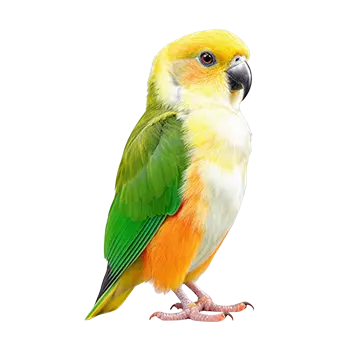

White-Bellied Caiques are among the most physically dynamic parrots in aviculture, and their housing must accommodate a level of activity that surpasses many birds twice their size. Unlike species that spend long stretches perching quietly, caiques use every available surface of their enclosure throughout the day, climbing the bars, hanging upside down, hopping between perches, and launching themselves from one side of the cage to the other with startling force. A cage that merely provides enough room for the bird to spread its wings falls dramatically short of what this species needs to maintain physical and psychological health.
The minimum recommended cage size for a single White-Bellied Caique is twenty-four inches wide by twenty-four inches deep by thirty inches tall, but these dimensions should be understood as an absolute floor rather than a target. Experienced caique owners and avian behaviorists consistently recommend going substantially larger whenever space and budget permit, with cages in the thirty-six by twenty-four by thirty-six inch range providing a more appropriate activity envelope. The width and depth of the cage matter more than height for this species, because caiques are horizontal movers and climbers rather than vertical fliers, and a tall, narrow cage restricts their preferred movement patterns.
Cage shape is a consequential but often underappreciated factor. Rectangular cages with flat tops and straight sides maximize usable interior space and allow the bird to climb predictably along the bars. Round cages, which narrow toward the top, create converging bar lines that can trap toes and tail feathers and eliminate the corner spaces where many caiques feel most secure. Decorative cages with ornamental scrollwork or complex bar patterns may look attractive but introduce pinch points and cleaning challenges that make them impractical for a species as active and messy as a caique.
Durability is a non-negotiable consideration for caique housing. These birds possess strong beaks relative to their body size and a persistent drive to manipulate, bend, and disassemble anything within reach. Lightweight cages with thin-gauge wire, plastic components, or spot-welded joints will not survive long-term caique occupancy. The cage must be constructed from heavy-gauge steel or wrought iron with welded joints and a powder-coated or stainless steel finish that resists both the bird's mechanical assaults and the corrosive effects of daily cleaning.