White-Bellied Caique Species Guide - Furry Critter Network

White-Bellied Caique

Quick Facts

🔬 Scientific Name
Pionites leucogaster
📊 Care Level
Intermediate
😊 Temperament
Playful, Energetic, Confident
📏 Adult Size
9-10 inches
⏱️ Lifespan
25-30 years
🔊 Noise Level
Moderate to Loud
🗣️ Talking Ability
Limited
🍽️ Diet Type
Pellet-based
🌍 Origin
South America (Amazon Basin)
🏠 Min Cage Size
24x24x24 inches
📐 Size
Medium

White-Bellied Caique - Names & Recognition

The White-Bellied Caique is scientifically classified as Pionites leucogaster, with the genus name Pionites referring to the two caique species and leucogaster deriving from Greek words meaning 'white belly,' directly describing this bird's most distinctive physical characteristic. The species was first described by German naturalist Philipp Ludwig Statius MĂźller in 1776 based on specimens collected from the Amazon Basin.

This species is known by several common names across different regions and languages. In English-speaking countries, it is called the White-Bellied Caique, White-Bellied Parrot, or simply Caique when context makes the species clear. The word 'caique' is pronounced 'kye-EEK' and derives from the Tupi indigenous language of Brazil, where these birds are native. In Portuguese-speaking Brazil, the bird is known as Marianinha-de-cabeça-amarela or Periquito-de-barriga-branca. Spanish-speaking regions use names including Perico de Vientre Blanco or Calacante de Vientre Blanco.

There are three recognized subspecies of White-Bellied Caique, each occupying different portions of the Amazon Basin and showing subtle variations in coloration and size. The nominate subspecies, P. l. leucogaster, is found south of the Amazon River in Brazil and northern Bolivia. P. l. xanthomeria inhabits areas north of the Amazon in Brazil and extends into Peru and Ecuador, characterized by slightly more yellow on the thighs and under the tail. P. l. xanthurus, native to southern Peru and northern Bolivia, shows more extensive yellow coloring in the tail region. These subspecies distinctions are primarily of interest to ornithologists and taxonomists, as captive-bred pet trade birds are rarely identified to subspecies level and often represent mixed lineages from different geographic populations.

Caiques as a group consist of only two species: the White-Bellied Caique (Pionites leucogaster) and the Black-Headed Caique (Pionites melanocephalus). These species are closely related, share many behavioral characteristics, and can hybridize in captivity, though such crosses are generally discouraged by responsible breeders. Both species exhibit similar personalities and care requirements, making them popular choices among parrot enthusiasts seeking energetic, entertaining companions. The Pionites genus is sometimes colloquially referred to as the 'dancing parrots' due to their characteristic hopping behavior and playful antics.

In aviculture and among bird enthusiasts, White-Bellied Caiques are occasionally nicknamed 'clowns of the bird world' or 'dancing parrots' in reference to their entertaining behaviors, acrobatic abilities, and seemingly endless energy. These informal names reflect the species' reputation for amusing antics that have made them popular subjects in parrot videos and social media content. Understanding the proper scientific classification and common names helps owners communicate accurately with veterinarians, breeders, and other bird enthusiasts about their specific species.

White-Bellied Caique Physical Description

The White-Bellied Caique is a compact, stocky parrot measuring approximately 9 to 10 inches in total length from beak to tail tip, making it a medium-sized species comparable to a small conure or large cockatiel. Adults typically weigh between 150 and 170 grams, with males averaging slightly heavier than females, though this difference is not pronounced enough for reliable visual sexing. Despite their relatively small size, these birds have substantial, muscular builds that contribute to their powerful flying and climbing abilities.

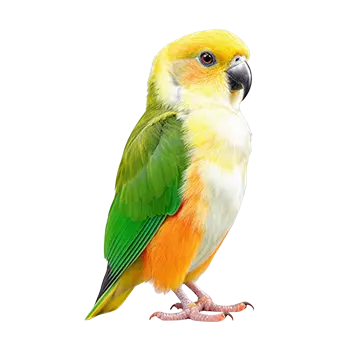
The White-Bellied Caique's plumage is strikingly beautiful and distinctly colored, featuring bold blocks of contrasting hues that make this species unmistakable. The head, nape, and throat are rich orange to golden-yellow, creating a bright, cheerful facial appearance. This golden coloring can vary in intensity between individuals, with some birds displaying deeper orange tones while others show paler yellow coloration. The eyes are large, expressive, and dark brown to reddish-brown, surrounded by narrow rings of bare gray skin.

The breast, belly, and under-tail coverts are bright, creamy white—the species' namesake feature—providing sharp contrast against the darker back and wings. This white belly extends from the lower chest down through the vent area, creating a distinctive appearance when the bird is perched or in flight. Some individuals show faint yellowish or creamy tinting in the white feathers, particularly as they age or during certain times of year.

The back, wings, and upper tail are predominantly rich green, ranging from emerald to grass-green depending on lighting and individual variation. The wing feathers show darker green on the flight feathers with lighter green coverts creating subtle patterns visible when wings are spread. The tail is relatively short and blunt compared to many parrot species, predominantly green with varying amounts of yellow on the underside depending on subspecies.

The thighs, flanks, and sides of the body display bright yellow-orange coloring that creates a beautiful transition between the white belly and green back. This yellow extends around the lower back and rump area, though the amount and intensity of yellow varies between subspecies and individuals. In flight, these yellow and green areas create an attractive pattern as the bird moves.

The beak is robust, horn-colored, and strongly hooked, perfectly adapted for cracking seeds, nuts, and manipulating food items. White-Bellied Caiques have powerful jaw muscles that give them considerable bite strength relative to their size—something potential owners should carefully consider. The legs and feet are pinkish-gray with the typical zygodactyl toe arrangement (two forward, two back) that provides excellent gripping and climbing ability. Caiques are notably sure-footed and agile climbers.

Sexual dimorphism is minimal in White-Bellied Caiques, with males and females appearing virtually identical in plumage, size, and coloration. This makes visual sexing unreliable, and definitive sex determination requires DNA testing through blood or feather samples, or surgical sexing by an avian veterinarian. Some breeders claim that males have slightly larger, blockier heads and thicker necks, but these differences are subtle and not reliable for accurate sexing.

Juvenile White-Bellied Caiques can be distinguished from adults by their slightly duller plumage overall, particularly less intense orange-yellow on the head. Young birds also have darker irises that lighten as they mature, and their beaks may show darker coloring that fades to the adult horn color. The white belly may appear less pristine in juveniles, sometimes showing faint gray or dusky markings that disappear with the first molt. Birds typically achieve full adult plumage by 12 to 18 months of age.

Affection Level
White-Bellied Caiques show moderate affection and can be somewhat independent compared to other parrots. They enjoy interaction and play more than cuddling sessions. While they bond strongly with their owners, they typically prefer active engagement over prolonged physical contact. Individual birds vary, with some being quite affectionate while others are more aloof.
Sociability
These birds are extremely social and thrive on interaction with humans and other caiques. They live in flocks in the wild and desperately need companionship in captivity. Pairs of caiques often entertain each other through constant play and wrestling. Single birds require extensive daily human interaction to meet their profound social needs and prevent behavioral issues.
Vocalization
White-Bellied Caiques produce moderate noise levels with distinctive calls, whistles, and contact squawks. While not as loud as large macaws or cockatoos, they can be quite vocal when excited or seeking attention. They make various sounds including chirps, beeps, and their characteristic caique screech. Most caiques are acceptably noisy for apartment living with tolerant neighbors.
Intelligence
Caiques demonstrate high intelligence with excellent problem-solving abilities and quick learning capacity. They figure out puzzles, learn tricks rapidly, and remember routines and people. Their intelligence requires mental stimulation through toys, training, and environmental enrichment. Without adequate challenges, their cleverness can lead to mischievous or destructive behaviors as they create their own entertainment.
Exercise Needs
White-Bellied Caiques have extremely high energy levels and require several hours of active play and exercise daily. They are among the most active parrot species, constantly hopping, climbing, swinging, and playing. Inadequate exercise leads to behavioral problems, obesity, and frustration. These birds need both physical space for movement and engaging activities to burn their considerable energy.
Maintenance Level
These parrots require moderate maintenance including daily cage cleaning due to their messy eating habits and active play style. They scatter food extensively and destroy toys rapidly, requiring frequent replacements. Their high energy means more wear on cage furnishings. Regular bathing opportunities, nail trims, and consistent enrichment add to care requirements, though they are not exceptionally demanding compared to larger parrots.
Trainability
White-Bellied Caiques are highly trainable and enjoy learning new tricks and behaviors through positive reinforcement. Their intelligence and food motivation make training sessions productive and enjoyable. However, their short attention spans and high energy can make sustained training challenging. Brief, frequent training sessions work best. They excel at learning complex tricks and can master impressive behavioral repertoires.
Independence
Caiques have low independence and strongly prefer constant companionship, whether from humans or other caiques. They become distressed when left alone for extended periods and may develop screaming or plucking behaviors. Best suited for households with someone home most of the time or for owners who can provide a same-species companion. They demand significant daily attention and interaction.

Natural Habitat & Range

The White-Bellied Caique inhabits the vast Amazon Basin of South America, with its range extending across portions of Brazil, Peru, Ecuador, Colombia, and Bolivia. This distribution covers a massive geographic area of tropical rainforest, though the species is notably absent from some regions where its close relative, the Black-Headed Caique, occurs. The two caique species have largely non-overlapping ranges with only limited areas of potential contact, possibly preventing significant interbreeding in the wild.

The primary habitat of White-Bellied Caiques consists of humid tropical rainforests in lowland and foothill regions, typically below 1,200 meters elevation though occasionally ranging higher in certain mountain valleys. These parrots show strong preference for areas near rivers, streams, and other water sources where forest vegetation is particularly lush and diverse. They inhabit both terra firme forests (upland forests that don't flood) and vĂĄrzea forests (seasonally flooded forests along rivers), demonstrating considerable ecological adaptability within their rainforest ecosystem.

White-Bellied Caiques favor the upper and middle canopy levels of mature forests, spending most of their time 15 to 30 meters above the ground among the dense foliage where they forage, socialize, and rest. They rarely descend to the forest floor except occasionally to access fallen fruits or visit mineral-rich clay licks along riverbanks. These clay lick visits are important social events where multiple caiques and other parrot species gather to consume clay, which helps neutralize toxins from their diet and provides essential minerals.

These highly social parrots live in small flocks typically numbering 10 to 30 individuals, though larger aggregations form at particularly abundant food sources or roosting sites. Flock dynamics are complex, with birds engaging in frequent vocalizations to maintain contact, social play behaviors, mutual preening, and coordinated movements through the forest. Caiques are known for their energetic, acrobatic movements through the canopy, often swinging, hanging upside-down, and making impressive leaps between branches. This playful behavior continues throughout adulthood, not just in juvenile birds.

The daily activity pattern of wild White-Bellied Caiques follows typical tropical parrot rhythms, with peak activity during early morning and late afternoon hours. Flocks leave their communal roosting trees shortly after dawn, calling loudly as they fly to feeding areas. They spend several hours actively foraging, often moving considerable distances through the forest to locate fruiting trees, flowering plants, and other food sources. During the intense midday heat, caiques typically rest in shaded areas of the canopy, engaging in quiet activities like preening and social interactions.

The natural diet consists of a diverse array of forest foods including fruits, seeds, flowers, nectar, leaf buds, and occasionally insects. Caiques show particular fondness for palm fruits, berries from various rainforest trees, and the seeds of forest legumes. They use their powerful beaks to open tough fruits and extract seeds, often holding food items in their feet while eating—a behavior that captive caiques continue to display. Their feeding activities can be noisy affairs with much chattering, playing, and social interaction among flock members.

Breeding behavior in the wild is not extensively documented but appears to follow seasonal patterns corresponding to periods of food abundance. Pairs nest in natural tree cavities, often in dead or dying trees where wood rot has created suitable hollows. Both parents participate in raising chicks, with the female incubating eggs while the male brings food. Young caiques remain with their parents for several weeks after fledging, learning foraging skills and social behaviors before joining the main flock.

The conservation status of White-Bellied Caiques is currently listed as Least Concern by the International Union for Conservation of Nature (IUCN) due to their extensive range and apparently stable population numbers. However, like many Amazonian species, they face ongoing threats from deforestation, habitat fragmentation, and capture for the pet trade. The extent of historical wild-capture for the pet trade significantly impacted some local populations, though current legal pet trade birds are predominantly captive-bred. Continued protection of Amazon rainforest habitat remains essential for long-term conservation of this and thousands of other species dependent on these irreplaceable ecosystems.

Temperament

White-Bellied Caiques are legendary among parrot enthusiasts for their boundless energy, playful antics, and entertaining personalities that have earned them the nickname 'clowns of the parrot world.' These birds approach life with exuberance and enthusiasm, displaying activity levels that exceed most other parrot species. From the moment they wake until they reluctantly settle for sleep, caiques are in nearly constant motion—hopping, climbing, swinging, wrestling, playing, and investigating everything in their environment with insatiable curiosity.

The characteristic 'caique hop' is perhaps the most distinctive and endearing behavior of this species. Rather than walking sedately like many parrots, caiques often move in enthusiastic two-footed hops and jumps, bouncing along surfaces with apparent joy and energy. This hopping behavior is accompanied by head bobbing, wing flapping, and sometimes full-body dancing displays that captivate observers. Many caiques will hop and dance when excited about food, greeting their favorite person, or simply because they're having a good time. These animated displays showcase the species' playful, spirited nature.

Confidence and boldness characterize the typical caique personality. Despite their relatively small size, these birds approach the world with fearless attitudes, readily investigating new situations, toys, and people. This confidence can sometimes manifest as cockiness or bossiness, with caiques attempting to dominate larger birds or challenge their owners. They have strong personalities and definite opinions about what they like and dislike, expressing preferences clearly through body language and vocalizations. Owners must establish appropriate boundaries early to prevent behavior problems from developing.

White-Bellied Caiques are intensely social birds with profound needs for interaction and companionship. In the wild, they live in tight-knit flocks with constant social engagement, and captive birds maintain these social drives. Single caiques require several hours of active human interaction daily to remain psychologically healthy. Without adequate socialization, they may develop behavioral problems including excessive screaming, aggression, feather plucking, or depression. Many experienced caique owners recommend keeping pairs when possible, as bonded caiques entertain each other through constant play and social interaction, though paired birds may bond less strongly with human family members.

The play behavior of White-Bellied Caiques is remarkable in its intensity and creativity. These birds love toys and interact with them enthusiastically—shredding, throwing, wrestling, and manipulating playthings with obvious enjoyment. They particularly enjoy toys they can destroy, making quick work of paper, cardboard, soft wood, and palm materials. Caiques also engage in play behaviors with other birds and humans, including gentle wrestling, chasing games, and mock battles that look aggressive but are actually social bonding activities when performed with appropriate bite pressure and body language.

Rolling, wrestling, and tumbling behaviors are characteristic caique activities that can startle unfamiliar observers but are completely normal. Bonded pairs or groups of caiques regularly engage in rough-and-tumble play that involves rolling around together, pinning each other, and gentle beak wrestling. These sessions often include distinctive vocalizations—a combination of chirps, trills, and soft contact calls. While this behavior looks violent, it's actually healthy social interaction when both birds are willing participants with relaxed body language. Understanding this helps owners distinguish between normal play and actual aggression.

Bathing is another activity that brings out the exuberant caique personality. Most White-Bellied Caiques absolutely love water and approach bath time with tremendous enthusiasm. They splash, roll, dunk their heads, and thoroughly soak themselves while making excited sounds. Providing regular bathing opportunities—whether through shallow dishes, spray bottles, or supervised showers—meets both hygiene needs and provides enriching entertainment. Some caiques even enjoy playing in running water from faucets, though supervision is essential for safety.

Vocalization levels in White-Bellied Caiques are moderate compared to large parrots like macaws or cockatoos, but these birds are far from quiet. They produce a variety of sounds including contact calls, alarm calls, excited chirps, and a distinctive harsh screech when particularly stimulated or demanding attention. Morning and evening tend to be the loudest times, matching natural calling periods. While not excessive screamers under normal circumstances, neglected or bored caiques may develop screaming problems. Their vocalizations can be piercing and carrying, making them potentially challenging for apartment living or very noise-sensitive households.

Talking ability in White-Bellied Caiques is generally limited compared to species like African Greys, Amazons, or even Quakers. While some individual caiques learn a handful of words or short phrases, most do not develop extensive vocabularies. Their talking voices, when they do speak, tend to be high-pitched and not always clearly enunciated. However, many caiques excel at learning and mimicking whistles, household sounds, and other non-speech vocalizations. Owners should not acquire caiques primarily for talking ability but rather for their entertaining personalities and playful behaviors.

Affection levels in caiques are moderate and somewhat variable between individuals. While they bond strongly with their owners and enjoy interaction, most caiques are not particularly cuddly birds that want extended petting or snuggling sessions like cockatoos or some conures. They typically prefer active engagement—playing games, learning tricks, exploring together—over quiet physical affection. However, many caiques do enjoy brief head scratches and may solicit attention in this way, especially in the evening when they're winding down. Some individuals are more affectionate than the average, showing that personality variation exists within the species.

Territory and aggression can be issues with White-Bellied Caiques, particularly during breeding season or if boundaries haven't been established. These confident birds may become territorial about their cages, favorite perches, or their chosen human. They can be aggressive toward other species of birds and should never be housed with significantly smaller birds they might injure. Some caiques show same-sex aggression and may not tolerate other birds of the same gender. Their bites can be quite painful given their strong beaks, making proper socialization and bite-pressure training essential. Despite potential challenges, properly raised and socialized caiques make wonderful companions for owners who understand and appreciate their unique personalities and provide appropriate outlets for their considerable energy.

Care Requirements

Proper housing for White-Bellied Caiques requires careful consideration of these active, energetic birds' unique needs for space, stimulation, and opportunities for their characteristic playful behaviors. The minimum cage dimensions for a single caique should be at least 24 inches wide by 24 inches deep by 24 inches high, though larger is always preferable for these exceptionally active parrots. Birds spending most of their time caged require proportionally larger housing—ideally 30 inches or more in each dimension—to allow adequate movement and exercise space.

Cage bar spacing is critical for safety and should not exceed three-quarters of an inch apart to prevent head entrapment or body squeezing through bars. The cage should be constructed from durable, non-toxic materials—stainless steel is ideal for its longevity and ease of cleaning, while powder-coated steel provides a more affordable alternative. Avoid cages containing zinc, lead, or other toxic metals that caiques might ingest through chewing. Horizontal bars on at least two sides facilitate climbing, which these acrobatic parrots do constantly.

Cage design should accommodate the White-Bellied Caique's active lifestyle and destructive capabilities. Look for sturdy construction that can withstand vigorous play and climbing. Multiple doors provide convenient access for cleaning and interaction. Some owners prefer dome-top cages with play gyms built into the roof, creating additional space for outside-cage activities. Ensure all latches and locks are secure, as intelligent caiques quickly learn to open simple closures and may escape. Many owners add small padlocks or carabiner clips to cage doors for added security.

Cage location significantly impacts the bird's security, comfort, and integration into family life. Position the cage in a well-used room where the caique can observe household activities and feel included in the family's social group—living rooms and family rooms work well. Never place cages in kitchens where cooking fumes, especially from non-stick cookware, pose deadly risks. The cage should sit against a wall rather than in the center of a room, providing security on one side. Position the cage so top perches are roughly at human eye level, preventing dominance issues that can develop when birds perch above human heads constantly.

Avoid placing cages near windows with direct sunlight that could overheat birds, heating or air conditioning vents that create drafts, or high-traffic doorways where constant activity might cause stress. Windows pose additional risks including escape if opened and collision injuries if birds don't recognize the glass barrier. Rooms with stable temperatures, good air quality, and appropriate household traffic patterns provide optimal cage locations for White-Bellied Caiques.

Perch selection and placement create an enriching environment while supporting foot health in captive caiques. Provide perches of varying diameters ranging from three-quarters inch to one and a half inches thick to exercise different foot muscles and prevent pressure sores that develop from standing on identically sized perches constantly. Natural wood branches make excellent perches, offering varying thickness, texture, and chewing opportunities. Manzanita, java wood, dragon wood, and safe fruit tree branches are durable choices. Avoid treated lumber, toxic woods like cedar or redwood, and sandpaper perch covers.

Arrange perches at different heights throughout the cage, ensuring the bird can't soil food or water dishes from above. Caiques love horizontal perches for sleeping and also enjoy angled branches that create climbing challenges. Include some thicker perches for secure sleeping positions and thinner perches for exercise. Many caiques enjoy rope perches for their flexibility and texture, though inspect rope regularly for fraying that could entangle feet. Replace perches when they become excessively soiled or damaged.

Toy selection for White-Bellied Caiques requires understanding their destructive capabilities and intense play drive. These birds need abundant toys and destroy them rapidly, necessitating regular replacements. Provide a variety of toy types including shreddable toys made from palm, paper, cardboard, and soft wood that satisfy their need to destroy things; puzzle toys hiding treats that engage their intelligence; swinging toys, bells, and manipulatives with moving parts for active play; and foraging toys requiring problem-solving to access rewards.

Rotate toys every one to two weeks to maintain novelty and interest, keeping some favorites consistently available while introducing new options regularly. Ensure all toys are appropriately sized for medium parrots without small parts that could be swallowed or sharp edges causing injury. Caiques particularly enjoy toys they can wrestle with, throw, and manipulate with their feet. Expect significant toy expenses, as these enthusiastic players go through destructible toys quickly.

Out-of-cage time is absolutely non-negotiable for White-Bellied Caique wellbeing. These exceptionally active parrots require a minimum of three to four hours daily outside their cage, though more is better. Establish a play gym, tree stand, or designated play area with perches, toys, and foraging opportunities where the bird can spend supervised time. Many caiques enjoy floor play on safe, washable mats where they can hop, roll, and tumble. Never leave caiques unsupervised outside their cage, as their curiosity and destructive abilities can quickly lead to dangerous situations.

Bird-proofing is essential before allowing out-of-cage time. Remove or secure hazards including ceiling fans (a leading cause of bird injuries), open windows and doors, toxic plants, exposed electrical cords, standing water in toilets or sinks, hot surfaces, other pets, and small objects that could be swallowed. Cover mirrors and large windows to prevent collision injuries. Be particularly vigilant about non-stick cookware and appliances, as fumes from heated Teflon and similar coatings kill birds within minutes. Remove scented candles, air fresheners, and aerosol sprays from areas where birds spend time.

Enrichment strategies extend beyond toys to include foraging opportunities that engage natural food-seeking behaviors and provide mental stimulation. Hide treats in foraging boxes, wrap vegetables in palm leaves, stuff food inside paper tubes, or use commercial foraging toys requiring problem-solving. Scatter pellets among crumpled paper for ground foraging. Provide varied textures and materials for exploration including cardboard boxes, paper bags, and safe browsing branches. These activities keep intelligent caiques mentally engaged and prevent boredom-related behavior problems.

Bathing opportunities are essential for White-Bellied Caiques, and most individuals absolutely love water. Provide shallow dishes for bathing several times weekly, offer gentle misting with spray bottles, or allow supervised time in the sink or shower. Many caiques enthusiastically splash and play in water, thoroughly soaking themselves. Regular bathing supports healthy feather condition, provides enrichment, and helps prevent dry skin. Always use plain water without additives, and ensure birds have time to dry thoroughly in a warm, draft-free area before going to sleep.

Temperature and humidity requirements for White-Bellied Caiques align with typical household conditions. Maintain ambient temperatures between 65-80°F, avoiding extremes and rapid fluctuations. These Amazonian parrots tolerate average household humidity but benefit from levels around 50-60%, particularly during molting periods. Provide bathing opportunities or gentle misting to increase local humidity around the bird. Avoid placing cages near heating vents or air conditioning that creates drafts and temperature variations.

Lighting requirements include both adequate daylight for activity and complete darkness for rest. White-Bellied Caiques need approximately 10-12 hours of uninterrupted sleep nightly in a quiet, completely dark environment. Cover the cage with a breathable cover or move the bird to a separate sleeping cage if household activity continues late. Full-spectrum lighting providing UVA and UVB wavelengths benefits indoor birds, supporting vitamin D synthesis and natural behaviors. Maintain consistent light-dark cycles mimicking natural photoperiods, as irregular schedules disrupt circadian rhythms and can trigger hormonal issues.

Cage maintenance for White-Bellied Caiques requires diligent attention, as these messy eaters scatter food extensively. Perform daily spot cleaning to remove droppings and food debris from cage floors, perches, and dishes. Replace substrate or liner paper daily. Food and water dishes require daily cleaning with hot, soapy water followed by thorough rinsing to prevent bacterial contamination. Weekly deep cleaning should include removing all furnishings, scrubbing the entire cage with bird-safe disinfectant or diluted bleach solution, and thoroughly rinsing and drying before replacing clean perches and toys. Regular maintenance prevents disease transmission and creates a healthy environment for your energetic White-Bellied Caique.

Feeding & Nutrition

In their native Amazon Basin rainforests, White-Bellied Caiques consume a highly varied diet consisting of fruits, seeds, flowers, nectar, berries, nuts, and leaf buds obtained from the forest canopy. They forage actively throughout the day, visiting multiple food sources and showing preferences for ripe fruits and flowering trees. Wild caiques also visit mineral-rich clay licks along riverbanks to consume clay that helps neutralize dietary toxins and provides essential minerals. Replicating this dietary diversity in captivity is crucial for maintaining optimal health, supporting immune function, and preventing nutritional diseases.

The foundation of a captive White-Bellied Caique's diet should be high-quality parrot pellets formulated specifically for medium-sized parrots or small hookbills. Pellets should comprise approximately 60-70% of total daily food intake, providing nutritionally complete and balanced nutrition with appropriate levels of proteins, vitamins, minerals, and other essential nutrients. Choose pellets from reputable manufacturers that avoid artificial colors, flavors, and preservatives. Some caiques prefer natural colored pellets while others enjoy variety in colored formulas—offer what your bird prefers to ensure consistent consumption.

Historically, parrot diets consisted primarily of seed mixes, but modern avian nutrition science recognizes that seed-only diets create serious health problems. Seeds are high in fat while deficient in essential nutrients including calcium, vitamin A, amino acids, and many vitamins. White-Bellied Caiques appear particularly prone to obesity and fatty liver disease when fed high-seed diets. However, seeds aren't completely prohibited—they can comprise 10-15% of the diet as part of a varied menu or serve as high-value training rewards. Choose quality mixes containing canary seed, millet, oats, and limited amounts of sunflower and safflower seeds rather than cheap mixes dominated by fatty sunflower seeds.

Fresh vegetables should constitute approximately 20-25% of daily intake, providing essential vitamins, minerals, fiber, and dietary variety. Excellent vegetable choices for White-Bellied Caiques include dark leafy greens such as kale, collard greens, mustard greens, dandelion greens, and chard; orange vegetables like carrots, sweet potato, butternut squash, and pumpkin that provide vitamin A; cruciferous vegetables including broccoli, cauliflower, and Brussels sprouts; colorful bell peppers; snap peas and snow peas; corn; and green beans. Wash all produce thoroughly and offer raw or lightly steamed without seasonings. Chop vegetables appropriately or present them whole for foraging enrichment.

Fresh fruits provide natural sugars, vitamins, and antioxidants but should be offered more sparingly than vegetables due to high sugar content—approximately 5-10% of daily intake is appropriate for most caiques. Safe, nutritious fruit options include berries like blueberries, strawberries, raspberries, and blackberries; apple slices without seeds; grapes cut in half to prevent choking; banana; mango; papaya; pomegranate; melon; citrus fruits; and kiwi. Many caiques especially enjoy tropical fruits reflecting their Amazonian origins. Remove uneaten fresh foods within two to three hours to prevent spoilage and bacterial growth, particularly in warm environments.

Certain foods are highly toxic to White-Bellied Caiques and must be strictly avoided to prevent serious illness or death. The most critical items to exclude include avocado in all forms, as the flesh, skin, and pit contain persin that is fatal to birds; chocolate and any caffeine-containing products; alcohol in any amount; onions, garlic, and chives that damage red blood cells; apple seeds, cherry pits, and stone fruit pits containing cyanide compounds; raw or dried beans containing toxic lectins; high-sodium foods and table salt; fatty fried foods; and any moldy or spoiled food that could contain harmful mycotoxins.

Never share seasoned human foods with caiques, as most contain excessive salt, sugar, fats, or other inappropriate ingredients. While small amounts of plain, cooked grains, pasta, or scrambled eggs can be healthy treats, most prepared human foods are unsuitable for parrots. Avoid giving dairy products beyond occasional small amounts of hard cheese or plain yogurt, as birds cannot properly digest lactose. When in doubt about a food's safety, research thoroughly before offering it to your caique.

Healthy treat options for training rewards, foraging enrichment, or occasional variety include small amounts of unsalted, unflavored air-popped popcorn; whole grain pasta cooked without sauce; unsweetened whole grain cereals; small bits of scrambled or hard-boiled egg; unsalted, roasted almonds crushed or slivered appropriately for medium birds; tiny amounts of natural peanut butter; and occasional bits of whole grain bread. Treats should never exceed 10% of total daily intake and should be offered strategically rather than free-fed. Use high-value treats specifically for training to maximize motivation and learning.

Calcium and mineral supplementation requires careful attention, particularly for breeding females at risk for egg binding and young growing birds. While high-quality pellets contain adequate calcium for most non-breeding birds, supplemental sources benefit many individuals. Provide a cuttlebone or mineral block in the cage for birds to nibble as needed. Dark leafy greens offer excellent dietary calcium. For breeding birds or those with demonstrated deficiencies, veterinarian-prescribed calcium supplements ensure adequate intake without risking over-supplementation, which can cause its own health problems including kidney damage.

Vitamin supplementation is generally unnecessary for White-Bellied Caiques consuming balanced diets of high-quality pellets and adequate fresh foods, as over-supplementation can cause toxicity, particularly with fat-soluble vitamins like A, D, E, and K. However, birds eating primarily seeds or those with demonstrated deficiencies may benefit from veterinarian-recommended supplements. Never add vitamin supplements to drinking water, as this promotes bacterial growth, alters water taste potentially reducing consumption, and prevents accurate dosing. If supplementation is necessary, apply powdered vitamins directly to moist foods or administer liquid supplements by mouth under veterinary guidance.

Water requirements are straightforward but absolutely critical—White-Bellied Caiques must have access to fresh, clean water at all times throughout the day. Change water at least once daily, cleaning the dish thoroughly with hot, soapy water to prevent bacterial and algal growth. Many caiques enjoy playing in their water dishes, bathing and dunking food items, which necessitates more frequent water changes—sometimes two or three times daily. Use heavy ceramic dishes or securely mounted bottles that cannot be tipped. Avoid using water additives, supplements, or medications in drinking water unless specifically prescribed by an avian veterinarian.

Foraging opportunities transform feeding time into an enriching activity that engages natural food-seeking behaviors, provides mental stimulation, and extends eating time to prevent boredom. Rather than simply placing food in dishes, hide treats inside crumpled paper, stuff vegetables through foraging boxes, wrap produce in palm leaves, skewer fruits and vegetables on stainless steel skewers, or use commercially available foraging toys requiring manipulation to access food. Scatter pellets among shredded paper substrate for ground foraging. Hang food items from cage bars or place them inside destructible toys. These activities keep intelligent, active White-Bellied Caiques mentally engaged while satisfying natural foraging instincts and preventing the behavior problems that arise from boredom in these energetic parrots.

White-Bellied Caique Health & Lifespan

White-Bellied Caiques are generally robust, hardy parrots that enjoy good health when provided with proper nutrition, housing, enrichment, and preventive veterinary care. With excellent care, these birds regularly live 25 to 30 years in captivity, with some individuals reaching their mid-30s. Maintaining this longevity requires vigilant attention to their physical and psychological needs, along with prompt response to any health concerns that arise. Polyomavirus represents a significant viral threat to young White-Bellied Caiques, particularly in breeding facilities or households with multiple birds. This virus primarily affects chicks and recently weaned juveniles, causing sudden death, failure to thrive, abdominal swelling, and abnormal feather development. Adult birds may carry the virus asymptomatically while shedding it to vulnerable young birds. Vaccination against polyomavirus is available and strongly recommended for breeding birds and young caiques in multi-bird environments. Prospective owners should inquire about polyomavirus testing and vaccination status when acquiring birds from breeders.

UV lighting benefits indoor White-Bellied Caiques by enabling natural vitamin D synthesis essential for calcium metabolism and bone health. Without access to unfiltered natural sunlight, indoor birds should receive full-spectrum avian lighting providing both UVA and UVB wavelengths. This lighting supports normal circadian rhythms, encourages natural behaviors, and contributes to overall physiological health. Providing appropriate lighting on a consistent 12-hour daily cycle mimics natural photoperiods and supports both physical and psychological wellbeing. Annual wellness exams allow avian veterinarians to establish baseline health parameters for individual birds and detect subtle changes that might indicate developing problems before they become serious. These preventive care visits provide opportunities to discuss diet, behavior, environmental enrichment, and any concerns about the bird's health or wellbeing. Veterinarians can recommend appropriate vaccines, perform routine health screenings, and provide guidance on optimal husbandry practices. Investing in preventive care throughout the bird's life typically results in fewer emergency situations and better long-term outcomes, enabling White-Bellied Caiques to live their full potential lifespan of 25-30 years as healthy, active companions.

Common Health Issues

  • Maintaining this longevity requires vigilant attention to their physical and psychological needs - Along with prompt response to any health concerns that arise.\n\nPolyomavirus represents a significant viral threat to young White-Bellied Caiques, particularly in breeding facilities or households with multiple birds.
  • Vaccination against polyomavirus is available and strongly recommended for breeding birds and young caiques in multi-bird environments. - Vaccination against polyomavirus is available and strongly recommended for breeding birds and young caiques in multi-bird environments.
  • Prospective owners should inquire about polyomavirus testing and vaccination status when acquiring birds from breeders.\n\nPsittacosis - Caused by the bacterium Chlamydia psittaci, is a serious respiratory infection that affects caiques and other parrot species while also posing zoonotic risks to human caregivers.
  • Infected birds display symptoms including lethargy - Respiratory difficulty, nasal discharge, conjunctivitis, and lime-green droppings.
  • Psittacosis requires aggressive antibiotic treatment under veterinary supervision - Often involving long courses of appropriate medications.
  • Human family members may need medical evaluation if exposure to an infected bird has occurred - As psittacosis can cause severe flu-like illness in people.
  • Obtaining birds from reputable sources and maintaining good hygiene practices reduces psittacosis risk.\n\nFeather plucking and self-mutilation are behavioral and medical problems occasionally seen in White-Bellied Caiques - Though they are somewhat less prone to feather destruction than species like cockatoos or African Greys.
  • Treatment addresses both medical factors and environmental improvements to reduce stress and increase enrichment.\n\nRespiratory infections represent common health challenges in captive White-Bellied Caiques - Particularly when birds are exposed to drafts, poor air quality, cigarette smoke, or aerosolized toxins from non-stick cookware and household chemicals.

Preventive Care & Health Monitoring

  • White-Bellied Caiques are generally robust - Hardy parrots that enjoy good health when provided with proper nutrition, housing, enrichment, and preventive veterinary care.
  • This life-threatening situation can result from calcium deficiency - Obesity, young age at first breeding, stress, or anatomical problems.
  • Prevention involves ensuring adequate dietary calcium and vitamin D3 - Providing appropriate lighting, maintaining healthy body weight, and avoiding hormonal triggers that induce inappropriate egg laying in pet birds.\n\nBeak and nail overgrowth occurs when perches and environmental enrichment don't provide adequate natural wear on these constantly growing structures.
  • Regular veterinary examinations should include evaluation of beak and nail length - With trimming performed as needed to prevent injuries from catching on cage items or difficulty manipulating food.\n\nRegular veterinary checkups with an experienced avian veterinarian are absolutely essential for maintaining White-Bellied Caique health and detecting problems early.
  • Annual wellness examinations should include thorough physical examination - Weight monitoring, assessment of beak and nails, and discussion of any behavioral or health concerns.
  • Building a relationship with a qualified avian veterinarian before emergencies arise ensures access to expert care when needed - \n\nProper diet and nutrition form the absolute foundation of disease prevention in White-Bellied Caiques.

Training & Vocalization

White-Bellied Caiques possess exceptional intelligence and trainability, making them outstanding candidates for learning complex behaviors, tricks, and commands through consistent positive reinforcement training. Their high intelligence, strong food motivation, playful personalities, and desire for interaction create ideal conditions for successful training when approached with patience, consistency, appropriate techniques, and understanding of their energetic nature. Beginning training early, preferably during the first year of life, establishes good habits and strengthens the human-bird bond, though adult caiques certainly can learn new behaviors at any age with appropriate methods.

The foundation of all parrot training is the step-up command, teaching the bird to step onto a hand or perch on cue. This essential behavior facilitates safe handling, cage cleaning, veterinary examinations, and moving the bird around the home. Train step-up by presenting a finger or perch just above the bird's feet at chest level while saying 'step up' in a clear, consistent tone. When the bird steps onto the hand or perch, immediately provide enthusiastic verbal praise and a small food reward. Practice this command multiple times daily in brief sessions until it becomes reliable in various situations, locations, and with different people.

Target training, where the bird learns to touch a target stick with its beak, forms the basis for teaching numerous advanced behaviors and impressive tricks. Once the caique understands targeting, you can use the target to guide the bird into new positions, around obstacles, through hoops, or to specific locations for stationing. Target training also facilitates recall training and helps manage behavior. Begin with a colorful stick or dowel, present it near the bird's beak, and reward any interaction initially. Gradually shape the behavior until the bird deliberately and reliably touches the target on command, then extend distance and complexity.

Recall training, teaching the bird to fly to you when called, is both practical and enriching for White-Bellied Caiques. Start with very short distances of just a few inches and gradually increase distance as the bird gains confidence and reliability. Use a specific recall word or distinctive whistle, always rewarding successful recalls with high-value treats and enthusiastic praise. Only practice recall in completely safe, enclosed areas free from hazards like ceiling fans, windows, and other pets. Many energetic caiques thoroughly enjoy the flying exercise and bonding aspect of recall training. While recall can potentially help in escape situations, it should never substitute for proper flight safety precautions and vigilant supervision.

Trick training provides mental stimulation, strengthens the human-bird relationship, and showcases the White-Bellied Caique's considerable intelligence and entertaining personality. These clever birds can learn to wave, turn around in circles, play dead, retrieve small objects, navigate obstacle courses, ring bells, put objects into containers, and perform complex behavior chains combining multiple tricks. Break tricks into small, achievable steps, reward incremental progress generously, and keep training sessions brief—5 to 15 minutes—to accommodate their short attention spans and maintain enthusiasm. End sessions on a positive note by requesting a well-known behavior the bird can successfully complete.

White-Bellied Caiques possess limited talking ability compared to renowned talkers like African Greys, Amazons, Eclectus, or even Quaker Parrots. While some individual caiques learn to say a handful of words or short phrases, most do not develop extensive vocabularies, and some never talk at all beyond their natural vocalizations. Their talking voices, when they do speak, tend to be high-pitched, somewhat raspy, and not always clearly enunciated, though enthusiastic owners usually understand their bird's words. Males may show slightly more aptitude for speech than females, though individual variation exists and exceptions are common.

For owners interested in encouraging speech, start with simple, frequently repeated words presented in clear context—'hello,' 'goodbye,' the bird's name, and names of favorite treats work well. Repeat target words enthusiastically when performing associated actions. Some caiques learn 5-15 words or simple phrases with consistent effort, while others never talk but may excel at learning whistles and household sounds. Prospective owners should not acquire caiques primarily for talking ability but rather for their playful, entertaining personalities, acrobatic antics, and engaging behaviors.

Vocalization management is important for White-Bellied Caique owners, as these birds produce moderate to loud vocalizations and use them throughout the day. They are most vocal during dawn and dusk—their natural calling times in the wild—and also vocalize when excited, seeking attention, hearing triggering sounds like other birds or doorbells, or communicating with perceived flock members. Their calls include contact chirps, excited trills, alarm calls, and a distinctive harsh screech when particularly stimulated. While not excessive screamers under normal circumstances with proper care, neglected or bored caiques may develop screaming problems.

Never reinforce screaming by responding with attention, even negative attention like yelling, rushing to investigate, or making eye contact. This teaches the bird that screaming produces desired results. Instead, completely ignore screaming, waiting for even brief pauses before providing any attention or rewards. Proactively reward quiet behavior and appropriate vocalizations by providing attention, treats, and positive interaction when the bird vocalizes at acceptable volumes. This positive approach teaches that quiet or moderate vocalizations earn rewards while screaming is ignored. Absolute consistency from all household members is essential for success—a single person rewarding screaming undermines everyone else's efforts.

Socialization throughout the bird's life prevents numerous behavioral problems and helps create a well-adjusted companion comfortable with various people, situations, and experiences. Expose young caiques to diverse positive experiences including different people of various ages, genders, and appearances; novel environments and rooms; car rides in secure carriers; appropriate household sounds like vacuum cleaners and televisions; gentle handling by multiple trusted people; and new toys and enrichment items. Always keep experiences positive, never forcing interactions that frighten the bird or overwhelming them with too much novelty at once. Proper early socialization prevents fear-based aggression, excessive screaming, and other stress-related behaviors that commonly develop in under-socialized parrots.

Bonding techniques strengthen the relationship between White-Bellied Caique and owner, creating mutual trust and enjoyment. Spend quality time with your bird daily through training sessions, active play, gentle handling, talking, and simply being present together. Learn to read your caique's body language and respect boundaries—approach when the bird is receptive rather than forcing interaction when they're uninterested or tired. Many caiques enjoy brief head scratches, shoulder riding, and gentle play with trusted companions. Consistency, patience, understanding of their personality, and positive experiences build strong bonds over time.

Behavioral challenges in White-Bellied Caiques often stem from inadequate socialization, insufficient mental and physical stimulation, improper handling, hormonal influences, or unmet needs rather than maliciousness or stubbornness. Common issues include territorial aggression particularly during breeding season, fear-based or dominance-related biting, attention-seeking screaming, destructive behaviors directed at inappropriate items, and rough play that becomes too intense. Address behavioral problems by identifying and resolving underlying causes, implementing consistent training protocols, dramatically increasing enrichment and exercise opportunities, establishing clear boundaries, and sometimes consulting with an avian behaviorist or experienced trainer.

Positive reinforcement training methods work by rewarding desired behaviors, making them more likely to occur again in the future. This approach uses food treats, verbal praise, head scratches, access to favorite toys, or other rewards immediately following good behaviors. The critical element is timing—rewards must occur within one to two seconds of the desired behavior to create clear associations in the bird's mind. Never use punishment, yelling, striking, water squirting, or forceful handling, which damages the human-bird relationship, increases fear and aggression, and typically creates or worsens behavior problems rather than solving them. Training should always be a positive, enjoyable, mutually rewarding experience for both bird and trainer, strengthening trust and communication.

Children & Other Pets

White-Bellied Caiques can be appropriate family pets for households with children, but this suitability depends heavily on multiple critical factors including children's ages, maturity levels, respect for boundaries, impulse control, and the family's ability to provide constant supervision during all interactions. These medium-sized parrots possess powerful beaks capable of delivering quite painful bites, particularly when frightened, territorial, mishandled, or during hormonal periods, making proper education and unwavering supervision absolutely essential for both child safety and bird welfare.

Families with children aged 10 years and older who demonstrate maturity, gentleness, patience, and willingness to learn proper bird handling techniques typically have the most success with White-Bellied Caiques. Older children and teenagers can participate meaningfully in bird care, training, and supervised interaction when properly educated about bird body language, safe handling techniques, bite pressure, and the critical importance of respecting the bird's boundaries and moods. Younger children, particularly those under 7 or 8 years old, generally lack the impulse control, fine motor skills, and understanding necessary for safe, independent bird interaction, though they can still enjoy observing, learning about, and occasionally interacting with the family bird under constant, active adult supervision.

Teaching children appropriate interaction with White-Bellied Caiques begins with comprehensive education about bird body language and communication signals. Children must learn to recognize signs that a bird wants to interact—relaxed posture, stepping forward eagerly, soft vocalizations, head lowering for scratches—versus clear signals indicating the bird wants space or is becoming agitated—pinned eyes, raised feathers, leaning or moving away, aggressive lunging, beak opening, or nipping. Understanding these signals prevents misunderstandings that could result in painful bites or chronically stressed birds. Children should thoroughly understand that birds are living, sensitive beings with feelings and preferences, not toys to be grabbed, carried around, or played with roughly.

Establishing clear, non-negotiable household rules protects both children and birds from harm. Children should understand they must always ask adult permission before approaching or interacting with the bird, never wake a sleeping caique, avoid sudden movements or loud noises near the bird that could startle or stress them, keep their faces away from the bird's powerful beak, never put fingers through cage bars, and immediately report any concerning bird behaviors to adults. Running, screaming, rough play, or chaotic activity should not occur near the bird's cage or play areas, as this creates stress and anxiety. Food sharing should be strictly supervised to prevent children offering inappropriate, toxic, or dangerous items.

Supervision requirements for child-bird interactions cannot be overstated or compromised—active, engaged adult supervision is mandatory 100% of the time children interact with White-Bellied Caiques, without exception. Even responsible, well-trained older children require direct adult oversight, as birds can become unpredictably territorial, hormonal, or frightened, and children may inadvertently do something that startles, annoys, or threatens the bird. Never leave children of any age alone with caiques, even briefly to answer the phone or door. This protection extends bidirectionally—supervision prevents child injury and also protects birds from well-intentioned but potentially harmful child actions like feeding inappropriate items, rough or improper handling, or accidentally releasing the bird.

White-Bellied Caiques' compatibility with other household birds varies tremendously based on individual personalities, species involved, introduction methods, available space, and ongoing management. Some caiques live peacefully alongside other medium to large parrots when properly introduced, while others display significant aggression or territoriality toward avian companions. Caiques can be particularly aggressive toward smaller birds like budgies, lovebirds, finches, or canaries, potentially injuring or killing them through territorial attacks. Never house White-Bellied Caiques with significantly smaller species, and always closely supervise interactions between different species during out-of-cage time, ready to intervene immediately if aggression appears.

Introducing a White-Bellied Caique to other household birds requires slow, methodical steps with constant monitoring throughout the process. Begin with proper quarantine—all new birds should spend 30 to 45 days in a completely separate room with no shared air space, dedicated equipment, and strict hygiene protocols to prevent disease transmission before introduction to resident birds. After quarantine clearance, position cages near each other but not touching in the same room, allowing birds to see and hear each other while remaining safely separated. Observe reactions carefully over several weeks, watching for signs of interest versus aggression. If both birds seem curious or friendly without aggressive displays, you can eventually allow brief, heavily supervised interactions in neutral territory outside both cages. Some birds become bonded companions, others tolerate each other peacefully, and some never accept each other—respect individual preferences rather than forcing relationships.

White-Bellied Caiques and traditional companion mammals like dogs and cats present significant safety challenges requiring constant vigilance and strict management protocols. Dogs and cats are predators by nature, possessing deeply ingrained hunting instincts that can activate around small animals despite extensive training, long domestication, or seemingly gentle temperaments. Even the gentlest, best-trained dog or cat may seriously injure or kill a bird within seconds—faster than humans can effectively intervene—through predatory drive activation, playful batting or pouncing, or accidental roughness. Additionally, even minor bites, scratches, or contact with mammalian saliva can introduce deadly bacteria like Pasteurella into birds' bloodstreams, making immediate emergency veterinary intervention critical after any contact injury.

If keeping White-Bellied Caiques in households with dogs or cats, strict, non-negotiable safety protocols must be maintained without exception. Birds should only be outside secure cages when dogs or cats are completely separated in different rooms behind closed, secured doors. Never assume your dog or cat will remain trustworthy indefinitely—prey drive can activate unexpectedly after years of peaceful coexistence. During cage time, ensure cages are extremely secure and positioned where dogs and cats cannot reach through bars, knock over cages, or cause stress through excessive attention. Some birds react fearfully to dogs and cats nearby even when physically separated, experiencing chronic stress that impacts health and behavior. Assess your individual bird's comfort level and adjust housing accordingly.

Smaller pets including rabbits, guinea pigs, hamsters, ferrets, and reptiles should similarly be kept completely separated from White-Bellied Caiques. While rabbits and guinea pigs aren't typical predators, their large size and potentially startling movements can frighten birds, and stressed birds may bite them if forced into proximity. Ferrets are obligate carnivores with strong predatory instincts and are extremely dangerous to birds. Small rodents might seem harmless, but diseases can transmit between species, and stressed birds may injure them. The safest, most responsible approach keeps birds and other pets in completely separate living spaces with no direct contact.

Teaching children appropriate responsibility for pet care provides valuable life lessons about commitment, compassion, and animal welfare, but expectations must be age-appropriate and realistically matched to children's developmental capabilities. Older children and teenagers can assume significant bird care duties including preparing fresh food, changing water daily, spot cleaning cages, supervising out-of-cage time with adult backup, and participating in training sessions. Younger children can help with simple, supervised tasks like selecting vegetables at the grocery store, handing supplies to adults during cage cleaning, or observing and reporting on the bird's behavior. Make care routines educational opportunities, teaching children about nutrition, behavior, responsibility, and compassion for animals. However, remember that ultimate responsibility for bird welfare must always rest with adults—children's enthusiasm and commitment typically wanes over time, and parents must be fully prepared to assume all care duties throughout the bird's potential 25-30 year lifespan.