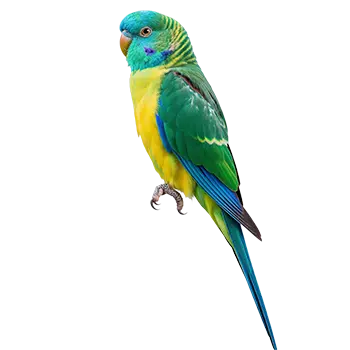

The Turquoisine Parakeet is an active, flight-oriented species that requires considerably more horizontal space than its small body size might suggest. In the wild, Neophema pulchella spends its days foraging across open woodland floors and flying between ground-level feeding areas and elevated roosting sites. Captive housing should provide enough room for sustained horizontal flight, which is the primary form of exercise for this species. Tall, narrow enclosures that prioritize height over length fail to meet this fundamental need, regardless of their total volume.
Temperament plays a significant role in housing decisions for Turquoisines. These are gentle, somewhat timid birds that do not thrive in crowded or visually chaotic environments. They are easily stressed by aggressive cage mates, excessive foot traffic near their enclosure, and sudden environmental changes. Housing should provide both open flight paths and sheltered retreats where the bird can feel secure. A Turquoisine that lacks a sense of safety in its enclosure will spend excessive time frozen in one position rather than engaging in the natural movement and exploration that supports physical and psychological health.
Climate adaptability is another factor that shapes housing choices. As Australian natives, Turquoisine Parakeets tolerate moderate temperature swings well but are sensitive to sustained cold, damp conditions and to extreme heat without ventilation. Indoor housing in climate-controlled rooms provides the most stable environment, while outdoor aviaries offer superior space and natural light but require thoughtful design to protect against weather extremes, predators, and disease vectors. Many experienced keepers maintain both an indoor cage for overnight housing and inclement weather and an outdoor flight for daytime exercise during favorable conditions.
The choice between cage and aviary often depends on the keeper's goals. A single pet Turquoisine can live well in a generously sized indoor flight cage with daily out-of-cage time. Breeding pairs and small groups are better served by an aviary or dedicated bird room that allows natural flight patterns and reduces the territorial stress that can arise in confined quarters. Regardless of the housing type selected, the principle of providing the largest practical enclosure should guide every purchase decision.