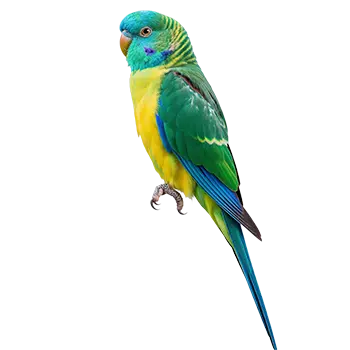

Essential Accessories Overview

Outfitting a Turquoisine Parakeet's living space goes well beyond the cage itself. The accessories chosen for the enclosure directly influence the bird's physical health, foot condition, hygiene, mental stimulation, and overall comfort. A thoughtfully accessorized cage transforms a bare enclosure into a functional habitat that supports the full range of natural behaviors, from foraging and bathing to roosting and preening. Conversely, a poorly equipped cage, or one furnished with inappropriate items, can contribute to foot problems, nutritional deficiencies, chronic stress, and preventable injuries.

The Turquoisine Parakeet's small body size and gentle temperament inform every accessory selection. Products designed for medium to large parrots are almost always unsuitable. Food dishes are too deep, perches are too thick, bathing vessels are too large, and carrier openings are too wide for secure containment. The keeper should seek out accessories sized specifically for small parakeets, budgerigars, or finches, evaluating each item not just for function but for physical compatibility with a bird weighing approximately forty to fifty grams.

Durability and safety are non-negotiable considerations. Accessories constructed from stainless steel, food-grade plastic, natural untreated wood, and vegetable-tanned leather are safe choices for avian use. Products containing zinc, lead, copper, or cadmium must be avoided entirely, as ingestion of even trace amounts through chewing or preening causes heavy metal toxicity. Any accessory that develops cracks, sharp edges, or loose components should be replaced immediately rather than left in service.

The initial accessory setup for a new Turquoisine should be minimal and expanded gradually. Starting with the essentials, including appropriate perches, food and water vessels, a cuttlebone, and a simple swing, allows the bird to acclimate to its new environment without being overwhelmed by unfamiliar objects. Additional accessories can be introduced one at a time over subsequent weeks as the bird settles in and demonstrates comfort with each new addition.

Perches & Perch Materials

Perch selection is one of the most impactful accessory decisions for a Turquoisine Parakeet's long-term foot health. The bird spends virtually its entire life standing, and the surfaces it stands on determine whether its feet remain healthy or develop painful conditions like bumblefoot, pressure sores, and arthritis. A variety of perch diameters, textures, and materials distributed throughout the cage is essential for promoting natural foot exercise and preventing the repetitive strain that uniform perching surfaces create.

Natural wood branches are the gold standard for avian perches. Their irregular diameter, varied texture, and slight flex under the bird's weight closely replicate the tree branches and shrub stems that wild Turquoisines use for roosting. Safe wood species for perches include apple, pear, willow, eucalyptus, bottlebrush, and manzanita. Each species offers a different combination of hardness, bark texture, and diameter variation. Branches should be sourced from unsprayed trees, scrubbed clean, and either baked briefly or soaked in a dilute vinegar solution to eliminate surface contaminants before installation.

Rope perches made from untreated cotton or sisal provide a soft, flexible perching surface that complements harder wood perches. The pliable surface of a rope perch distributes pressure across a wider area of the foot, reducing the risk of pressure sores on the plantar surface. Rope perches can be bent into curves, spirals, or angled configurations that encourage the bird to adjust its grip as it moves, promoting foot dexterity and muscle engagement. Regular inspection for fraying is essential, as loose fibers can entangle toes or be ingested and cause crop impaction.

Concrete and mineral perches serve a specific purpose: conditioning the beak and nails through gentle abrasion during normal perching activity. These rough-textured perches should be positioned at a food or water station where the bird spends brief, stationary periods rather than at the primary sleeping perch. Extended standing on abrasive surfaces causes foot irritation and sores, so limiting the bird's time on concrete perches to short feeding visits balances the conditioning benefit against the risk of injury. One concrete perch per cage is sufficient.

Plastic and dowel perches, the type most commonly included with new cages, are the least suitable option for regular use. Their uniform, smooth surface offers no diameter variation and forces the foot into a single grip position for extended periods, directly contributing to pressure sore development. If dowel perches are the only option available initially, they should be wrapped with veterinary bandage tape or self-adhesive athletic tape to create texture variations until proper perches can be obtained.

Food & Water Dispensers

The type and placement of food and water vessels affect both the Turquoisine Parakeet's nutritional intake and the hygiene of its living space. Open ceramic or stainless steel dishes are the most versatile option for dry seed, pellets, fresh foods, and water. Stainless steel is preferred for its durability, ease of cleaning, and resistance to bacterial biofilm accumulation. Ceramic dishes are an acceptable alternative provided they are lead-free and finished with a food-safe glaze. Plastic dishes, while inexpensive, scratch easily, and the microscopic grooves in scratched plastic harbor bacteria that resist normal washing.

Dish size and depth should match the bird's feeding habits. Turquoisines are ground-level foragers that prefer to see their food spread out rather than piled deep in a narrow vessel. Wide, shallow dishes no more than one inch deep allow the bird to sift through seed and select preferred items without having to reach deep into a container. For fresh foods and sprouted seeds, low-sided ceramic ramekins or small stainless steel sauce cups work well and can be removed and washed easily after each serving.

Tube-style water dispensers offer a hygienic alternative to open water dishes. These gravity-fed bottles deliver clean water through a small drinking tube, preventing contamination from droppings, food debris, and feather dust that inevitably accumulate in open water bowls. Not all Turquoisines adapt to tube drinkers readily, so the keeper should provide both a tube dispenser and an open water dish during the transition period and confirm that the bird is drinking from the tube before removing the dish. Tube dispensers should be cleaned daily with a bottle brush to prevent algae and biofilm buildup in the tube and reservoir.

Seed hoppers with adjustable flow openings can reduce waste by dispensing seed gradually rather than allowing the bird to scatter an entire dish. However, hoppers can mask food consumption levels, making it harder to monitor how much the bird is actually eating versus how much it is hulling and discarding. For keepers who value consumption monitoring, open dishes remain preferable despite higher waste. Regardless of the vessel type chosen, food and water stations should be positioned away from perches to minimize contamination from droppings, and at a height that allows the bird comfortable access without requiring awkward postures.

Bathing & Grooming Supplies

Regular bathing supports feather health, skin condition, and natural preening behavior in Turquoisine Parakeets. Most Turquoisines are enthusiastic bathers that will readily use a shallow dish of lukewarm water placed on the cage floor or attached to an open cage door. The bathing vessel should be heavy enough to resist tipping, with a depth of no more than one inch to prevent any drowning risk. Ceramic baking dishes, shallow terracotta saucers, and purpose-built clip-on bird baths designed for small parakeets all serve this function well.

Misting with a clean spray bottle provides an alternative bathing method and is particularly effective for birds that are reluctant to enter standing water. A fine mist of lukewarm water directed above the bird, allowing droplets to drift down naturally, mimics the gentle rain that wild Turquoisines bathe in opportunistically. Misting should occur during the warmer hours of the day to allow the bird ample time to dry before evening temperatures drop. Forcing a misting session on a clearly resistant bird is counterproductive and erodes the trust relationship between keeper and bird.

Grooming tools for Turquoisine Parakeets are minimal compared to those required for larger parrot species. Nail trimming is the most common grooming need and typically requires only a small pair of sharp nail scissors or a dedicated bird nail clipper. The nails of a Turquoisine are tiny and nearly translucent, making the blood vessel within the nail visible in good lighting. Trimming should remove only the sharp tip beyond the visible vessel, and styptic powder should be on hand to stop bleeding in the event of an accidental quick nick.

Beak maintenance is usually self-managed by a Turquoisine that has access to appropriate chewing surfaces. Cuttlebone, mineral blocks, and natural wood perches provide the abrasive contact necessary to keep the beak properly shaped and at functional length. Manual beak trimming should be performed only by a veterinarian or experienced aviculturist, as the beak contains blood vessels and nerve endings that make improper trimming painful and potentially dangerous. A beak that appears overgrown, asymmetrical, or flaky warrants a veterinary examination, as these signs can indicate underlying health conditions rather than simple overgrowth.

Carriers & Travel Gear

A safe, appropriately sized carrier is an essential piece of equipment for every Turquoisine Parakeet owner, even for birds that rarely leave the home. Veterinary visits, emergency evacuations, and household situations that require temporary relocation all demand a carrier that can be deployed quickly and used confidently. A small, hard-sided carrier designed for budgerigars or small parakeets is the most practical option. The carrier should be just large enough for the bird to turn around, perch comfortably, and access a small water source, but compact enough to prevent injury from being thrown against the walls during transport.

Ventilation in the carrier must be adequate without creating security gaps. Turquoisines can squeeze through surprisingly small openings when panicked, so any ventilation slots or grilles should be narrow enough to prevent escape. Wire-front carriers with solid sides provide a good balance of airflow and containment. Fully transparent carriers are not recommended, as the visual exposure to unfamiliar surroundings during transport increases stress for this naturally cautious species. A carrier that allows the keeper to partially drape a light cloth over it for visual shielding during stressful transits offers a practical advantage.

Furnishing the carrier for transport requires attention to stability and safety. A small, non-slip perch positioned low in the carrier, approximately two inches from the floor, gives the bird a stable gripping surface during vehicle movement. The perch should be fixed firmly enough that it cannot shift or roll. A shallow water dish attached to the carrier wall or a small piece of water-rich fruit like cucumber or grape provides hydration for longer trips without the mess of an open water cup that will inevitably spill during motion.

Familiarizing the Turquoisine with its carrier before an emergency arises reduces the stress of transport significantly. Leaving the carrier open near the cage with a treat inside encourages voluntary exploration. Periodically placing the bird in the carrier for brief, positive-outcome sessions, such as a short trip to another room followed by a treat, builds a positive association with the carrier. A bird that enters the carrier calmly rather than requiring a stressful chase-and-catch sequence arrives at the veterinary clinic in better condition for examination and is easier for the veterinarian to evaluate.

Lighting & UV Solutions

Full-spectrum lighting that includes ultraviolet wavelengths is one of the most important accessories for any indoor-housed Turquoisine Parakeet. Ultraviolet B radiation is essential for the synthesis of vitamin D3 in the bird's skin, which in turn enables calcium absorption from the diet. Without adequate UVB exposure, even a calcium-rich diet cannot prevent deficiency. Standard household lighting, including LED and fluorescent bulbs, produces virtually no UVB, meaning indoor birds without supplemental UV lighting are at chronic risk of calcium-related health problems.

Avian-specific full-spectrum bulbs are manufactured to produce a spectral output that approximates natural sunlight, including the UVA and UVB wavelengths that are filtered out by window glass and absent from conventional lighting. These bulbs are available in compact fluorescent and linear tube formats, both of which are suitable for use over a Turquoisine cage. The bulb should be positioned within twelve to eighteen inches of the bird's closest perch, as UVB intensity drops off rapidly with distance. A mesh screen between the bulb and the bird is acceptable, but glass or plastic shields block UVB entirely and negate the benefit.

Lighting duration and scheduling contribute to the bird's circadian rhythm and hormonal regulation. Turquoisine Parakeets benefit from a consistent photoperiod of approximately ten to twelve hours of full-spectrum light followed by twelve to fourteen hours of complete darkness. A simple plug-in timer eliminates the inconsistency of manual switching and ensures the bird receives a predictable light-dark cycle. Gradually shifting the photoperiod with the seasons, providing slightly shorter days in winter and slightly longer days in summer, mimics natural conditions and supports appropriate hormonal cycling.

UVB bulbs degrade over time even when they appear to be functioning normally. The visible light output may remain unchanged while UVB production drops below effective levels. Manufacturers typically recommend replacing avian UVB bulbs every six to twelve months, depending on the product and daily usage hours. Keeping a replacement schedule ensures the bird continues to receive meaningful UV exposure. A UVB radiometer, while not essential for most hobbyists, provides a definitive measurement of output for keepers who want to verify bulb performance.

Cage Covers & Nesting Accessories

A cage cover is a simple but effective tool for ensuring uninterrupted sleep and managing the Turquoisine Parakeet's photoperiod. Covering the cage with a dark, breathable fabric at a consistent time each evening signals the end of the active day and blocks ambient light from hallways, streetlamps, and electronic devices that would otherwise disrupt the bird's sleep. Adequate sleep, generally twelve to fourteen hours of uninterrupted darkness, is critical for immune function, hormonal balance, and behavioral stability.

The cover material should be opaque enough to block light effectively but breathable enough to allow adequate air circulation within the covered cage. Heavy canvas and quilted covers provide excellent light blocking and some temperature insulation but can restrict airflow if the cage is in a poorly ventilated area. Lighter fabrics like cotton broadcloth or purpose-made bird cage covers with ventilation panels offer a good compromise. The cover should drape to the cage floor on all sides without bunching or sagging into the cage interior where the bird could pull on or chew it.

Nest boxes are a conditional accessory, appropriate only for breeding pairs during the breeding season and counterproductive at other times. The standard nest box for Neophema parakeets is a vertical-format wooden box measuring approximately six inches wide, six inches deep, and ten to twelve inches tall, with a round entrance hole of approximately two inches in diameter positioned near the top. A concave wooden insert or a shallow depression in the bedding at the box floor cradles the eggs and prevents them from rolling. Clean pine shavings or untreated wood chips provide suitable nesting substrate.

Providing a nest box to a non-breeding bird or a solitary hen can trigger chronic egg-laying, a dangerous condition that depletes calcium reserves and can lead to egg binding. Similarly, leaving nest boxes in place year-round encourages excessive breeding that exhausts hens and reduces the viability of offspring. Nest boxes should be installed only when breeding is intended, cleaned or replaced between clutches, and removed at the conclusion of the breeding season. Any bird showing signs of broody behavior outside of controlled breeding conditions should have potential nest sites, including covered corners, enclosed spaces, and dark recesses within the cage, eliminated to discourage hormonal stimulation.

Always consult a qualified professional before making any health-related decisions. This content is provided for informational reference only and should not replace professional guidance specific to your animal.