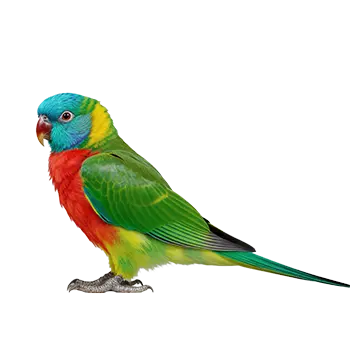

Enrichment for the Splendid Parakeet must be understood through the lens of the species' natural behavior rather than by extrapolating from what works for larger, more interactive parrot species. Neophema parakeets are not power chewers, acrobatic climbers, or puzzle-obsessed manipulators in the way that conures, caiques, or cockatoos are. Their wild lives revolve around ground foraging through grasses and low vegetation, brief but fast horizontal flights between feeding areas, and quiet social interaction with their mate or small flock. Effective enrichment for this species channels these instincts into captive activities rather than imposing play styles borrowed from fundamentally different birds.
The consequences of inadequate enrichment in Splendid Parakeets tend to manifest differently than in larger species. Where an under-stimulated cockatoo might scream or develop severe feather destruction, a bored Splendid Parakeet is more likely to become lethargic, sit passively on a single perch for hours, lose interest in food variety, and develop a dull, listless demeanor that owners may mistake for contentment. This quiet decline in engagement is easy to miss precisely because the bird is not creating obvious behavioral problems, making proactive enrichment planning important rather than reactive responses to distress signals.
The enrichment approach for this species should emphasize foraging, gentle physical activity, and sensory variety over complex manipulation or high-energy play. Foraging enrichment encourages the bird to work for its food in ways that approximate natural seed-seeking behavior. Physical enrichment provides opportunities for flight, gentle climbing, and foot exercise. Sensory enrichment introduces novel but non-threatening visual, auditory, and tactile stimuli that maintain the bird's interest in its environment without causing the startle responses that overly bold or noisy toys can trigger in this cautious species.
Social enrichment also plays a significant role for Splendid Parakeets, which are pair-bonding birds that benefit greatly from the company of a conspecific. A single bird can thrive with sufficient human interaction and environmental enrichment, but owners should recognize that no toy or foraging device fully replaces the companionship of another bird. For single birds, positioning the cage in a room where the owner spends significant time provides passive social contact, and dedicated daily interaction periods supplement environmental enrichment to meet the bird's social needs.