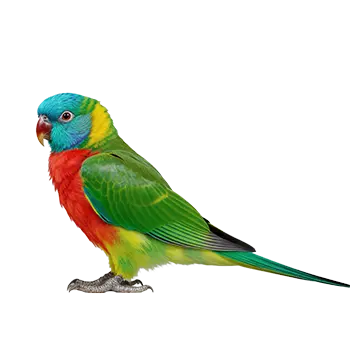

Technology in avian husbandry serves a straightforward purpose: it extends the owner's ability to observe, measure, and respond to changes that affect the bird's health and comfort. For the Splendid Parakeet, a species that conceals illness instinctively and can deteriorate from apparently healthy to critically ill within hours, monitoring technology provides an early-warning layer that unaided human observation cannot match. The investment in appropriate tech products is not about gadgetry for its own sake but about closing the information gaps that make small bird care unpredictable.
The most consequential monitoring gaps for Splendid Parakeet owners involve weight, environmental conditions, and behavioral patterns. A bird that weighs thirty-five grams can lose ten percent of its body weight, a clinically significant decline, with a change of just three and a half grams. This change is invisible to the eye and undetectable by handling alone. Similarly, temperature and humidity fluctuations that fall within human comfort ranges can push a small bird into thermal stress without any obvious environmental cue to the owner. Behavioral changes like reduced activity, altered vocalization patterns, or shifts in feeding rhythm may be subtle enough to escape notice during the limited periods when the owner is actively observing the bird.
Technology addresses these gaps by providing continuous or regular measurement where human observation is intermittent. A digital scale records weight with precision that the hand cannot achieve. An environmental sensor tracks temperature and humidity around the clock, not just when the owner happens to check. A camera allows remote observation during the long hours when the owner is at work or asleep. None of these tools replaces the owner's judgment or the veterinarian's expertise, but they provide the data on which better judgment and more informed veterinary consultations can be built.
The tech landscape for bird care ranges from simple, inexpensive instruments to sophisticated networked systems, and the appropriate level of investment depends on the owner's circumstances and the bird's needs. A first-time owner with a single healthy bird benefits most from a quality digital scale and a basic thermometer-hygrometer. A breeder managing multiple pairs or an owner caring for a bird with chronic health issues may justify the additional investment in camera systems, smart environmental controls, and data-logging devices. The sections that follow cover each technology category in enough depth to support informed purchasing decisions at every level of engagement.