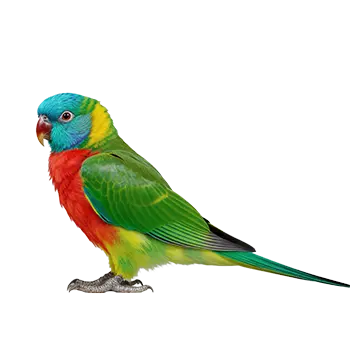

The Splendid Parakeet is an active flyer that spends much of its waking life in horizontal flight, darting back and forth between perches and foraging stations with a speed and agility that belies its small size. This flight-oriented behavior is the single most important factor in enclosure selection, because a cage that prioritizes height over horizontal length fails to accommodate the bird's primary mode of exercise. Unlike climbing species that scale vertical bars and hang from cage tops, Neophema parakeets use the full horizontal span of their enclosure in rapid, level flights that maintain cardiovascular fitness and psychological well-being.
Minimum cage dimensions for a single Splendid Parakeet should be no less than thirty-six inches long by eighteen inches deep by twenty-four inches tall. These dimensions provide enough horizontal runway for short flights, though larger is always preferable. For a pair, the minimum length should increase to forty-eight inches. These are genuinely minimum figures intended to prevent the most acute forms of confinement stress, and owners who can provide a larger flight cage or dedicated aviary will see noticeably better feather condition, muscle tone, and behavioral health in their birds.
Bar spacing is a safety-critical specification for this small species. The maximum safe bar spacing for a Splendid Parakeet is half an inch. Wider spacing creates a risk of head entrapment, where the bird pushes its head between bars and cannot withdraw it, a situation that can result in injury or death if not discovered quickly. Cages marketed for cockatiels often use three-quarter-inch spacing, which is dangerously wide for Neophema species. Always verify bar spacing with a ruler rather than trusting product descriptions, as manufacturing tolerances can vary.
Cage construction material affects both durability and safety. Powder-coated steel and stainless steel are the two acceptable options. Powder coating is the more affordable choice and performs well as long as the coating remains intact, but chipping or flaking powder coat should be addressed immediately, as exposed steel can rust and bare metal edges can cause injury. Stainless steel cages represent a significant upfront investment but are effectively lifetime purchases that resist corrosion, withstand aggressive cleaning agents, and never chip. Zinc-coated or galvanized wire should be avoided entirely, as zinc ingestion from chewing galvanized surfaces causes heavy metal poisoning in birds.