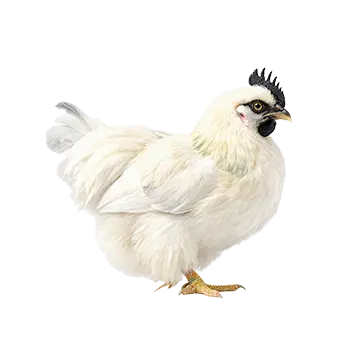

Silkie Chickens have nutritional requirements that overlap substantially with standard poultry but diverge in several important areas driven by their unique physiology. Their profuse, hair-like plumage demands a steady supply of amino acids, particularly methionine and cysteine, which are the primary building blocks of keratin in feathers. A diet deficient in these sulfur-containing amino acids will produce dull, brittle plumage and prolonged molts, which is especially problematic in a breed kept largely for its ornamental appearance. Protein levels during growth and molting periods should be higher than for production breeds, typically in the range of eighteen to twenty percent.
Calcium and phosphorus balance is another area that warrants attention. Silkie hens are prolific brooders and will sit on eggs for extended periods, sometimes entering multiple broody cycles per year. Each cycle places significant demands on calcium reserves even when the hen is not actively laying, because broody behavior suppresses appetite and reduces overall nutrient intake. Hens that cycle between laying and brooding without adequate calcium reserves are at elevated risk for egg binding and weakened bones. A laying ration with at least three and a half percent calcium, supplemented with free-choice oyster shell, is the standard approach.
Silkies have a slightly lower metabolic rate than larger, more active breeds, which means caloric needs per unit of body weight are moderate. Overfeeding high-energy foods, particularly scratch grains and corn, can lead to obesity, which compounds the breed's existing challenges with mobility and predator evasion. Because Silkies cannot fly and are less agile than hard-feathered breeds, excess weight places disproportionate strain on their legs and feet. Maintaining a lean body condition through portion control and a balanced ration is more important for this breed than for many others.
Vitamins A, D, and E play critical roles in immune function, reproductive health, and skin condition. Silkies' characteristic dark skin, known as fibromelanosis, is a genetic trait that does not alter vitamin requirements but does make visual assessment of skin health more challenging. Adequate vitamin A supports the mucous membranes that protect against respiratory infections, a common concern in heavily feathered breeds whose plumage can trap moisture near the face and nostrils. Vitamin D is essential for calcium metabolism and is particularly important for flocks without consistent access to direct sunlight.