
Housing Requirements

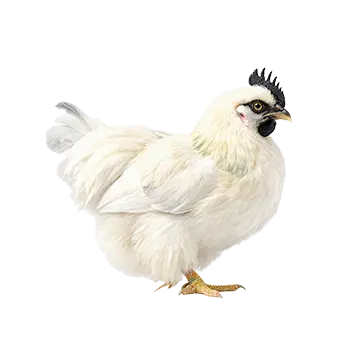
Silkie Chickens demand housing that accounts for several breed-specific vulnerabilities that do not apply to most standard poultry. Their feathering is structurally different from that of hard-feathered breeds: Silkie feathers lack the barbicels that hook barbs together in conventional plumage, producing a soft, fur-like covering that provides far less insulation and virtually no water repellency. This means Silkies are significantly more susceptible to cold stress, wind chill, and rain exposure than breeds with standard feathering, and their housing must compensate accordingly with dry, draft-free shelter that still allows adequate air exchange.

Silkies cannot fly. Their wing feathers share the same open structure as their body plumage, rendering them incapable of generating lift. This flightlessness has direct implications for coop design: roosts must be low to the ground or replaced entirely with ground-level sleeping platforms, and access ramps must be gently sloped rather than steep. A Silkie that falls from a high roost risks leg injuries, bumblefoot from hard landings, or keel bone bruising. Many experienced keepers eliminate elevated roosts altogether for Silkie-only flocks, providing wide, padded sleeping shelves no more than twelve to eighteen inches above the floor.

Space allocation for Silkies can be slightly less generous than for standard breeds simply due to their smaller body size, but overcrowding should still be avoided. A minimum of three square feet of coop floor space per bird and eight to ten square feet of outdoor run space per bird represents a reasonable baseline. Silkies are generally non-aggressive and tolerate close quarters better than many breeds, but inadequate space still produces stress, feather picking, and increased parasite loads. Providing slightly more than the minimum is always advisable, particularly in climates where the birds spend extended periods confined during inclement weather.

The coop floor should be solid rather than wire. Silkies' feathered feet are susceptible to bumblefoot, an infection of the foot pad caused by Staphylococcus bacteria that enter through cuts or abrasions. Wire flooring creates pressure points on the foot pad and promotes the types of injuries that lead to bumblefoot. A solid wood or composite floor with deep, soft bedding protects the feet, provides insulation from ground cold, and absorbs moisture from droppings.

What to Look For

When evaluating coop options for Silkies, construction quality and material durability should be the primary considerations. Prefabricated coops marketed for backyard chickens vary enormously in quality, and many of the less expensive models use thin plywood, lightweight stapled hardware cloth, and minimal weatherproofing that will not withstand more than a season or two of use. Look for coops built with solid lumber framing, exterior-grade plywood or tongue-and-groove siding, and galvanized or stainless steel hardware. The roof should be waterproof with adequate overhang to direct rain away from the walls and ventilation openings.

Hardware cloth is non-negotiable for any opening that provides ventilation or predator protection. Standard chicken wire is not predator-proof. Its thin gauge can be torn apart by raccoons, dogs, and even determined rats. Half-inch galvanized hardware cloth resists all common predators and prevents the entry of small animals like weasels and snakes that can kill Silkies or their chicks. Every vent, window, and run panel should be covered with hardware cloth secured with screws and washers rather than staples, which can be pried loose.

Ventilation design is one of the most commonly misunderstood aspects of poultry housing. A coop needs continuous air exchange to remove moisture, ammonia, and carbon dioxide, but the airflow should pass above the birds rather than blowing directly on them. Ventilation openings positioned high on the walls, ideally near the roofline on opposite sides of the coop, create a passive chimney effect that draws stale, moist air upward and out while pulling fresh air in through lower intake vents. For Silkies, which are particularly sensitive to drafts and damp conditions, this high-ventilation design is essential. Coops that rely on a single door or window for ventilation are inadequate in all but the mildest climates.

Ease of cleaning directly affects flock health and keeper compliance. Coops with removable droppings trays, access doors large enough to reach every corner, and smooth interior surfaces that resist moisture absorption are far easier to maintain. Painted or sealed interior wood surfaces prevent droppings from soaking into the grain, reducing bacterial buildup and making scraping and sanitizing more effective. A coop that is difficult to clean will inevitably be cleaned less often, creating conditions that promote respiratory disease and parasites.

Coop Styles and Configurations

Walk-in coops offer the greatest convenience for keepers and the most flexible interior layout. A structure tall enough for an adult to enter upright simplifies daily tasks like refilling feeders, collecting eggs, inspecting birds, and performing thorough cleanings. Walk-in designs range from simple shed-style buildings to more elaborate designs with attached runs, storage areas, and covered porches. For Silkie keepers who plan to manage broody hens and raise chicks, the walk-in format provides enough interior space to set up temporary partitions, brooding areas, and isolation pens without requiring a separate building.

Raised coops with enclosed runs beneath them are popular for small flocks and offer several practical advantages. The elevated floor provides additional outdoor shelter underneath the coop during rain or intense sun, gives the birds a shaded area to dust-bathe and forage, and improves air circulation beneath the floor, which helps keep bedding dry. The primary consideration for Silkies with raised coops is ramp design. The access ramp must have a gentle slope, typically no steeper than a thirty-degree angle, with horizontal cleats spaced closely enough that the birds can walk up without needing to jump or grip aggressively. Silkies' feathered feet make smooth or widely spaced ramp cleats difficult to navigate, so cleats should be no more than three to four inches apart.

Tractor coops, also called mobile coops, are designed to be moved periodically across a yard or pasture, giving the birds access to fresh ground while containing them in a protected enclosure. These lightweight structures work well for small Silkie flocks in areas where permanent construction is impractical or prohibited. The main limitations are reduced insulation and weatherproofing compared to permanent structures, and the physical effort required to move the tractor regularly. Tractors intended for Silkies should include a fully enclosed sleeping area that can be closed and insulated during cold weather, as the typical open-sided tractor design leaves birds too exposed to wind and precipitation.

Convertible greenhouse-style coops have gained popularity among Silkie enthusiasts in cooler climates. These structures use translucent polycarbonate or corrugated plastic panels on the south-facing wall to admit solar warmth while maintaining wind protection. The greenhouse effect can raise interior temperatures significantly on sunny winter days, providing natural warmth that reduces the need for supplemental heating. Adjustable ventilation panels prevent overheating during warmer months. The increased light transmission also supports laying activity during short-day seasons, as chickens require approximately fourteen hours of light exposure to maintain consistent egg production.

Bedding and Substrate

Bedding choice has a direct impact on foot health, respiratory health, and ammonia control in the coop. Pine shavings are the most widely used poultry bedding and perform well for Silkies when used at an appropriate depth. A layer of three to four inches provides adequate cushioning for the feet, absorbs droppings efficiently, and can be managed with either a regular full replacement or a deep-litter composting method. Kiln-dried pine shavings are preferable to air-dried, as the kiln process reduces moisture content and eliminates many of the aromatic compounds that can irritate respiratory tissues.

Cedar shavings should be avoided entirely. The phenols in cedar, primarily plicatic acid and thujone, are known respiratory irritants in poultry and can cause chronic inflammation of the airways with prolonged exposure. While cedar shavings are sometimes marketed for their insect-repelling properties, this benefit does not outweigh the respiratory risk, particularly for Silkies, whose dense facial feathering already restricts airflow around the nostrils and can trap irritant particles close to the mucous membranes.

Chopped straw is an economical alternative that provides good insulation and a natural substrate for scratching and foraging behavior. Its primary disadvantage is a tendency to mat down and become damp more quickly than wood shavings, requiring more frequent turning or replacement. Barley straw is generally preferable to wheat straw because it resists matting better. Some keepers layer straw over a base of shavings to combine the insulating and enrichment properties of straw with the superior moisture absorption of wood shavings.

Sand has become a popular coop substrate in warmer climates because it drains quickly, dries rapidly, and can be cleaned by sifting with a litter scoop, similar to a cat litter box. Coarse construction sand or river sand works best, as fine play sand compacts and does not drain well. Sand provides minimal insulation, making it a poor choice for cold climates unless the coop floor is otherwise insulated. For Silkies specifically, sand can work well in dry environments but presents a risk in damp conditions, as wet sand against feathered feet creates a prolonged moisture exposure that promotes skin infection and fungal growth between the toes.

The deep-litter method involves starting with a thick base of bedding and periodically adding fresh material on top rather than removing the old. Microbial decomposition in the lower layers generates mild heat, which can contribute to coop warmth in winter, and the composting process helps control odor and pathogen levels. This method requires regular turning with a rake or pitchfork to incorporate oxygen and prevent anaerobic conditions that produce ammonia. When managed correctly, deep litter is an effective and labor-efficient approach. When managed poorly, it becomes a breeding ground for mold, ammonia, and parasites. Monitoring moisture level and smell provides reliable indicators of whether the system is functioning properly.

Run Design and Outdoor Space

An enclosed outdoor run gives Silkies access to fresh air, sunlight, and natural foraging opportunities while protecting them from the predators and environmental hazards that their docile temperament and limited mobility make them uniquely vulnerable to. The run should be fully enclosed on all sides and overhead. Silkies' inability to fly means they cannot escape aerial predators like hawks and owls, and their calm demeanor means they are less likely to sound alarm calls or flee quickly when a predator appears. A run covered with hardware cloth or welded wire on the top and sides, with an apron or buried barrier along the perimeter to prevent digging predators, provides comprehensive protection.

Ground cover within the run affects both enrichment value and maintenance requirements. Bare soil compacts over time, becomes muddy after rain, and can develop a parasite-laden crust in heavily used areas. Covering the run floor with a layer of coarse wood chips, mulch, or gravel provides drainage, reduces mud, and gives the birds material to scratch through. Wood chips are particularly popular because they support insect activity that provides natural foraging opportunities, and they decompose into a manageable mulch that can be raked out and replaced seasonally.

Shaded areas within the run are essential, especially in warm climates. Silkies overheat more easily than hard-feathered breeds because their plumage traps heat while providing poor evaporative cooling. Shade structures can be as simple as a tarp or shade cloth stretched over a section of the run, or as elaborate as a planted arbor with climbing vines. The shaded area should be large enough to accommodate the entire flock simultaneously, as dominant birds will claim the prime shaded spots and subordinate birds may be left in direct sun if the shaded area is too small.

Dust-bathing areas deserve deliberate inclusion in run design. Dust bathing is a critical behavior for feather maintenance and external parasite control. Silkies will create their own dust-bathing depressions in bare soil, but providing a dedicated area filled with a mixture of fine sand, diatomaceous earth, and wood ash gives them a more effective substrate and allows the keeper to incorporate natural parasite-control agents. The dust bath should be in a covered or sheltered location so it remains dry, as wet substrate defeats the purpose and can turn into a muddy mess that coats the Silkies' profuse foot feathering.

Predator Protection

Predator protection is arguably the single most critical aspect of Silkie housing. This breed's combination of small size, flightlessness, limited vision due to crested plumage, and docile temperament makes them exceptionally vulnerable to a wide range of predators. Raccoons, foxes, coyotes, dogs, hawks, owls, weasels, mink, rats, and snakes all pose significant threats, and in many suburban and rural settings, multiple predator species are active simultaneously. A housing setup that fails to address predator pressure comprehensively is likely to result in losses regardless of how well other aspects of care are managed.

Hardware cloth of half-inch gauge is the standard for all external openings and run enclosures. This mesh size prevents raccoons from reaching through to grab birds, excludes weasels and snakes, and withstands the physical force that larger predators can exert. All hardware cloth should be secured with screws and fender washers rather than staples, which can be pried loose by raccoons, which possess remarkable manual dexterity. Overlapping seams at panel joints should be secured with hog rings or wire ties to eliminate gaps.

The perimeter of the run requires an anti-dig barrier. Options include a hardware cloth apron extending eighteen to twenty-four inches outward from the base of the run, buried hardware cloth extending the same distance straight down, or a combination of both. Concrete footers provide the most permanent solution but are also the most labor-intensive and expensive to install. Many keepers opt for the apron method, laying hardware cloth flat on the ground around the run perimeter and covering it with soil, sod, or gravel. Predators that attempt to dig at the fence line encounter the buried mesh before they can get underneath.

Coop doors should be secured with predator-resistant latches. Simple hook-and-eye latches and slide bolts without secondary locks are easily defeated by raccoons, which can manipulate these basic mechanisms. Two-step latches that require simultaneous lifting and sliding, carabiner clips, or padlocks provide reliable security. Automatic coop doors that close at dusk and open at dawn add convenience and eliminate the risk of forgetting to close the coop on a given evening, which is one of the most common causes of predator losses in backyard flocks.

Nocturnal security is especially important because the most dangerous predators, including raccoons, owls, foxes, and weasels, are primarily active after dark. The coop itself must be completely sealed at night, with no gaps larger than half an inch. Windows and ventilation openings should be covered with hardware cloth at all times, and the pop door into the run should be closed and latched every evening. Motion-activated lights or predator deterrent devices positioned near the coop can provide an additional layer of nighttime protection, though they should be considered supplementary rather than primary defenses.

Seasonal Adaptations

Winter housing management for Silkies requires more attention than for most chicken breeds. Their open-structured feathers provide poor insulation, and their dark skin and exposed combs, while less prone to frostbite than large single combs, can still suffer cold damage in extreme temperatures. The primary winter strategy is moisture control rather than heating. A dry coop with good ventilation retains enough body heat from the birds to maintain a survivable interior temperature in most climates, while a damp coop with poor ventilation creates dangerously cold conditions even at moderate outdoor temperatures. Frostbite is almost always a product of moisture combined with cold, not cold alone.

Supplemental heating is a topic of considerable debate among poultry keepers. Heat lamps are the most commonly used option but carry a significant fire risk, as a fallen lamp in contact with dry bedding can ignite within seconds. Radiant panel heaters designed for poultry are a far safer alternative, producing gentle warmth without an exposed heating element or high surface temperatures. If supplemental heat is used, it should be minimal and consistent rather than dramatic, as large temperature swings between heated and unheated spaces stress the birds more than steady cold. A modest increase of ten to fifteen degrees above ambient is sufficient to prevent cold stress in most situations.

Summer housing adaptations focus on ventilation and cooling. Silkies overheat before most other breeds, and heat stress can be fatal in severe cases. Opening all available ventilation points, adding fans for air circulation, and providing frozen water bottles or shallow wading pans in the run help mitigate heat buildup. Wading pans should be shallow enough that Silkies can stand in them without getting their body feathers soaked, as saturated Silkie plumage becomes extremely heavy and takes hours to dry, creating a different set of health risks. Misting systems that dampen the air without directly soaking the birds are a more controlled approach to evaporative cooling.

Mud and wet ground are year-round enemies of Silkie foot health. Their heavily feathered feet act as sponges in wet conditions, retaining moisture against the skin for prolonged periods and promoting bacterial and fungal infections. Gravel paths between the coop and run, covered areas over high-traffic zones, and prompt drainage of standing water all help keep feet dry. In climates with extended rainy seasons, a partially or fully covered run is practically a necessity for Silkie flocks, as limiting outdoor access during every rain event is neither practical nor enriching for the birds.

Always consult a qualified professional before making any health-related decisions. This content is provided for informational reference only and should not replace professional guidance specific to your animal.