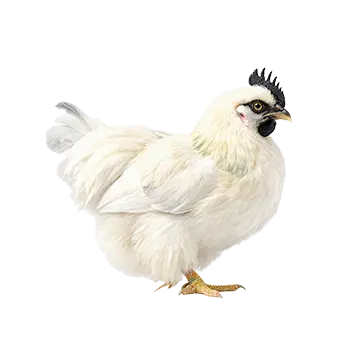

Why Technology Matters for Silkies

Silkie Chickens occupy a unique position among domestic poultry breeds that makes them particularly well-suited to benefit from monitoring technology and automation. Their inability to fly, poor weather resistance due to non-waterproof plumage, vulnerability to temperature extremes, and limited predator awareness create a set of care requirements that are more demanding and more time-sensitive than those of hardier, more self-sufficient breeds. Technology does not replace attentive husbandry, but it extends the keeper's ability to detect problems early, automate routine protective tasks, and maintain environmental conditions within the narrow range that Silkies require to thrive.

The economic case for coop technology is strongest for Silkie keepers who are away from home during critical hours of the day, particularly dawn and dusk when predator activity peaks and coop doors need to open and close. A single predator incident can eliminate an entire small flock in minutes, and the replacement cost of quality breeding Silkies, which often ranges from thirty to over one hundred dollars per bird for show-quality stock, quickly exceeds the cost of an automated door system. Similarly, a temperature excursion that goes undetected for several hours can cause heat stroke or cold stress casualties that a timely alert would have prevented.

Reliability is the most important attribute of any technology deployed in a poultry setting. Coop environments are harsh on electronics: they are dusty, sometimes damp, subject to temperature swings, and occasionally pecked at by curious birds. Consumer-grade smart home devices designed for climate-controlled indoor use may not perform reliably in these conditions. Products specifically designed for agricultural or outdoor use, or consumer devices with demonstrated durability in harsh environments, should be prioritized over the latest feature-rich smart home gadget that lacks environmental hardening.

Connectivity infrastructure should be evaluated before purchasing any smart device. Many coop technology products require a stable Wi-Fi connection to deliver remote monitoring and alerts. Coops located far from the home router may fall outside reliable Wi-Fi range, requiring a range extender, outdoor access point, or mesh network node to maintain connectivity. Cellular-connected devices that operate independently of Wi-Fi are available for remote or off-grid setups but typically carry a monthly data subscription cost. Assessing connectivity options before purchasing devices avoids the frustration of owning a smart system that cannot reach its network.

What to Look For

Environmental durability should be the first evaluation criterion for any tech product destined for the coop. Devices rated IP65 or higher for dust and water resistance will tolerate the conditions inside a typical coop without premature failure. Circuit boards and sensors exposed to ammonia vapor from droppings corrode faster than those in sealed enclosures, so devices with fully sealed electronics and external-only sensor probes last significantly longer than those with exposed internal components. Operating temperature ranges listed in product specifications should encompass the full range of temperatures the coop experiences throughout the year, including both winter lows and summer highs with the added heat from direct sun on the coop structure.

Power source flexibility is a practical concern in coop installations where running electrical wiring may be inconvenient or impossible. Battery-powered devices offer placement flexibility but require regular battery changes that are easily forgotten. Solar-powered devices with rechargeable battery backup provide continuous operation in outdoor environments with adequate sun exposure, though performance degrades during extended cloudy periods and short winter days. Hardwired devices connected to the electrical grid offer the most reliable power but require either an existing electrical run to the coop or the installation of new wiring, which should meet local electrical codes for outdoor and agricultural structures.

Alert and notification systems determine how quickly the keeper learns about problems. Push notifications to a smartphone are the most common alert method and work well for keepers who carry their phones consistently. Some systems also support email alerts, SMS messages, or audible alarms that can be heard from the house. Configurable alert thresholds are essential, as a system that sends a notification every time the temperature fluctuates by a single degree will generate alert fatigue and train the keeper to ignore notifications, including the critical ones. The ability to set meaningful thresholds based on actual risk points for Silkies, such as temperatures above eighty-five degrees Fahrenheit or below twenty degrees, ensures alerts are actionable.

Integration with existing smart home ecosystems can add value for keepers who already use platforms like Home Assistant, Apple HomeKit, Google Home, or Amazon Alexa. Devices that integrate with these platforms can be incorporated into automated routines, such as triggering a fan when the coop temperature exceeds a set point or turning on a light at a specific hour. However, ecosystem compatibility should be a secondary consideration behind reliability and environmental durability. A device that integrates beautifully with a smart home platform but fails after six months in the coop provides no long-term value.

Cameras and Visual Monitoring

A coop camera provides remote visual access to the flock, enabling the keeper to check on the birds, observe behavior, and review recorded footage after incidents. For Silkie keepers, cameras serve several breed-specific purposes beyond general security. Monitoring broody hens to ensure they are leaving the nest to eat and drink, observing the flock's response to new enrichment or environmental changes, and reviewing nighttime footage to identify predator activity around the coop are all tasks that cameras handle more effectively than periodic in-person checks.

Camera selection for coop use should prioritize night vision capability, wide-angle lenses, and weather resistance. Infrared night vision allows monitoring during the dark hours when predator threats are highest and when broody hens may need to be observed without disturbing them with visible light. A wide-angle lens of one hundred degrees or more captures the full interior of a small to medium coop from a single mounting point, reducing the number of cameras needed. Outdoor-rated cameras with sealed housings resist the dust and moisture that accumulate in coop environments.

Pan-tilt-zoom cameras offer greater flexibility than fixed cameras, allowing the keeper to remotely adjust the viewing angle to focus on specific areas of interest, such as a nesting box, a feeder, or a particular bird that may be unwell. These cameras are more expensive than fixed models and introduce mechanical components that can fail in dusty conditions, but the ability to scan the entire coop and run from a single device can justify the added cost for keepers with larger or more complex setups.

Two-way audio capability, available on many modern security cameras, adds an interactive dimension to remote monitoring. Silkies are vocal birds that respond to familiar voices, and some keepers use the audio feature to call the birds or provide reassurance during stressful events like thunderstorms. More practically, the audio feed allows the keeper to hear abnormal sounds such as distress calls, predator vocalizations, or the silence that follows a flock disturbance, which may indicate a problem even when the visual feed appears normal.

Local storage versus cloud storage is a decision with both cost and privacy implications. Cameras that record to an onboard microSD card provide footage access without ongoing subscription fees, but the storage is limited and the card must be physically retrieved to review older footage. Cloud-based storage offers remote access to recorded video and typically provides longer retention periods, but most services require a monthly subscription. Some hybrid systems record continuously to local storage while uploading motion-triggered clips to the cloud, combining the benefits of both approaches.

Automatic Coop Doors

Automatic coop doors are among the highest-impact technology investments a Silkie keeper can make. These devices open and close the coop's pop door on a programmed schedule or in response to ambient light levels, ensuring the birds are secured inside the coop at dusk and released in the morning without requiring the keeper to be physically present at the critical transition times. For Silkies, which are among the most predator-vulnerable of all chicken breeds, the reliability of door closure at dusk is a genuine life-safety issue.

Light-sensor-activated doors adjust their timing automatically as day length changes through the seasons, opening at dawn and closing at dusk without manual reprogramming. This set-and-forget operation is convenient and tracks natural light cycles accurately. However, light-sensor doors can be triggered prematurely by heavy cloud cover, solar eclipses, or shadows from nearby structures, and they may close too early during overcast evenings when the birds have not yet returned to the coop. Timer-based doors operate on a fixed schedule set by the keeper and are not affected by ambient light variations, but they require periodic adjustment as sunrise and sunset times shift. Many modern automatic doors offer both light-sensor and timer modes, allowing the keeper to choose the most appropriate control method or combine both for redundancy.

Door safety features are critical when Silkies are the end users. A door that closes on a bird standing in the opening can cause serious injury or death. Auto-reverse or obstacle-detection systems sense resistance during closing and immediately reverse the door's direction, preventing entrapment. This feature should be considered non-negotiable for any automatic door used with Silkies, as their slower reaction time and obstructed vision make them more likely than other breeds to linger in the doorway as the door closes.

Door material and construction should match the predator-proofing standards of the rest of the coop. An automatic door made of thin aluminum or plastic may be convenient to operate but can be bent or breached by a determined raccoon or other mid-sized predator. Heavy-gauge aluminum, steel, or hardwood doors provide the mechanical resistance needed to withstand predator pressure. The door mechanism should be mounted securely to the coop wall with hardware that prevents the entire assembly from being pried away from the structure.

Remote monitoring and control capability is available on premium automatic door models and adds a layer of confidence for keepers who are frequently away from home. Smartphone apps that display the current door status, allow remote opening and closing, and send alerts if the door fails to operate on schedule provide actionable information and control from any location with cellular or internet connectivity. Some systems also log door events, creating a record that can be reviewed to verify consistent operation and identify patterns, such as a door that occasionally fails to close fully due to debris in the track.

Climate and Environmental Sensors

Temperature monitoring is the most valuable sensor deployment for Silkie flocks. The breed's poor thermoregulation capability, a consequence of feathering that insulates less effectively than conventional plumage and dissipates body heat inefficiently, makes Silkies vulnerable at both temperature extremes. A digital thermometer with remote readout allows the keeper to monitor coop temperature without opening the door and disturbing the flock. Wireless sensor systems that transmit data to a base station or smartphone app provide continuous monitoring with historical data logging that reveals temperature trends over hours, days, and seasons.

Humidity monitoring is equally important but less commonly implemented. High humidity combined with moderate temperatures creates conditions that promote respiratory disease, which Silkies are predisposed to due to their restricted nasal airflow and crest feathering that traps moisture near the face. A relative humidity consistently above seventy percent inside the coop indicates inadequate ventilation and warrants corrective action. Combined temperature and humidity sensors, often marketed as hygrometers or thermo-hygrometers, provide both data points from a single device and are available in both standalone and smart-connected versions.

Ammonia detection addresses a serious but invisible threat to respiratory health. Ammonia is produced by the bacterial decomposition of nitrogen compounds in poultry droppings and accumulates in poorly ventilated coops, especially during winter when ventilation openings may be reduced to conserve heat. Concentrations above twenty-five parts per million cause irritation to the eyes and respiratory tract, and sustained exposure at lower levels contributes to chronic respiratory disease. Electronic ammonia sensors designed for agricultural use can be set to alarm at a threshold well below the danger level, providing early warning that ventilation is insufficient or that bedding management needs attention.

Integrated environmental monitoring stations that combine temperature, humidity, and air-quality sensing in a single networked device have become available at price points accessible to backyard poultry keepers. These multi-sensor units typically connect to a smartphone app that displays current conditions, tracks historical data in graph form, and sends configurable alerts when any parameter moves outside the set range. For Silkie keepers managing flocks in challenging climates, the ability to receive a single alert that the coop is too hot, too humid, or too ammonia-rich, and to review the environmental history leading up to the event, transforms reactive problem-solving into proactive environmental management.

Lighting Systems

Supplemental lighting in the coop serves two primary purposes for Silkie flocks: extending perceived day length to maintain egg production during short-day seasons, and providing early-morning or late-evening illumination that helps the birds navigate the coop safely. Chickens require approximately fourteen hours of light exposure per day to sustain consistent laying, and natural day length falls well below this threshold during autumn and winter in most temperate climates. A timer-controlled light that extends the morning by turning on before dawn brings the total light period to fourteen hours without disrupting the natural dusk-to-dark cycle that cues the birds to roost.

LED lighting is the preferred technology for coop installations due to its low heat output, energy efficiency, long lifespan, and the ability to select specific color temperatures. Warm-white LEDs in the range of twenty-seven hundred to three thousand Kelvin mimic the spectral quality of natural sunlight and are well-accepted by poultry. Cool-white or blue-rich LEDs can disrupt rest patterns and cause stress when used during periods that should be perceived as transitional twilight. Red LED lighting is sometimes used specifically to reduce feather-picking behavior, as the red light makes blood less visible on plumage and thereby reduces the visual stimulus that triggers pecking aggression.

Dimmable lighting systems add a refinement that benefits Silkies' overall welfare. Rather than switching abruptly from full darkness to full brightness, a dimmer that gradually increases light intensity over a fifteen- to thirty-minute period simulates a natural dawn and allows the birds to wake and orient themselves gradually. This is particularly valuable for Silkies, whose crested plumage can obstruct their vision during the initial moments of waking, and a sudden blast of light in a disoriented bird can cause startled fluttering and collisions with coop fixtures. Smart bulbs and programmable dimmers make dawn and dusk simulation straightforward to configure.

Solar-powered coop lighting systems offer an off-grid alternative for coops without electrical service. A small solar panel mounted on the coop roof charges a battery during the day, and the stored energy powers an interior LED fixture during the early morning hours. These systems are typically sufficient for the modest lighting levels needed to stimulate laying, which require only around one foot-candle of intensity at the birds' eye level. The primary limitation is battery capacity during extended cloudy periods, which can reduce available light below the effective threshold. A system with sufficient battery reserve to sustain three to four consecutive overcast days provides adequate reliability in most climates.

Automation and Integration

Combining individual technology components into an integrated system multiplies their value by enabling automated responses to environmental conditions. A temperature sensor connected to a smart plug can activate a coop fan when the interior temperature exceeds a set threshold, providing automatic ventilation without keeper intervention. Similarly, a temperature trigger can activate a radiant heater panel during extreme cold snaps or turn on a heated waterer base before the water reaches freezing temperature. These conditional automations, often called routines or scenes in smart home platforms, transform passive monitoring into active environmental management.

Home automation platforms like Home Assistant provide a flexible framework for building custom coop management systems. These open-source or commercially supported platforms aggregate data from multiple sensors, control connected devices through programmed rules, and present all information in a unified dashboard accessible from any web browser or smartphone. A typical Silkie coop dashboard might display current temperature and humidity, door status, camera feeds, and lighting state, with historical charts showing trends over the past twenty-four hours. Building a custom system requires more technical knowledge than purchasing a turnkey product, but the flexibility and extensibility are significantly greater.

Automated alert escalation ensures that critical warnings reach the keeper through multiple channels. A well-designed alert system sends a push notification for routine threshold breaches, escalates to a text message if the condition persists without acknowledgment, and potentially triggers a phone call or activates an audible alarm for emergency conditions like extreme temperatures or detected predator activity. This layered approach reduces the risk that a single missed notification leads to a preventable loss.

Data logging and trend analysis, while not immediately actionable, provide valuable long-term management insights. Reviewing seasonal temperature patterns helps the keeper anticipate when heating or cooling interventions will be needed and plan bedding changes and ventilation adjustments proactively. Tracking egg production alongside environmental data can reveal correlations between conditions and laying performance, informing future management decisions. Feed consumption logged against body weight and environmental conditions helps optimize feeding programs. The cumulative value of recorded data increases over time as patterns emerge that are invisible in day-to-day observation.

Power backup is a frequently overlooked component of any automated coop system. A power outage that disables an automatic door, a heated waterer, or a ventilation fan during a storm or cold snap can create a dangerous situation precisely when the equipment is needed most. An uninterruptible power supply rated for the total wattage of all connected coop devices provides short-term backup that bridges brief outages. For longer outages, a small generator or a solar-and-battery system capable of powering essential coop functions independently of the grid ensures continuity of care regardless of utility status.

Always consult a qualified professional before making any health-related decisions. This content is provided for informational reference only and should not replace professional guidance specific to your animal.