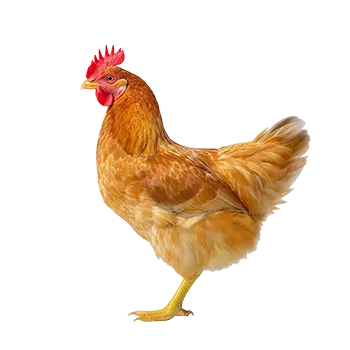

The Serama occupies a unique niche in poultry keeping that directly shapes its housing needs. Originating in tropical Malaysia, this breed evolved in a warm, humid climate and lacks the cold tolerance of most other chicken breeds. Seramas have virtually no body fat reserves and carry their feathers tight against a compact frame, which means they lose heat rapidly when ambient temperatures drop below about forty degrees Fahrenheit. This cold sensitivity is the single most important factor in housing decisions, and it distinguishes Serama housing from the straightforward coop-and-run setups that work for hardier breeds.
Many Serama owners keep their birds partially or entirely indoors, treating them more like companion parrots than farmyard poultry. This approach is viable because of the breed's small size, relatively low mess output, and genuinely sociable temperament. An indoor Serama requires a secure enclosure that provides adequate space for movement, perching, and nesting while containing droppings and dander. The housing should allow the bird to express natural behaviors, including scratching, dust bathing, and wing stretching, within the constraints of an indoor environment.
For owners who keep Seramas outdoors, the coop must address predator protection, weather resistance, and thermal management far more aggressively than a standard chicken coop. Seramas are small enough to be targeted by predators that would ignore larger breeds, including hawks, snakes, rats, and even large cats. Hardware cloth with a mesh size no larger than half an inch is essential for excluding these smaller predators. The coop itself must be draft-free and insulated or heated during cold months, with reliable ventilation to manage moisture without creating air currents that chill the birds.
Regardless of whether the setup is indoor or outdoor, space planning should allow a minimum of two square feet of floor space per bird inside the enclosure, with additional space in an attached run or supervised free-range area. While Seramas are small enough to fit in remarkably compact spaces, crowding causes stress, feather picking, and increased disease transmission. A well-designed Serama enclosure feels spacious relative to the bird's size and provides distinct zones for eating, perching, nesting, and activity.