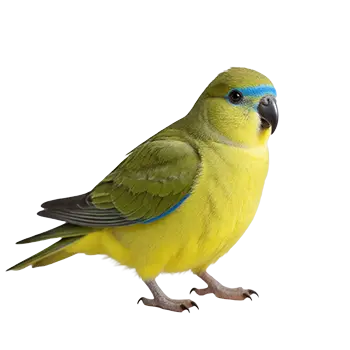

The Rock Parrot's shy temperament and sensitivity to environmental disturbances make it a species that benefits substantially from unobtrusive monitoring technology. Traditional hands-on health assessment requires catching and handling the bird, which causes significant stress in a species already predisposed to anxiety. Technology that allows the keeper to gather health and behavioral data without physical contact or cage intrusion reduces this stress while simultaneously improving the quality of information available for care decisions.
Environmental stability is critically important for Rock Parrots. Fluctuations in temperature, humidity, and air quality that a hardier parrot species might tolerate without issue can trigger respiratory infections, feather problems, and immune suppression in this more delicate bird. Monitoring devices that track environmental conditions continuously and alert the keeper to deviations from optimal ranges provide a safety net that manual checks performed once or twice daily simply cannot replicate. A temperature spike caused by a malfunctioning heater or a humidity drop triggered by a change in weather can be detected and corrected before the bird shows clinical signs of distress.
Technology also supports the keeper's understanding of normal behavior patterns, which is the foundation for early illness detection. Small parrots are adept at masking symptoms, and by the time a Rock Parrot appears visibly unwell, the underlying condition may have been developing for days or weeks. Continuous monitoring through cameras, activity sensors, and weight tracking establishes a detailed behavioral baseline against which subtle changes become detectable. A bird that is slightly less active than its established norm, or whose weight has drifted downward by two or three grams over a week, may be exhibiting the earliest signs of a developing health problem.
The technology landscape for companion bird care has expanded rapidly, moving from simple thermometers and mechanical timers to interconnected smart devices that feed data to mobile applications. For Rock Parrot keepers, the goal is not to adopt every available gadget but to identify the specific monitoring gaps in their care routine and fill them with reliable, species-appropriate tools. A targeted investment in a few well-chosen devices delivers more value than an unfocused accumulation of tech products.