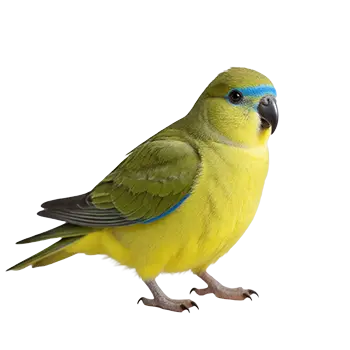

The Rock Parrot's housing needs are shaped by two defining characteristics of the species: its ground-dwelling foraging habits and its shy, easily stressed temperament. In the wild, Neophema petrophila spends the vast majority of its time on or near the ground, feeding among low coastal scrub, dune grasses, and rocky shoreline vegetation. Unlike many parrots that are primarily arboreal, Rock Parrots use elevated perches mainly for roosting and surveying their surroundings, returning to ground level for most active behavior. An enclosure that prioritizes horizontal floor space over vertical height accommodates this natural movement pattern far more effectively than a tall, narrow cage.
The shy disposition of the Rock Parrot makes enclosure placement and design especially important. Sudden movements, loud noises, and frequent disturbances near the enclosure cause chronic stress in this species, which can suppress immune function, reduce breeding success, and lead to feather-damaging behavior. Housing should be positioned in a calm area of the home or aviary complex, ideally against a solid wall on at least one side to provide a sense of security. Placing the enclosure at waist height or slightly above gives the bird a comfortable vantage point without the vulnerability associated with floor-level placement.
Ventilation and air quality are critical considerations for any indoor housing arrangement. Rock Parrots are susceptible to respiratory infections, and stagnant air, cooking fumes, aerosol sprays, and scented candles all pose genuine health risks. The enclosure room should have adequate natural or mechanical ventilation, and the cage itself should never be placed in a kitchen or adjacent to one. Rooms with operable windows that allow controlled fresh air circulation without creating drafts directly on the cage represent the ideal indoor environment for this species.
Temperature tolerance in Rock Parrots is reasonably broad, reflecting their origin in the temperate coastal regions of southern Australia where temperatures range from near freezing on winter nights to over thirty-five degrees Celsius in summer. However, captive birds that have been raised indoors lack the gradual acclimatization that wild birds experience with seasonal changes. Indoor housing should be maintained between eighteen and twenty-eight degrees Celsius, with protection from direct afternoon sun that could overheat a cage positioned near a window.