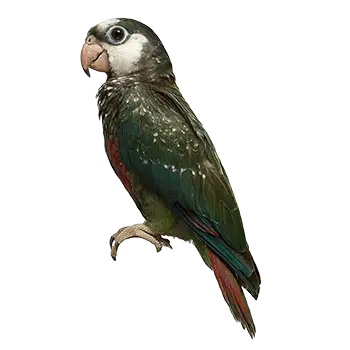

White-capped Pionus parrots are active, mid-sized birds that need substantially more space than their compact frame might suggest. The minimum recommended cage size for a single White-capped Pionus is 24 inches wide by 24 inches deep by 30 inches tall, but experienced keepers overwhelmingly recommend going larger whenever space and budget allow. A cage in the range of 30 by 24 by 36 inches or greater gives the bird room to stretch, climb, and move between perches without its tail feathers brushing against the bars — a common problem in undersized enclosures.
Bar spacing is a critical safety consideration that cannot be compromised. For White-capped Pionus, bar spacing should fall between five-eighths of an inch and three-quarters of an inch. Spacing wider than three-quarters of an inch creates a risk of the bird wedging its head between bars, which can result in injury or strangulation. Horizontal bars on at least two sides of the cage are strongly preferred, as they give Pionus parrots the grip points they need for their natural climbing behavior.
Beyond the cage itself, out-of-cage time is an essential component of housing. No cage, regardless of size, can substitute for supervised time in a bird-safe room where the Pionus can fly, explore, and interact with its human family. Most avian behaviorists recommend a minimum of two to four hours of out-of-cage time daily. A dedicated play stand or tabletop perch outside the cage gives the bird a home base during these free periods and helps define appropriate spaces for the bird to occupy.
Cage placement within the home significantly affects the bird's psychological wellbeing. Position the cage in a room where family activity occurs regularly, such as a living room or family room, so the bird feels included in the household dynamic. Avoid placing the cage directly in front of windows where temperature swings and the sight of outdoor predators can cause stress. One side of the cage should be against a wall to provide a sense of security and a retreat point.