
Play Style & Drive

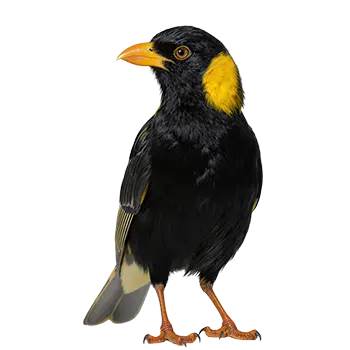
Mynah birds are curious, intelligent, and physically active, but their play style differs considerably from parrots and other hookbills. Mynahs do not chew or shred with the same intensity as parrots, and they rarely manipulate objects with their feet. Instead, they interact with their environment primarily through their beaks, by tossing, pecking, and flipping objects, and through vigorous hopping and short flights. Understanding this distinction is essential for selecting toys that a mynah will actually use.

Their intelligence is one of the most notable traits of the species. Mynah birds are exceptional mimics and vocal learners, and they thrive on novelty and social interaction. A bored mynah will develop problematic behaviors including excessive screaming, feather plucking, and repetitive pacing. Enrichment is not a luxury for this species but a daily necessity that directly affects behavioral health and quality of life.

Mynahs are also naturally drawn to shiny objects, small items they can toss and catch, and sounds they can investigate or mimic. Toys that produce noise, reflect light, or move unpredictably tend to capture their attention more effectively than static objects. Their play sessions are often brief but frequent, so having multiple enrichment options available throughout the cage encourages spontaneous engagement during the day.

Social interaction is itself a form of enrichment for mynahs. Many of the best enrichment activities involve the keeper directly, whether through vocal practice, training sessions, or supervised exploration outside the cage. Toys supplement but do not replace the human engagement that mynahs require to remain well-adjusted.

Foraging & Puzzle Toys

Foraging toys are among the most valuable enrichment tools for mynah birds because they replicate the food-seeking behavior that occupies a significant portion of a wild mynah's day. In captivity, food is readily available in a dish, which eliminates the mental and physical effort of searching for meals. Foraging toys reintroduce that effort in a safe, controlled way, keeping the bird engaged and mentally sharp.

Look for foraging toys designed for softbill species or medium-sized birds. Puzzle feeders that require the bird to lift lids, pull tabs, or peck through barriers to access hidden fruit or insect treats work well for mynahs. Avoid foraging toys designed for parrots that require foot manipulation or extensive chewing, as mynahs lack the foot dexterity and beak strength to use them effectively.

Simple foraging setups can be highly effective. Wrapping a small piece of fruit in a sheet of unbleached paper, tucking treats into crumpled paper cups, or hiding food beneath bird-safe objects in a shallow tray all create foraging opportunities without requiring specialized products. The goal is to make the bird work for a portion of its food, not to create frustration.

Rotate foraging toys and methods regularly to maintain novelty. Mynahs are quick learners and will solve a familiar puzzle in seconds once they have figured out the mechanism. Introducing new challenges every few days keeps the enrichment genuinely stimulating rather than routine.

Toss & Manipulate Toys

Mynahs have a distinctive play behavior of picking up small objects with their beaks and tossing them, sometimes repeatedly. Toys that cater to this behavior provide excellent entertainment and physical activity. Small plastic balls, lightweight rings, and bird-safe bells that the bird can grab, fling, and chase across a flat surface are ideal choices for this play style.

When selecting toss toys, size and weight are the primary safety considerations. Items should be small enough for the mynah to pick up comfortably but too large to swallow. Lightweight materials that will not injure the bird if tossed against cage bars are preferable. Avoid anything with small detachable parts, sharp edges, or lead-based materials that could pose a toxicity risk.

Play gyms and tabletop activity centers provide a designated space for toss-and-manipulate play during out-of-cage time. These platforms typically include ladders, small cups, rings, and other accessories arranged on a stable base. Mynahs enjoy the variety of activities available on a well-designed play gym and will often entertain themselves for extended periods if the setup is positioned near household activity.

Some mynahs develop a preference for specific toys and will repeatedly seek out favorites even when new options are available. Pay attention to which toys generate the most engagement and keep those in regular rotation while gradually introducing new items alongside established favorites.

Sound & Mirror Toys

Given their vocal intelligence, mynah birds are naturally attracted to toys that produce sound. Bells, chimes, and rattles that respond to the bird's contact with audible feedback create a rewarding play loop where the mynah learns to associate its actions with interesting sounds. Some mynahs will incorporate the sounds their toys make into their vocal repertoire, adding bell tones or rattle noises to their mimicry collection.

Mirrors are a more nuanced enrichment choice. Some mynahs enjoy interacting with their reflection, vocalizing and displaying as though engaging with another bird. For a single mynah without avian companionship, a mirror can provide social stimulation during periods when the keeper is unavailable. However, monitor mirror use carefully, as some birds become obsessively attached to their reflection, which can interfere with bonding with human family members and cause stress when the mirror is removed.

Musical toys and noise-making devices designed for birds can provide auditory enrichment, but avoid anything battery-powered that produces sounds at volumes uncomfortably loud for a bird's sensitive hearing. Small wind chimes, wooden clackers, and stainless steel bells mounted securely in the cage are safer alternatives that the bird can engage with on its own terms.

Audio enrichment extends beyond physical toys. Playing varied music, nature sounds, or recordings of mynah vocalizations during the day stimulates the bird's auditory interest and encourages vocal practice. Mynahs are more likely to develop extensive vocabularies and mimicry skills in acoustically stimulating environments.

Swings, Ladders & Climbing Structures

Swings provide motion-based enrichment that many mynah birds enjoy. A well-constructed swing sized for a medium bird gives the mynah a perching option that moves and sways, engaging balance and coordination muscles that static perches do not challenge. Natural wood or stainless steel swings are the most durable and safest options. Avoid swings with thin chains that could trap toes or beaks.

Ladders and climbing structures serve a different purpose for mynahs than they do for parrots. While parrots are natural climbers, mynahs primarily hop and fly. Ladders with wide, flat rungs spaced at hopping distance can encourage movement and exercise, but vertical rope ladders designed for parrot climbing may be ignored or used awkwardly by a mynah. Choose structures that accommodate hopping rather than hand-over-hand climbing.

Platforms and flat perching surfaces appeal to mynahs more than many traditional climbing toys. A small wooden platform mounted inside the cage or on a play stand gives the bird a surface to hop around on, toss toys from, and survey its surroundings. These platforms can also serve as feeding stations for foraging activities, combining enrichment with mealtime.

All climbing and swinging structures should be mounted securely to prevent collapse or tipping. Mynahs are energetic users that will test the stability of any fixture, and a falling swing or platform can injure the bird and create a fear response that makes the bird reluctant to use similar structures in the future. Inspect mounting hardware regularly and replace any components showing signs of wear.

DIY & Budget Options

Many effective mynah bird toys can be assembled from safe household materials at minimal cost. Crumpled balls of plain white paper, cardboard tubes cut into rings, and small wicker balls from craft stores all provide tossing and manipulating opportunities. Untreated wood blocks, cork pieces, and small stainless steel measuring spoons attached to cage bars with bird-safe hardware offer additional variety without the expense of commercial toys.

Foraging trays are simple to create using a shallow baking dish or tray filled with crumpled paper, wooden beads, and hidden fruit pieces. The mynah digs through the material to find treats, engaging both physical and mental energy. Change the filler material and hiding spots regularly to maintain the challenge. Dried leaves from bird-safe trees, shredded paper, and wooden craft sticks all work as tray fillers.

Training sessions are the most cost-effective enrichment available and strengthen the bond between bird and keeper. Mynahs respond well to simple target training, vocal mimicry practice, and retrieval games using small objects. A few minutes of focused interaction several times per day provides more meaningful stimulation than an enclosure full of expensive toys that the bird ignores.

When crafting homemade toys, safety is paramount. Use only materials free of dyes, adhesives, coatings, and small metal fasteners. Never use string, yarn, or loose threads that could entangle the bird. Test each item for durability before offering it, and discard anything that breaks into sharp pieces or develops loose components. The savings from DIY enrichment are worthwhile only if every item meets the same safety standards as commercial products.

Always consult a qualified professional before making any health-related decisions. This content is provided for informational reference only and should not replace professional guidance specific to your animal.