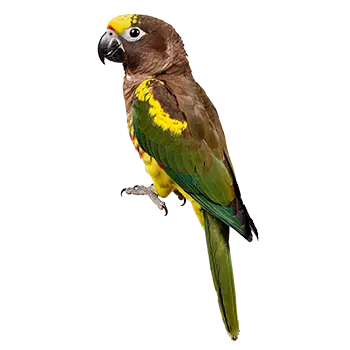

Meyer's Parrots are compact birds, but they are active climbers and benefit from considerably more space than their body size alone would suggest. The minimum recommended cage size for a single Meyer's Parrot is 24 inches wide by 24 inches deep by 30 inches tall, though larger is always better. A cage that allows the bird to fully extend and flap its wings without touching the bars on either side is a good baseline for width. Height is appreciated because Poicephalus parrots enjoy climbing and perching at elevated positions where they feel secure.
Bar spacing is a critical safety consideration that is often overlooked. For a Meyer's Parrot, bar spacing should be between five-eighths of an inch and three-quarters of an inch. Spacing wider than three-quarters of an inch creates a risk of the bird getting its head caught between bars, which can result in serious injury or strangulation. Spacing that is too narrow makes climbing more difficult and can trap toes. Horizontal bars on at least two sides of the cage facilitate climbing, which is a natural and preferred mode of movement for these parrots.
The cage should be positioned in a room where the family spends time, as Meyer's Parrots are social birds that become withdrawn or develop behavioral problems when isolated. However, placing the cage against at least one solid wall gives the bird a sense of security — parrots in the wild always have a protected side, and a cage in the center of a room can make them feel exposed. Avoid placement near windows with direct sun exposure, as the cage interior can overheat rapidly, and avoid kitchens where cooking fumes, non-stick pan vapors, and temperature fluctuations pose serious health risks.
If you plan to keep your Meyer's Parrot flighted or semi-flighted, consider the room dimensions as an extension of the enclosure. Bird-proofing the primary room — covering mirrors, securing ceiling fans, closing windows, and removing toxic plants — allows supervised out-of-cage flight time that dramatically improves physical fitness and psychological well-being.