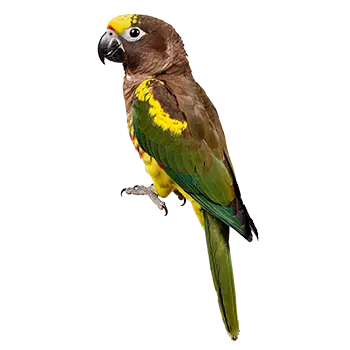

Play Style & Personality

Meyer's Parrots are often described as the introverts of the parrot world — thoughtful, methodical, and sometimes cautious when encountering new objects. Unlike some of the more boisterous parrot species that attack a new toy with immediate enthusiasm, a Meyer's Parrot may observe a new addition to its cage for hours or even days before interacting with it. Understanding this temperament is key to selecting toys that will actually be used rather than perpetually ignored.

These birds tend to favor manipulation over destruction. While a cockatoo might reduce a wooden toy to splinters in an afternoon, a Meyer's Parrot is more likely to carefully explore a toy's moving parts, turning beads, threading objects through openings, and working on mechanical puzzles with focused attention. This makes them excellent candidates for foraging toys and puzzle feeders that reward patience and dexterity rather than brute force.

Meyer's Parrots also exhibit strong foot dexterity for their size. They frequently hold food and small objects in one foot while perching on the other, a behavior that opens up a category of toys designed to be held and manipulated rather than hung from the cage ceiling. Small foot toys made of leather, wood, and acrylic that the bird can pick up, carry, and chew while holding them are often among the most-used items in a Meyer's Parrot's collection.

Because these parrots can be neophobic — wary of new things — introducing toys gradually is important. Place a new toy near but not inside the cage for a day or two, then hang it in a low-traffic area of the cage before moving it to a more central position. Forcing interaction by placing an unfamiliar toy directly next to a feeding station or sleeping perch can cause stress and food avoidance.

Foraging & Puzzle Toys

Foraging is the single most important enrichment category for captive parrots. In the wild, Meyer's Parrots spend a significant portion of their day searching for food — flying between feeding sites, stripping bark, cracking open seed pods, and investigating tree cavities. In captivity, food is presented in an open dish, eliminating the need for this natural behavior and leaving a cognitive void that often fills with boredom-related problems like feather plucking or excessive screaming.

Beginner-level foraging toys include paper cups placed over food dishes, food wrapped in plain paper, or treats hidden inside crumpled paper balls at the bottom of the cage. These low-barrier options teach the concept that food requires effort to access without frustrating a bird that has never foraged before. Once your Meyer's Parrot consistently engages with simple foraging setups, you can progress to commercially designed foraging toys with increasing difficulty levels.

Intermediate foraging devices typically involve drawers, rotating covers, or sliding panels that the bird must manipulate to reveal hidden food. Acrylic foraging wheels and boxes with visible food inside are particularly effective for Meyer's Parrots because the visual confirmation of a reward motivates continued effort. Look for products sized appropriately for a small to medium parrot — many foraging toys are designed for larger species and may be too heavy or mechanically stiff for a Meyer's Parrot to operate.

Advanced puzzle toys challenge the bird to perform multiple sequential steps to access a reward. These are excellent for Meyer's Parrots that have mastered simpler foraging tasks and need ongoing intellectual stimulation. Rotate puzzle toys on a weekly or biweekly cycle to maintain novelty — even the most engaging puzzle becomes routine once the bird has memorized the solution. Keeping three or four puzzle toys in rotation and swapping them regularly is more effective than having all of them available simultaneously.

Chew Toys & Destructible Items

Chewing is a natural and necessary behavior for all parrots. It maintains beak condition, provides sensory stimulation, and serves as an outlet for energy and mild frustration. For Meyer's Parrots, whose beak strength is moderate compared to larger parrots, softwood items made from balsa, pine, or yucca are ideal chewing substrates. These materials shred satisfyingly without requiring excessive force, giving the bird a productive way to exercise its beak throughout the day.

Leather strips, palm fronds, corn husks, and untreated woven grass mats provide varied textures that appeal to different chewing moods. Some Meyer's Parrots prefer shredding fibrous materials into thin strips, while others enjoy peeling layers off compressed palm or coconut husk toys. Having a mix of textures available ensures the bird can always find something that matches its current inclination.

The key principle with destructible toys is that destruction is the point. Many owners hesitate to provide items that will be quickly demolished, viewing it as wasteful. In reality, a toy that gets destroyed is a toy that fulfilled its purpose. A chew toy that sits untouched for weeks is either too hard, too intimidating, or not interesting enough for the bird. Budget for regular replacement of destructible items the way you budget for food — they are a consumable enrichment supply, not a durable good.

Safety considerations for chew toys include avoiding items with staples, metal clips, or small detachable parts that could be swallowed. Leather should be vegetable-tanned rather than chemically treated. Natural dyes used in colored wood blocks are generally safe, but the safest option is always undyed, unfinished bird-safe wood. If a toy includes string or twine, inspect it regularly for loops that could catch a toe or wrap around the neck.

Swings, Ladders & Climbing Toys

Climbing and swinging engage a Meyer's Parrot's natural arboreal instincts and provide physical exercise that complements the mental stimulation of foraging and puzzle toys. A simple swing made from natural wood or rope is one of the most universally enjoyed toys among Poicephalus parrots. Many Meyer's Parrots develop a strong attachment to a favorite swing and use it as a preferred resting spot, gently rocking themselves while relaxing or preening.

Ladders made from wood, rope, or a combination of both encourage vertical movement within the cage and provide additional perching surfaces with varied textures. Spiral rope ladders and boing-style coiled rope perches add a dynamic, bouncy element that many playful Meyer's Parrots enjoy. When selecting rope climbing toys, choose products made from natural cotton or sisal and ensure the diameter is appropriate for your bird's grip — too thin and the bird cannot get a secure hold, too thick and climbing becomes difficult.

Cargo nets and climbing webs made from bird-safe materials can be attached to the side or back of the cage, creating a climbing wall that maximizes the use of available vertical space. These are particularly useful in cages that are taller than they are wide, as they transform unused wall area into active enrichment space. Meyer's Parrots enjoy navigating the irregular grid pattern, and many will hang upside down from the net — a natural behavior that exercises muscles rarely used during standard perching.

Outside the cage, tabletop play gyms and hanging play stands provide a dedicated activity area during supervised free time. A good play stand for a Meyer's Parrot should include a combination of perches at different heights, toy hanging points, and a food and water cup. The stand becomes a familiar, positive location that encourages the bird to stay in a safe area rather than wandering to potentially hazardous parts of the room.

Sound, Texture & Sensory Toys

Parrots are highly sensory creatures, and toys that engage hearing and touch in addition to sight can provide deeper enrichment than visual stimulation alone. Small bells made from stainless steel produce gentle sounds that many Meyer's Parrots enjoy triggering repeatedly. The auditory feedback creates a cause-and-effect loop that is rewarding in itself — the bird learns that manipulating the bell produces a sound, which motivates continued interaction. Avoid bells with clappers that can be removed and swallowed, and ensure the bell opening is too small for the bird to get a toe caught inside.

Acrylic and hard plastic toys with moving parts — spinning wheels, clickable beads, or rotating rings — appeal to the Meyer's Parrot's preference for mechanical manipulation. These durable items provide long-lasting engagement because they cannot be destroyed, only interacted with. The visual and tactile feedback of moving a bead along a track or spinning a wheel gives the bird a satisfying sense of agency. Include one or two durable interactive toys alongside the destructible items to ensure the bird always has something to engage with even after the chewable items have been demolished.

Mirrors are a controversial enrichment item. While some parrots enjoy mirrors and interact with their reflection in ways that appear playful, others develop unhealthy bonding behaviors with the mirror image, leading to regurgitation, aggression toward human companions, or distress when the mirror is removed. For Meyer's Parrots, which are already prone to forming strong bonds with a single individual, mirrors should be used cautiously if at all. If you introduce a mirror, observe your bird's behavior carefully over several days and remove it at the first sign of obsessive interaction.

Textured foot toys made from combinations of materials — such as a small wooden block strung with leather strips and a few beads — provide multi-sensory stimulation in a compact format. Meyer's Parrots often carry these to a favorite perch and sit quietly manipulating them for extended periods, which is a sign of deep engagement and contentment. Keep a rotation of five to ten foot toys available, placing a few in the cage at a time and swapping them every few days to maintain freshness.

DIY & Budget-Friendly Enrichment

Some of the most effective enrichment for Meyer's Parrots costs little or nothing. Untreated paper — plain paper bags, newspaper (soy-based ink), paper towel rolls, and plain cardboard — can be offered for shredding, which satisfies the chewing instinct and provides foraging opportunities when food is hidden inside. Crumpling a sheet of paper into a ball with a few pellets inside creates an instant foraging toy that takes seconds to prepare and provides minutes of engaged activity.

Natural branches from bird-safe trees make excellent perches and chew toys. Apple, pear, willow, poplar, and elm branches can be collected, scrubbed with a stiff brush under hot water, and dried before offering to your bird. Avoid branches from trees that have been treated with pesticides or herbicides, and steer clear of toxic species including cherry, cedar, and oleander. The bark, buds, and varying diameters of natural branches provide far richer sensory stimulation than any manufactured perch.

Simple foraging stations can be created from everyday household items. A clean muffin tin with treats hidden under crumpled paper in each cup, a small cardboard box with holes poked in the sides and food placed inside, or a paper plate folded and stapled around a few seeds all create engaging challenges from free materials. The key is matching difficulty to your bird's current skill level — start easy enough that the bird succeeds on the first attempt, then gradually increase complexity.

Rotation is the single most impactful enrichment strategy that costs nothing extra. Even the best toys lose their appeal when they are constantly present. Removing toys from the cage for a week and then reintroducing them creates a sense of novelty that reignites interest. Maintain a storage box of toys not currently in use and cycle three to five items in and out of the cage each week. Combined with occasional new additions, this rotation system keeps the cage environment perpetually interesting without requiring constant spending.

Always consult a qualified professional before making any health-related decisions. This content is provided for informational reference only and should not replace professional guidance specific to your animal.