
Housing Requirements

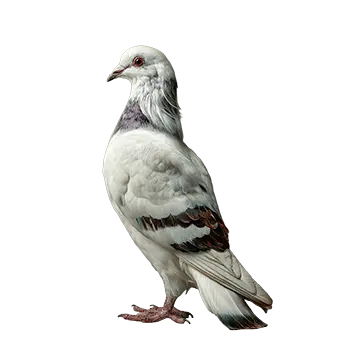
Jacobin Pigeons need housing that accounts for their ornamental feathering, their limited flight ability, and their gentle temperament. The breed's signature hood, an elaborate arrangement of reversed feathers that forms a mane, chain, and rosette around the head, restricts the bird's peripheral vision and makes it slower to detect threats and less agile in flight than unhooded breeds. These characteristics mean that Jacobins are poorly suited to free-loft arrangements where birds come and go through open traps, and they thrive instead in enclosed environments where they are protected from predators, weather, and more aggressive pigeon breeds.

Space allocation should allow each bird room to move comfortably without crowding. A general standard for fancy pigeons is a minimum of two square feet of floor space per bird, with additional vertical space for perching and nesting. For Jacobins, slightly more generous spacing is advisable because their long hood feathers are easily damaged in tight quarters. Overcrowding leads to feather wear from contact with walls, other birds, and fixtures, and it elevates stress levels in a breed that is naturally placid and does not compete well for resources.

Ventilation is one of the most critical and most frequently underengineered aspects of pigeon housing. Pigeons produce substantial amounts of feather dust, dander, and dried droppings, all of which become airborne and can cause respiratory problems in both birds and their keepers if not adequately exhausted. A well-ventilated loft should provide steady airflow without creating direct drafts at perch level. The classic approach uses high openings or ridge vents for exhaust and lower, baffled inlets for fresh air intake, creating a natural convection cycle that moves stale air upward and out.

Protection from predators is non-negotiable. Hawks, raccoons, rats, cats, and snakes all prey on pigeons or their eggs, and the Jacobin's impaired vision makes it especially vulnerable. Every opening in the loft or aviary must be secured with hardware cloth of half-inch mesh or smaller. Standard chicken wire is insufficient because its wider gauge allows rats, snakes, and weasels to pass through. The floor of outdoor enclosures should be either solid concrete, paving, or buried wire mesh to prevent burrowing predators from digging underneath.

Loft Design & Construction

A purpose-built pigeon loft is the gold standard for housing Jacobins, and its design should balance the practical demands of bird husbandry with the specific needs of a show breed. The loft should be elevated off the ground if possible, either on legs or a raised platform, to deter rodents and improve drainage. A typical small-to-medium loft for a collection of ten to twenty Jacobins might measure eight feet by ten feet in floor area with a ceiling height of seven feet, providing ample room for perching, nesting, and keeper access.

Interior layout should prioritize ease of cleaning and bird management. Smooth, sealed walls and floors resist moisture absorption and can be scraped and disinfected without harboring bacteria in porous surfaces. Many experienced keepers coat interior wood surfaces with a marine-grade sealant or use FRP panels, the fiberglass-reinforced plastic sheeting commonly found in commercial kitchens, which creates a seamless, washable surface. Removable perches and nest boxes simplify deep cleaning and allow the interior to be reconfigured as the flock size changes.

Nest boxes for Jacobins should be sized appropriately for the breed, typically twelve inches wide, twelve inches deep, and twelve inches tall. Each breeding pair needs its own nest box, and providing ten to twenty percent more boxes than pairs reduces territorial disputes. Boxes should be arranged in a grid pattern with uniform spacing, as pigeons tend to prefer boxes at certain heights and uneven placement can lead to conflict over the most desirable positions. Removable fronts or hinged lids allow the keeper to inspect nests, band squabs, and clean boxes without disturbing adjacent pairs.

Roofing material should be chosen for both weather protection and temperature regulation. Metal roofing is durable and easy to install but can create extreme heat in summer if not properly insulated. Adding a layer of rigid foam insulation beneath the metal, or using reflective radiant barrier material, significantly reduces heat transfer. Alternatively, composite shingle roofing provides better insulation properties but requires a steeper pitch and more structural support. In regions with severe winters, insulated walls and a supplemental heat source capable of maintaining temperatures above freezing protect the birds from cold stress without the dangers of overheating.

Indoor Caging Options

Not every Jacobin keeper has the space or zoning permission for an outdoor loft, and indoor caging can provide a perfectly adequate living environment when properly configured. Indoor housing for pigeons differs substantially from the cages marketed for parrots and songbirds. Pigeons need horizontal floor space more than vertical climbing room, and a cage designed for a pigeon should be wider than it is tall. Wire flight cages measuring approximately thirty inches wide, eighteen inches deep, and eighteen inches high can house a single pair comfortably, though larger enclosures are always preferable.

Cage construction should feature bar spacing narrow enough to prevent the bird from pushing its head through the bars, which can trap and damage hood feathers. Bar spacing of half an inch to five-eighths of an inch is appropriate for pigeons. Wider spacing designed for larger parrots allows pigeons to insert their heads and become stuck, potentially injuring themselves or breaking critical hood feathers that take months to regrow. Powder-coated or stainless-steel wire is preferable to galvanized wire, as pigeons occasionally nibble on cage bars and zinc from galvanized coating can cause toxicity over time.

The cage floor should be solid rather than wire-grated. Pigeons are ground-dwelling birds that spend much of their time walking, and wire grate floors cause foot irritation and can lead to bumblefoot, a painful bacterial infection of the foot pad. A solid tray lined with newspaper, pine shavings, or a commercial paper-based bird litter allows natural walking behavior and makes cleaning straightforward. The litter should be changed at least every two days to prevent ammonia buildup from droppings, which irritates the respiratory tract.

Placement of indoor cages matters for the bird's comfort and health. Position the cage in a room with natural light but out of direct sunlight, which can overheat a cage rapidly. Avoid kitchens, where cooking fumes, nonstick cookware off-gassing, and temperature fluctuations create hazards. The cage should be situated at a height where the bird can observe household activity without being startled by sudden movements from above, which pigeons instinctively perceive as predator approaches. A location against a wall provides a sense of security that a cage placed in the center of a room does not.

Aviaries & Flight Pens

An enclosed aviary or flight pen offers Jacobins the benefits of fresh air, natural sunlight, and more space for movement while maintaining the predator protection that this breed requires. Walk-in aviaries are particularly popular among Jacobin keepers because they allow the birds to fly short distances, engage in natural behaviors like dust bathing and sunning, and interact socially in a more spacious environment than a loft or cage can provide. The aviary also gives the keeper a pleasant space to observe and interact with the birds.

Structural framing for an aviary can be built from pressure-treated lumber, galvanized steel tubing, or aluminum extrusions. Steel and aluminum resist rot and insect damage but require careful grounding in areas with lightning risk. Wood is the most accessible and forgiving material for DIY construction but must be treated or sealed against moisture, and any preservative used should be confirmed safe for birds once cured. The frame should be engineered to support the weight of the wire mesh under wind load and, in snow-prone areas, the added weight of accumulated snow on the roof panel.

Roofing at least a portion of the aviary is essential. A solid roof section provides shade in summer, shelter from rain, and a dry area where food and water stations can be placed without contamination from wild bird droppings, which are a primary vector for diseases like paramyxovirus and salmonella. Translucent polycarbonate panels make excellent partial roofing because they admit light while blocking rain, and they are lightweight enough to avoid adding excessive structural load. The open-air sections should still be covered with mesh to prevent raptor access from above.

Flooring choices for outdoor aviaries range from natural ground to poured concrete to paver stones. Natural earth allows dust bathing, a behavior pigeons find deeply satisfying and that helps control external parasites, but it is harder to clean and can harbor parasites and pathogens over time. Concrete is the most hygienic option and can be sloped slightly toward a drain for easy washdown, but it eliminates the opportunity for dust bathing unless a separate sand tray is provided. Many keepers compromise by using concrete or pavers for the sheltered section where food and water are offered, with a natural-earth or sand area in the open portion for bathing and foraging.

Perching & Interior Fixtures

Perch design for Jacobin Pigeons should accommodate the breed's preference for flat or gently rounded resting surfaces rather than the round dowel perches used for parrots and songbirds. Pigeons naturally perch on ledges, and flat shelving-style perches ranging from three to four inches in width provide a comfortable resting surface that supports the bird's foot anatomy. Rounded perches force pigeons to grip in a way that strains their toes over time, and narrow perches do not allow the bird to settle its keel comfortably.

Perch placement should follow a tiered arrangement that avoids stacking perches directly above one another. Pigeons roosting on a lower perch will be soiled by droppings from birds above, leading to feather contamination that is especially problematic for Jacobins whose elaborate hood feathers are difficult to clean once stained. Staggering perches so that no perch sits directly beneath another, or installing droppings deflectors between tiers, keeps lower birds clean. The highest perches will always be the most sought after, so providing enough elevated positions for all birds reduces competition.

Material choices for perches and nest boxes should prioritize ease of cleaning and resistance to mites. Smooth-planed hardwood, sealed with a bird-safe finish, is a traditional choice that is easy to scrape clean and does not harbor red mites as readily as rough-sawn softwood. Plastic and composite perches have gained popularity because they can be removed and soaked in disinfectant solution, which is the most effective way to eliminate mite infestations. Some keepers use a combination, with permanent wooden perches for daily use and plastic perches that can be rotated in during mite-treatment cycles.

Bath pans are an important interior fixture that many novice keepers overlook. Pigeons bathe regularly and enthusiastically, and providing a shallow pan of clean water two to three times per week supports feather hygiene and parasite control. The bath pan should be large enough for the bird to stand in and splash freely, roughly twelve to fourteen inches in diameter and two to three inches deep. Remove the bath pan after an hour or so to prevent the water from becoming a breeding ground for bacteria, and never use the same vessel for drinking and bathing.

Climate Control & Ventilation

Temperature management in a Jacobin loft requires a balanced approach. Pigeons are reasonably cold-hardy and can tolerate temperatures well below freezing as long as they are dry, sheltered from wind, and have access to adequate food and water. However, extreme cold combined with dampness creates conditions favorable for respiratory illness, and Jacobins in full show feather are more susceptible to becoming chilled because their hood feathers can trap moisture against the head and neck. In cold climates, maintaining loft temperatures above forty degrees Fahrenheit during winter is a practical target that prevents water from freezing and keeps the birds comfortable without the fire risk associated with heat lamps.

Heat is a greater threat than cold for most pigeon keepers. Lofts with inadequate ventilation and poor insulation can reach dangerous temperatures during summer, particularly those with dark-colored or uninsulated metal roofs. Exhaust fans rated for agricultural use, positioned high on the wall to pull warm air out, are the most effective mechanical cooling option. Thermostatically controlled fans that activate when temperatures exceed a set threshold automate the process and prevent the keeper from having to monitor conditions manually during heat events.

Humidity control is closely linked to ventilation but deserves separate attention. Pigeon droppings release moisture as they decompose, and in an enclosed loft, humidity levels can climb to the point where condensation forms on walls and ceiling. This perpetual dampness fosters mold growth, bacterial proliferation, and respiratory disease. A humidity level between forty and sixty percent relative humidity is ideal. In humid climates, a dehumidifier sized for the loft volume can maintain conditions in this range when ventilation alone is insufficient.

Lighting has a direct effect on pigeon behavior and breeding cycles. Pigeons are photoperiodic breeders, meaning their reproductive activity is triggered by increasing day length. In a loft without supplemental lighting, breeding will follow the natural seasonal pattern, with activity increasing in spring and declining in fall. Keepers who show birds or breed on a specific schedule can manipulate the light cycle using timer-controlled LED lighting to extend the photoperiod and stimulate or suppress breeding as desired. Full-spectrum LED panels that approximate natural sunlight are preferred over incandescent or fluorescent bulbs, both for the quality of light they provide and for their energy efficiency and low heat output.

Cleaning & Maintenance Products

Maintaining a clean loft or cage is the single most important thing a keeper can do to prevent disease in Jacobin Pigeons. The cleaning regimen should include daily spot cleaning of droppings from perches and feeding areas, weekly full litter replacement, and periodic deep cleaning with disinfection. A rigid putty knife or paint scraper is the most efficient tool for removing dried droppings from flat perch surfaces and walls. Some keepers invest in a hand-held steam cleaner, which loosens dried deposits quickly and sanitizes surfaces without chemicals.

Disinfectant selection is important because many common household cleaners are toxic to birds. Quaternary ammonium compounds formulated for animal housing are effective against a broad spectrum of bacteria, viruses, and fungi while being safe for use around birds when diluted according to directions and allowed to dry before the birds are returned. Bleach solutions at a ten-percent concentration are also effective for periodic disinfection but must be thoroughly rinsed and dried before contact with birds, as residual chlorine irritates the respiratory tract. Products containing phenol, pine oil, or strong aromatic compounds should never be used in pigeon housing.

Litter material affects both hygiene and air quality. Clean pine shavings are the most popular litter for pigeon lofts, offering good absorbency, pleasant scent, and ease of removal. Cedar shavings should be avoided because the aromatic oils they release can irritate the respiratory system. Paper-based pelleted litters offer superior absorbency and produce less dust than shavings, making them a good choice for indoor setups or for keepers who are sensitive to airborne particles. Sand or fine gravel is used on the floor of some lofts and is easy to rake clean, but it does not absorb moisture and must be replaced entirely rather than spot-cleaned.

Ventilation system maintenance is part of the cleaning routine but is easily forgotten. Exhaust fan blades and guards accumulate feather dust rapidly and should be cleaned at least monthly to maintain airflow efficiency. Air intake screens or filters, if present, need regular inspection and cleaning or replacement. A ventilation system that is gradually clogged with dust operates at a fraction of its rated capacity, and the decline in air quality happens slowly enough that the keeper may not notice it until respiratory symptoms appear in the flock.

Always consult a qualified professional before making any health-related decisions. This content is provided for informational reference only and should not replace professional guidance specific to your animal.