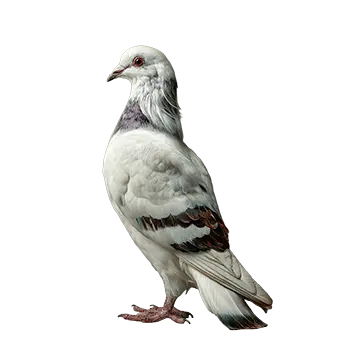

The Jacobin Pigeon shares the fundamental dietary requirements of all domestic pigeons but presents a few breed-specific considerations that owners should understand before selecting food products. Like other Columba livia domestica varieties, the Jacobin requires a diet built primarily on grains and seeds, supplemented with minerals, grit, and clean water. However, the breed's signature feathered hood, consisting of the mane, chain, and rose, places additional demands on protein and amino acid intake during molt and feather-replacement cycles. Inadequate nutrition shows up quickly in hooded breeds because the hood feathers are long, dense, and structurally complex, and any deficiency produces visible thinning, breakage, or irregular growth.
Protein is the macronutrient that deserves the most careful attention when feeding Jacobins. During active molt, protein requirements can increase substantially, and a grain mix that sustains a utility breed through molt may leave a Jacobin with incomplete hood development. Legumes such as peas, lentils, and vetches are the primary protein sources in pigeon diets, and their proportion in the mix should increase during feather replacement. Outside of molt, excessive protein can stress the kidneys and promote unwanted weight gain, so the diet should shift toward a lower-protein maintenance blend once new feathers are fully grown.
Fat plays a supporting role in feather quality and energy balance. Jacobins are not strong fliers and tend to be less active than racing or high-flying breeds, so their caloric needs are moderate. Oily seeds like safflower, hemp, and small quantities of sunflower provide essential fatty acids that contribute to feather sheen and skin health without overloading the bird with calories. Because Jacobins are show birds rather than performance birds, the feeding strategy should prioritize feather condition and body maintenance over the high-energy demands of flight training.
Calcium and phosphorus are critical for skeletal health and eggshell formation in breeding hens. These minerals also contribute to the structural integrity of feather shafts, which is particularly relevant for the elongated hood feathers of the Jacobin. A quality grit and mineral supplement, combined with access to a calcium source such as oyster shell, ensures that the bird can meet these mineral demands without depleting its skeletal reserves.