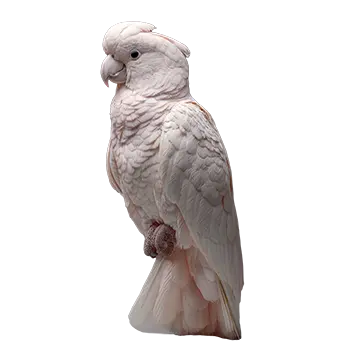

Goffin's Cockatoos rank among the most cognitively advanced parrots ever studied, with peer-reviewed research demonstrating their capacity for tool use, sequential problem solving, and mechanical reasoning that rivals great apes in specific experimental contexts. This exceptional intelligence creates an equally exceptional enrichment obligation for owners. A Goffin's that lacks sufficient mental stimulation does not simply become bored; it develops behavioral pathologies including feather destruction, stereotypic movements, excessive vocalization, and self-mutilation that can become entrenched and extremely difficult to reverse once established.
The enrichment needs of this species extend well beyond providing a few toys and hoping for the best. Effective enrichment engages multiple cognitive domains: problem solving, physical manipulation, foraging instincts, and exploratory drive. A well-enriched Goffin's should spend significant portions of its day actively interacting with its environment rather than sitting passively on a perch. Research on captive cockatoos consistently shows that behavioral problems correlate more strongly with environmental complexity than with any other single variable, including social contact, diet, or cage size.
Variety is as important as quantity. Goffin's Cockatoos habituate to familiar objects quickly, losing interest in a toy that captivated them for hours just days earlier. This rapid habituation is itself a sign of intelligence, as the bird has extracted all available information and challenge from the object and needs novel stimuli to remain engaged. An enrichment strategy that relies on a static set of toys will inevitably fail regardless of how well-chosen those toys initially were.
The financial commitment to ongoing toy replacement is a reality that prospective Goffin's owners should understand before acquiring the bird. Destructible toys are consumed rather than preserved, foraging devices need regular refilling and periodic replacement, and the rotation system that prevents habituation requires maintaining an inventory of toys beyond what is actively deployed. Budgeting for monthly toy purchases as a recurring cost of bird ownership, comparable to food or veterinary care, is a realistic approach that prevents enrichment from becoming an afterthought.