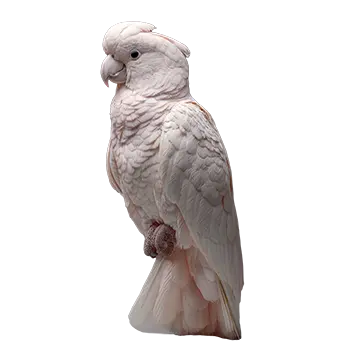

Remote monitoring cameras have become one of the most valuable technology investments for Goffin's Cockatoo owners, providing real-time visibility into the bird's behavior, activity level, and safety during the hours when the owner is away from home. Goffin's Cockatoos are highly social birds that experience genuine distress during prolonged isolation, and the ability to observe the bird remotely allows owners to detect signs of anxiety, self-harming behavior, or environmental problems that would otherwise go unnoticed until they return home.
Camera selection for a bird room involves considerations distinct from standard home security applications. Resolution should be at least 1080p to allow observation of behavioral details such as feather condition, food consumption, and foot grip quality from across a room. Wide-angle lenses that capture the entire cage and surrounding area without requiring multiple cameras are preferable, and a pan-tilt-zoom function allows the owner to examine specific areas more closely when something catches their attention. Night vision capability using infrared illumination enables monitoring during the bird's dark sleeping hours without producing visible light that would disrupt the photoperiod.
Two-way audio is a feature that requires careful consideration for cockatoo owners. The ability to speak to the bird through the camera can provide reassurance during separation, and many Goffin's respond positively to hearing their owner's voice. However, unexpected sounds from a speaker can also startle a nervous bird, and some cockatoos become overstimulated by disembodied voices, leading to increased vocalization or agitation rather than calm. Testing the bird's response to the two-way audio feature during a short absence before relying on it during full workday separation is a prudent approach.
Cloud storage versus local storage for recorded footage involves tradeoffs between convenience and privacy. Cloud-based systems automatically archive footage and allow review from any device, which is useful for tracking long-term behavioral patterns or documenting incidents for a veterinarian. Local storage on a microSD card avoids ongoing subscription costs and keeps footage under the owner's physical control. Many camera systems offer both options, allowing the owner to choose based on their preferences. Motion-triggered recording conserves storage space and makes it easier to review periods of activity rather than scanning through hours of static footage.