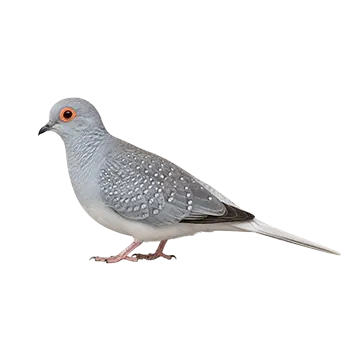

Understanding Diamond Dove Play Behavior

Diamond Doves interact with their environment very differently from parrots and other hookbill species. They do not climb, chew, or manipulate objects with their feet. Instead, their natural behaviors center on ground foraging, bathing, cooing, and gentle exploration of their surroundings. Enrichment products chosen for Diamond Doves should align with these instincts rather than mimic toys designed for psittacines.

In the wild, Diamond Doves spend much of their active time walking along the ground searching for small seeds and grit. This foraging drive is the most productive behavioral channel to target with enrichment products. Items that encourage searching, pecking, and ground-level exploration will see far more engagement than hanging toys or puzzle feeders designed for birds that use their feet to grip and manipulate.

Social interaction is another major source of stimulation for Diamond Doves. These birds form strong pair bonds, and a bonded pair will preen each other, coo in tandem, and perform courtship displays that provide ongoing behavioral enrichment. For a single dove, human interaction, mirrors, and visual stimulation from a window view can partially fill this social role.

Recognizing what constitutes play in a Diamond Dove helps set realistic expectations. A dove that walks curiously around a new object, pecks at scattered seed on a textured surface, or bobs its head while watching movement outside the cage is demonstrating engaged, enriched behavior. These subtle interactions may not look as dramatic as a parrot shredding a wooden block, but they are equally meaningful for the species.

Foraging and Ground-Level Enrichment

Foraging trays are one of the most effective enrichment tools for Diamond Doves. A shallow dish or tray filled with a mix of seeds, fine grit, and dried herbs encourages natural pecking and searching behavior. Scatter a small amount of seed across a layer of clean sand, dried chamomile flowers, or shredded paper, and your dove will spend considerable time sifting through the material.

Rotating the contents and textures of foraging trays keeps the experience novel. One day you might use clean playground sand with seeds buried at different depths. Another day, try dried grass clippings or small pebbles. The key is variety in substrate rather than complexity of mechanism, since doves do not have the dexterity to operate latches, levers, or sliding doors that characterize parrot foraging toys.

Scattering seed directly on the cage floor rather than always presenting it in a dish is a simple but effective enrichment strategy. This mimics the dove's natural feeding pattern and extends the time spent on the meal, reducing boredom during the hours between feedings. For birds housed on grated cage floors, a separate flat-bottomed foraging area gives them access to this ground-level activity.

Small woven grass mats or seagrass squares placed on the cage floor provide textural interest and a surface that doves enjoy walking on and pecking at. These mats are inexpensive, bird-safe, and can be replaced as they wear. Some keepers sprinkle a few seeds between the fibers of the mat to combine tactile enrichment with foraging incentive.

Bathing and Water Play

Bathing is one of the most visibly enjoyable activities for Diamond Doves and serves as both physical enrichment and feather maintenance. Provide a shallow dish of lukewarm water, no deeper than half an inch, placed on the cage floor or in a dedicated bathing area. Most Diamond Doves will wade in, dip their chests, and flick water over their backs with enthusiastic wing fluttering.

Commercial bird bath attachments that clip to the cage door are convenient but may be too deep or too small for comfortable dove bathing. If you use one, choose the largest available size and fill it to a shallow level. Many keepers find that a simple ceramic saucer or a terracotta plant tray works better than purpose-built bird baths for this species.

Offer bathing opportunities several times per week, or daily if your dove shows strong interest. Remove the bath after thirty minutes to an hour to prevent the water from becoming soiled and to avoid excessive humidity in the cage. In cooler weather, ensure the room is warm enough that your dove can dry comfortably after bathing, and avoid placing the bath near drafts.

Some Diamond Doves prefer mist bathing to wading. A gentle misting from a clean spray bottle set to a fine setting can simulate light rain and prompt preening behavior. Hold the bottle above and slightly to the side of the bird, allowing the mist to drift down rather than spraying directly. If your dove fluffs up and spreads its wings, it is enjoying the experience. If it retreats or flattens its feathers, it prefers the dish method.

Visual and Auditory Stimulation

Diamond Doves are observant birds that respond to visual activity in their environment. Placing the cage in a room with regular household activity provides a changing landscape of movement and sound that keeps doves engaged throughout the day. A position near a window where they can observe outdoor birds, passing pedestrians, or moving foliage offers passive enrichment that requires no products at all.

Mirrors can be a useful enrichment tool for single Diamond Doves, providing the illusion of a companion. A small, bird-safe mirror placed at perch level may prompt cooing, head-bobbing, and display behaviors that indicate social engagement. Monitor your dove's response over time, however, as some individuals may become frustrated or overly fixated on their reflection, in which case the mirror should be removed.

Soft background music or nature sound recordings can provide auditory enrichment, particularly when the household is empty. Diamond Doves seem to respond positively to calm, melodic sounds and may vocalize along with gentle music. Avoid loud, bass-heavy, or sudden sounds, which can startle these naturally cautious birds. A radio tuned to a classical or ambient station at low volume is a simple solution.

Rotating the position of perches, dishes, and enrichment items within the cage on a weekly basis provides novelty without requiring new purchases. Even small changes in the interior layout encourage doves to re-explore their space and adapt to the new arrangement, which provides cognitive stimulation. Make changes gradually and avoid rearranging everything simultaneously, as too much disruption at once can cause stress.

Safe Materials and Toy Selection

When selecting any enrichment item for a Diamond Dove, material safety is the primary concern. Untreated natural wood, seagrass, coconut fiber, sisal, and plain cotton rope are all bird-safe materials commonly used in avian enrichment products. Avoid anything with zinc-coated hardware, lead-based paint, treated or pressure-washed wood, or small parts that could be swallowed.

Swinging perches and small wooden ladders designed for finches can work for Diamond Doves, though many doves prefer stable platforms over swinging surfaces. If you introduce a swing, choose a flat-bottomed style rather than a round dowel swing, as doves feel more secure on wider surfaces. Place it low enough that a startled bird can easily fly to a stable perch without injuring itself.

Bells and noise-making toys marketed for parakeets and cockatiels are generally not well-suited for Diamond Doves. The sudden metallic sounds can startle doves, and the small openings in bell clappers pose a toe-entrapment hazard for birds that walk along the cage floor. If you want to introduce auditory interaction, wind chimes made from bamboo or wooden beads produce softer, less startling sounds.

Always inspect enrichment items regularly for wear, fraying, or damage. Remove any item with loose threads long enough to tangle around a toe or leg. Replace natural fiber items when they become soiled or begin to disintegrate. A small inventory of inexpensive, rotating enrichment options keeps the environment fresh without requiring significant investment.

DIY and Budget Enrichment Ideas

Some of the most effective Diamond Dove enrichment costs nothing at all. A crumpled piece of plain brown paper bag placed on the cage floor becomes an object of investigation as the dove walks around it, pecks at the edges, and stands on it. Replace it every few days with a fresh piece to maintain novelty. Avoid glossy or printed paper, as inks may contain harmful chemicals.

Small bundles of dried herbs such as chamomile, lavender, or oregano tied with a strip of untreated cotton string provide scent-based enrichment. Diamond Doves will often peck at the dried leaves and spend time near the bundle. These herb bunches can be tucked into cage corners or laid flat on a foraging tray alongside scattered seed for a multi-sensory experience.

Creating a simple foraging box from a shallow cardboard tray filled with crinkled paper strips and hidden seeds gives your dove a digging and searching activity. Use only plain, unprinted cardboard and avoid staples, tape, or adhesive residue. The box can be replaced weekly or whenever it becomes soiled, making it a zero-cost enrichment cycle.

Outdoor time in a secure, supervised setting provides enrichment that no product can replicate. A small portable flight cage placed on a patio or lawn on warm, calm days lets your dove experience natural sunlight, fresh air, and the sights and sounds of the outdoor environment. Always supervise outdoor time closely to guard against predators, overheating, and escape. Even fifteen to twenty minutes of outdoor exposure a few times per week can noticeably improve a dove's activity level and mood.

Always consult a qualified professional before making any health-related decisions. This content is provided for informational reference only and should not replace professional guidance specific to your animal.