
Feeders, Bowls, and Water Dispensers

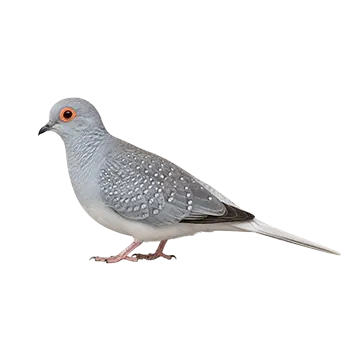
Diamond Doves feed primarily on the ground in the wild, so the style of feeder you choose should accommodate their natural preference for eating at floor level or from low-mounted dishes. Open-top ceramic crocks or small stoneware bowls are ideal because they are heavy enough to resist tipping, easy to clean, and allow doves to see and access seed without navigating hooded or tube-style dispensers designed for hookbills.

Covered seed hoppers can work well for reducing waste and keeping seed clean, but choose a model with a wide, low-profile opening. Doves will not reach into narrow slots or push past flaps to access food the way parakeets or canaries will. The hopper opening should be at least two inches wide and positioned at the dove's standing height to encourage comfortable feeding posture.

Water dispensers for Diamond Doves should be open and shallow. Doves drink by immersing their bill and drawing water upward through suction, unlike most other cage birds that tip their heads back to swallow. Tube-style water bottles with ball-bearing spouts are not appropriate for doves, as they cannot operate the mechanism. A small, heavy ceramic dish or a clip-on open water cup is the best option.

Maintain at least two feeding stations and two water sources in any enclosure housing a pair or more of doves. This prevents dominant birds from monopolizing resources and ensures that all birds can eat and drink without competition. Clean all food and water containers daily with hot water, and perform a thorough scrub with a dilute vinegar solution at least once per week to prevent bacterial and algal buildup.

Lighting and UV Accessories

Full-spectrum lighting that includes UVA and UVB wavelengths is one of the most beneficial accessories you can provide for an indoor Diamond Dove. Birds perceive a broader spectrum of light than humans, and UVA light enhances their ability to see colors in their food, environment, and each other. UVB light supports the synthesis of vitamin D3, which is essential for calcium metabolism and bone health.

Avian-specific full-spectrum bulbs are designed to emit the correct balance of UVA and UVB for birds. Mount the bulb within twelve to eighteen inches of the cage top, following the manufacturer's recommendations for distance and duration. Most avian lighting products suggest ten to twelve hours of light per day, which aligns with the photoperiod Diamond Doves experience in their native Australian habitat.

Replace full-spectrum bulbs according to the manufacturer's schedule, typically every six to twelve months, even if the bulb still produces visible light. UV output diminishes over time long before the bulb appears spent to the human eye. Using a bulb past its effective UV lifespan means your dove is receiving visible light without the beneficial UV component.

Avoid placing cages in direct, unfiltered sunlight for extended periods. While brief exposure to natural sunlight is beneficial, glass windows filter out most UVB radiation, and unfiltered sun through an open window can cause overheating in a cage that the bird cannot escape. A full-spectrum bulb on a timer provides consistent, safe UV exposure without the risks associated with direct sun.

Grooming and Hygiene Supplies

Diamond Doves are relatively low-maintenance birds when it comes to grooming, but a few essential supplies help keep them in optimal condition. A fine mist spray bottle is the most frequently used grooming tool, as regular misting helps maintain feather condition, removes dust, and encourages natural preening behavior. Use plain lukewarm water without any additives unless directed by an avian veterinarian.

Nail trimming is occasionally necessary for doves, particularly those housed on smooth perches that do not provide natural abrasion. A small pair of bird nail clippers or human nail clippers with a straight edge can be used to trim just the tip of each nail. Have styptic powder on hand in case of accidental bleeding, and work in good lighting to avoid cutting into the quick, which is visible as a darker shadow within the translucent nail.

Beak conditioning is generally self-managed by Diamond Doves that have access to cuttlebone and mineral blocks. These natural abrasives allow the bird to wear down its beak at a healthy rate through regular use. An overgrown or misaligned beak may indicate a nutritional deficiency or underlying health issue and should be evaluated by an avian veterinarian rather than trimmed at home.

Cage cleaning supplies should include a dedicated set of scrub brushes, a bottle brush for water dispensers, and a bird-safe disinfectant. Avoid household cleaners containing bleach, ammonia, or strong fragrances near your dove's enclosure. A solution of white vinegar and water is effective for routine cleaning, while veterinary-grade avian disinfectants are appropriate for deeper periodic sanitization.

Travel Carriers and Transport

A small, well-ventilated travel carrier is an essential accessory for veterinary visits, emergencies, and any situation that requires moving your Diamond Dove safely. Hard-sided carriers designed for small birds or small animals work best, as they provide protection from impacts and prevent the bird from escaping through flexible mesh or fabric panels.

Size the carrier appropriately for the bird. A carrier that is too large allows the dove to be tossed around during transport, while one that is too small causes stress and restricts air circulation. For a single Diamond Dove, a carrier measuring approximately ten by eight by eight inches provides enough room to include a small perch and a shallow water dish without excess space.

Line the carrier floor with a non-slip material such as a paper towel or a thin rubber shelf liner to give your dove stable footing during transport. Smooth plastic carrier floors can cause a dove to slide and scramble, which increases stress and can result in foot or wing injuries. A low perch mounted a few inches above the floor gives the bird an option to grip and stabilize itself.

Keep the carrier covered with a lightweight cloth during transport to reduce visual stimulation and stress. Ensure adequate ventilation by leaving the ends or one side uncovered. In hot weather, never leave a carrier in a parked vehicle, and in cold weather, preheat the car before placing the bird inside. Having the carrier assembled and ready to go at all times means you can respond quickly in an emergency evacuation or urgent veterinary situation.

Nesting Materials and Breeding Accessories

If you keep a male-female pair, Diamond Doves will almost certainly attempt to breed, and providing appropriate nesting accessories supports their natural behavior. A shallow, open-top nest bowl or platform placed in a quiet, elevated corner of the cage serves as the foundation. Doves prefer open nests over enclosed nest boxes, as their nesting instinct favors a wide, flat surface with low sides.

Nesting material for Diamond Doves should be fine and pliable. Dried grass, coconut fiber, small twigs, and shredded paper strips are all suitable options. Place materials on the cage floor and let the birds carry them to the nest site themselves, as the act of gathering and arranging material is an important part of the pair-bonding and nesting process.

Diamond Dove eggs are small and fragile, and the parents take turns incubating them over a period of approximately thirteen to fourteen days. During this time, minimize cage disturbances and avoid rearranging the interior layout. Breeding pairs benefit from a slightly increased protein intake, which can be provided through commercially available egg food or finely chopped hard-boiled eggs offered in a separate dish.

If you do not wish to breed your doves, you have several options for managing egg laying. Replacing real eggs with small plastic dummy eggs allows the hen to complete her incubation cycle without producing chicks, which reduces the physical toll of repeated egg production. Removing eggs immediately is not recommended, as it often stimulates the hen to lay replacement clutches, which depletes calcium reserves and can lead to egg binding.

Seasonal and Environmental Accessories

Cage covers are a useful accessory for establishing a consistent day-night cycle, which supports healthy sleep patterns in Diamond Doves. A dark, breathable cover placed over the cage at the same time each evening signals to the birds that the active period has ended. Choose a cover made from tightly woven cotton or a purpose-made cage cover fabric that blocks light without restricting airflow.

During cold months, a ceramic heat emitter mounted above or beside the cage can provide supplemental warmth without producing light that would disrupt the dove's sleep cycle. These emitters should always be used with a thermostat to prevent overheating, and positioned where the bird cannot make direct contact with the surface. A thermometer placed at perch level inside the cage helps you monitor the ambient temperature your dove is actually experiencing.

Air quality accessories such as a HEPA air purifier can be beneficial in rooms housing birds. Diamond Doves produce feather dust and dander, and an air purifier reduces airborne particulates that can affect both the bird's and the owner's respiratory health. Position the purifier in the same room as the cage but not so close that it creates a direct draft over the enclosure.

Seed guards and cage skirts are practical accessories that reduce the mess created by Diamond Doves hulling seed and flicking substrate material. These mesh or fabric panels attach around the lower perimeter of the cage and catch debris before it reaches the floor. They are particularly helpful for cages positioned on carpeted surfaces or in rooms where frequent sweeping is impractical. Choose a guard with a fine enough mesh to catch small seed husks, which are the primary mess culprit with this species.

Always consult a qualified professional before making any health-related decisions. This content is provided for informational reference only and should not replace professional guidance specific to your animal.