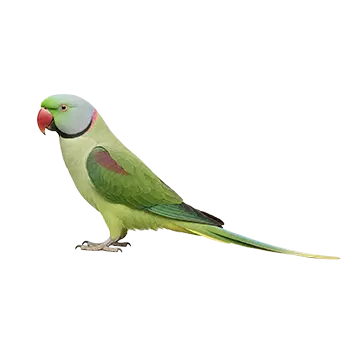

The Derbyan Parakeet is among the largest parakeets commonly kept in aviculture, with a body length approaching twenty inches when the long, graduated tail is included. That tail, which accounts for a substantial portion of the bird's total length, is easily damaged by enclosures that are too small, and tail feather condition serves as a reliable indicator of whether housing is adequate. A bird whose tail feathers are perpetually frayed, bent, or broken is almost certainly living in a cage that restricts its movement and prevents normal turning and climbing behavior.
Beyond physical dimensions, the Derbyan Parakeet's temperament places specific demands on its housing. These are active, intelligent birds that need space to move, climb, and explore throughout the day. In the wild, they range across large territories in montane forests, and captive birds retain that drive for movement and exploration. An enclosure that merely prevents escape without providing room for meaningful activity contributes to stress behaviors including feather plucking, repetitive pacing, and excessive vocalization.
The minimum recommended cage size for a single Derbyan Parakeet is 36 inches long by 24 inches wide by 48 inches tall, though larger is always preferable. Flight cages that provide at least 48 inches of horizontal space allow the bird to make short flights between perches, which is important for cardiovascular health and muscle tone. For owners who can accommodate it, a dedicated bird room or walk-in aviary represents the ideal housing arrangement, providing freedom of movement that no conventional cage can match.
Housing decisions should also account for the Derbyan Parakeet's social structure. While these birds can live contentedly as single pets when given adequate human interaction, pairs or small groups need proportionally more space. A pair of Derbyan Parakeets requires a cage at least sixty inches long to allow both birds adequate personal space, as this species can be territorial and individuals need the ability to retreat from one another when tensions arise.