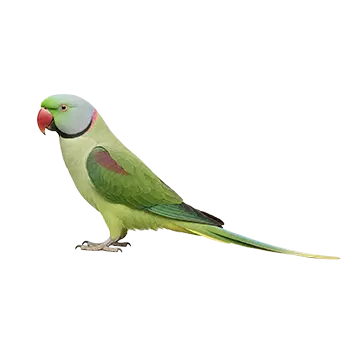

Essential Gear Overview

Outfitting a home for a Derbyan Parakeet extends well beyond the cage and its contents. A range of accessories and essential gear items supports the bird's daily care routines, health maintenance, safety during travel, and overall quality of life. These items are not luxuries but practical necessities that experienced owners accumulate over time, often discovering their importance only after a situation arises that demands them.

The accessory needs of a Derbyan Parakeet reflect both its physical characteristics and its behavioral tendencies. As one of the larger Psittacula species, this bird requires accessories sized for medium parrots rather than the smaller parakeet products that dominate retail shelves. Its strong beak means that flimsy or lightweight accessories will be damaged quickly, and products made from materials that release toxic substances when chewed pose a genuine health risk. Every accessory that enters the bird's environment should be evaluated with the same safety criteria applied to toys and cage furnishings.

Budgeting for accessories should account for both initial setup costs and ongoing replacement and maintenance expenses. Some items, like a quality travel carrier, represent a one-time investment that lasts for years. Others, like grooming supplies, cage liners, and bathing equipment, involve recurring costs. Building a comprehensive accessory collection incrementally over the first few months of ownership is more manageable than attempting to purchase everything at once, and it allows the owner to learn which specific products work best for their individual bird.

Organizing accessories for daily accessibility streamlines care routines and makes it easier to maintain consistency. Keeping grooming tools, cleaning supplies, and spare cage hardware in a dedicated storage area near the cage ensures that everything is at hand when needed. A first-aid kit stocked with avian-specific supplies should be assembled before it is needed, as emergencies rarely announce themselves in advance.

What to Look For

The same material safety standards that apply to toys and cages apply to every accessory a Derbyan Parakeet might contact. Stainless steel is the safest metal for bird accessories, followed by nickel-plated steel. Zinc, lead, copper, and brass are all potentially toxic and should be absent from any item the bird can reach. Plastics should be food-grade and free of BPA, phthalates, and other plasticizers that can leach when chewed. Fabrics and ropes should be natural fibers, specifically cotton, hemp, or sisal, as synthetic fibers can cause crop impaction if ingested.

Durability is a practical necessity rather than a luxury consideration for this species. Derbyan Parakeets investigate new objects with their beaks as a matter of course, and accessories that cannot withstand this investigation will have a short service life and may create safety hazards as they deteriorate. Hardware attachments, clasps, and fasteners should be heavy-duty and securely assembled. Quick-link connectors in stainless steel are the preferred attachment method for hanging accessories, as they are strong, easy to open and close for cleaning, and resistant to manipulation by the bird.

Ergonomic design affects both the bird's comfort and the owner's willingness to maintain consistent care routines. Food and water dishes that are awkward to remove, fill, and replace will be serviced less diligently than ones that slide in and out smoothly. Carriers with poorly designed doors make loading the bird stressful for both parties. Grooming tools that are uncomfortable to hold lead to rushed, less careful grooming sessions. The best accessories balance safety and durability with designs that make daily use straightforward and pleasant.

Product reviews from other Psittacula owners are a valuable resource when evaluating accessories, as the specific challenges of housing a large parakeet species are not always apparent from manufacturer descriptions. Size, beak strength, and temperament vary significantly across parrot species, and a product that works well for an Amazon parrot may not suit a Derbyan Parakeet at all. Seeking out feedback from owners of Alexandrine, Derbyan, and other large ringneck-type parakeets provides the most relevant perspective.

Perches & Stands

Perches and play stands extend the Derbyan Parakeet's living space beyond the cage, providing supervised out-of-cage areas where the bird can exercise, socialize, and engage with its environment. A tabletop or freestanding play stand serves as the bird's home base during out-of-cage time, offering familiar perching surfaces, food and water cups, and toy attachment points in a location the bird learns to associate with positive experiences.

Play stand construction should be robust enough to support a bird weighing up to 350 grams and active enough to climb, swing, and flap vigorously. Stands made from natural wood branches mounted on a weighted base provide the most engaging perching experience, with natural diameter variation and bark texture that promote foot health. Manufactured stands in powder-coated steel or wrought iron offer greater durability and easier cleaning, though they should include natural wood perch attachments to supplement the uniform metal surfaces.

Window perches and door-mounted perches allow the bird to enjoy different vantage points around the home. Suction-cup window perches give the bird access to natural light and a view of outdoor activity, which can be highly stimulating and enriching. These perches must be rated for the bird's weight and should be tested for adhesion before the bird is allowed to use them unsupervised. Door-frame and wall-mounted perches with bolt-on brackets provide a more permanent and secure installation for birds that enjoy specific locations outside the cage.

Shower perches enable the bird to join the owner during bathing, providing both a bathing opportunity and social interaction. These perches typically feature suction-cup mounts for tile or glass shower walls and a textured perching surface that provides grip when wet. Not all Derbyan Parakeets enjoy shower bathing, but those that do benefit from the warm mist, which softens feather dust and encourages thorough preening. The perch should be positioned where the bird receives indirect mist rather than direct water spray, and the water temperature should be lukewarm rather than hot.

Feeding & Watering Equipment

The feeding and watering equipment used for a Derbyan Parakeet should prioritize hygiene, durability, and ease of daily maintenance. Stainless steel dishes are the standard recommendation for psittacine food and water service. They resist bacterial colonization better than plastic, cannot be chewed apart, do not absorb odors or stains, and withstand dishwasher temperatures for thorough sanitization. Coop cups with mounting brackets that lock into the cage bars allow the dishes to be removed and replaced without opening the main cage door.

Water delivery options extend beyond the traditional open dish. Water bottle systems with stainless steel or glass tubes eliminate the problem of water contamination from food, droppings, and feather dust that plagues open dishes. However, not all Derbyan Parakeets will learn to drink from a bottle, and those that do may not drink adequate volumes, so a transition period with both bottle and open dish available is advisable. Water should be changed daily regardless of the delivery method, and bottles should be disassembled and scrubbed with a bottle brush at least every other day to prevent biofilm accumulation inside the tube.

Foraging feeders combine feeding equipment with enrichment functionality. Tray-style foraging feeders with adjustable compartment covers, rotating barrel feeders that dispense food as the bird manipulates them, and skewer-style holders that present fresh vegetables in a way that requires effort to consume all serve double duty. These devices slow food consumption, extend engagement time, and provide cognitive stimulation, making them a worthwhile complement to standard feeding dishes rather than a complete replacement.

Travel feeding equipment deserves separate consideration. Spill-proof water containers that attach inside a carrier, small stainless steel cups sized for carrier-mounted use, and sealable containers for transporting fresh food are all necessary for veterinary visits, travel, and emergency evacuations. Assembling a dedicated travel feeding kit and keeping it stored with the carrier ensures readiness when the need arises. Practice setting up the travel feeding arrangement before it is needed to identify any issues with fit or function.

Carriers & Travel Gear

A quality travel carrier is a non-negotiable accessory for any Derbyan Parakeet owner. Veterinary appointments, emergency evacuations, travel, and even routine trips to an avian groomer all require safe, secure transport. The carrier should be large enough for the bird to perch comfortably and turn around, but not so large that the bird is thrown about during vehicle movement. For a Derbyan Parakeet, a carrier with interior dimensions of approximately eighteen inches long, twelve inches wide, and fourteen inches tall provides a good balance of comfort and security.

Carrier construction should be hard-sided for maximum protection during transport. Molded plastic carriers with stainless steel grate doors and ventilation panels on multiple sides are the most common and practical option. The door should latch securely with a mechanism the bird cannot operate, and the ventilation openings should be too small for the bird to get its head, feet, or beak through. Soft-sided carriers, while lighter and more portable, offer less protection from impacts and are vulnerable to beak damage from a stressed Derbyan Parakeet during transit.

Carrier acclimation should begin well before the carrier is actually needed. Many birds develop intense fear of carriers because their only association with the carrier is stressful veterinary visits. Leaving the carrier open in the bird's living area, placing treats and favored toys inside, and allowing the bird to explore it at its own pace transforms the carrier from a source of dread into a familiar object. Some owners use the carrier as a feeding station during acclimation, placing the daily food dish inside the open carrier to create a positive association.

Travel accessories that support the bird's comfort during transit include carrier-specific perches that mount securely and prevent sliding during vehicle movement, clip-on water cups that resist spilling, and carrier covers that reduce visual stimulation during transport. A cover made from breathable, opaque fabric calms most birds by blocking the unfamiliar and potentially frightening visual input of a car ride. In cold weather, a cover also helps maintain temperature within the carrier, though care must be taken not to restrict ventilation.

Bathing & Grooming

Regular bathing supports feather health, reduces feather dust, and provides behavioral enrichment for Derbyan Parakeets. This species produces moderate amounts of feather dust from its powder down feathers, and bathing helps manage this dust both on the bird and in the surrounding environment. Most Derbyan Parakeets enjoy bathing once they are acclimated to the process, though individual preferences for bathing method vary considerably.

Bathing equipment options include shallow ceramic or stainless steel bath dishes that sit on the cage floor or attach to the cage door, misting bottles for gentle spray baths, and shower perches for birds that enjoy bathing with their owners. The water temperature for any bathing method should be lukewarm, approximately matching body temperature, as cold water can chill the bird and hot water can cause burns or thermal shock. Bath dishes should be wide enough for the bird to stand in comfortably and shallow enough that the water level does not exceed the bird's chest height.

Nail trimming is the grooming task most Derbyan Parakeet owners will need to perform regularly. Overgrown nails catch on fabrics, cage bars, and toys, and they alter the bird's grip in ways that can cause foot discomfort. A quality pair of bird nail clippers or a small rotary grinding tool designed for pet nails are the primary tools needed. Styptic powder should be on hand to stop bleeding in case a nail is trimmed too short and the quick is nicked. For owners uncomfortable performing nail trims themselves, avian veterinarians and experienced bird groomers offer this service.

Beak maintenance is usually handled by the bird itself through chewing on wood, cuttlebone, and mineral blocks. A healthy Derbyan Parakeet with adequate chewing opportunities rarely needs manual beak trimming. However, beak overgrowth can occur due to liver disease, nutritional deficiencies, or malocclusion, and in these cases a veterinarian should perform the trim using specialized equipment. Attempting to file or trim a bird's beak without proper training risks fracturing the beak or injuring the sensitive tissue beneath the keratin surface.

Lighting & Environment

Lighting quality has a profound impact on a Derbyan Parakeet's physical health, hormonal regulation, and psychological wellbeing. Birds perceive light differently than humans do, and their visual system extends into the ultraviolet spectrum, which is invisible to us. Standard household lighting, including most LED and fluorescent bulbs, does not produce the full-spectrum light that birds need for normal color perception, vitamin D3 synthesis, and circadian rhythm regulation.

Full-spectrum avian lighting products are designed to fill this gap. These lamps produce light across the visible and ultraviolet A and B spectrum, mimicking the qualities of natural sunlight that are filtered out by window glass and absent from conventional indoor lighting. The UVB component is particularly important because it initiates the vitamin D3 synthesis pathway that enables calcium absorption. For a species like the Derbyan Parakeet, where calcium metabolism is critical to long-term skeletal and reproductive health, adequate UVB exposure is not a minor detail.

Positioning of full-spectrum lights requires attention to distance, angle, and duration. The lamp should be placed above the cage at a distance specified by the manufacturer, typically twelve to eighteen inches from the closest perch, to deliver effective UVB intensity without risk of overexposure. The light should illuminate part of the cage while leaving other areas in relative shade, allowing the bird to self-regulate its exposure by moving between lit and unlit zones. A timer that provides ten to twelve hours of light followed by a full dark period supports the bird's natural circadian rhythm and prevents the hormonal disruption associated with artificially extended photoperiods.

Bulb replacement schedules must be followed even when the lamp appears to be functioning normally. UVB output from fluorescent and compact fluorescent avian bulbs degrades over time, often declining below therapeutic levels months before the visible light output changes noticeably. Most manufacturers recommend replacing avian UVB bulbs every six to twelve months, and maintaining a replacement schedule ensures consistent UVB delivery. LED-based full-spectrum avian lights are entering the market with longer effective lifespans, though they remain more expensive at the point of purchase.

Always consult a qualified professional before making any health-related decisions. This content is provided for informational reference only and should not replace professional guidance specific to your animal.