
Nutritional Needs

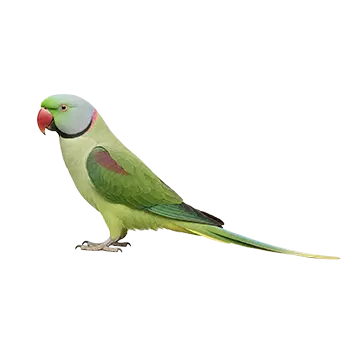
The Derbyan Parakeet is one of the largest members of the Psittacula genus, reaching lengths of up to twenty inches, and its size directly influences its caloric and nutritional requirements. In the wild, these birds inhabit montane forests across southeastern Tibet, southwestern China, and northeastern India, where they forage on a varied diet of seeds, fruits, flowers, leaf buds, and pine cones. Replicating the breadth and nutritional balance of that wild diet in captivity requires deliberate planning, and the consequences of getting it wrong accumulate steadily over the bird's potential thirty-year lifespan.

Protein needs for Derbyan Parakeets are moderate compared to larger parrots but higher than those of smaller parakeet species. Their muscular build and active temperament demand a diet that provides roughly twelve to fourteen percent protein from quality sources. Amino acid balance matters as much as total protein content, and diets built primarily around sunflower seeds or safflower fail to deliver the full amino acid profile that supports healthy feather growth, muscle maintenance, and immune function.

Calcium and phosphorus balance is particularly important for Derbyan Parakeets. The ideal dietary calcium-to-phosphorus ratio for psittacines is roughly two to one, and deviations from this balance can impair calcium absorption regardless of how much calcium is present in the food. Seeds are naturally high in phosphorus and low in calcium, which is one of the core reasons that seed-heavy diets cause chronic health problems in captive parakeets. A diet anchored by formulated pellets, supplemented with calcium-rich vegetables, corrects this imbalance at its source.

Vitamin A plays a central role in maintaining the health of the respiratory and digestive mucous membranes, and deficiency is one of the most common nutritional problems seen in captive Psittacula species. Derbyan Parakeets fed predominantly on seeds are especially vulnerable because most seed varieties contain negligible beta-carotene. Dark leafy greens, orange-fleshed vegetables, and red peppers are the most effective whole-food sources of vitamin A precursors, and they should appear in the diet several times per week at minimum.

What to Look For

Selecting food products for a Derbyan Parakeet starts with understanding what constitutes a quality formulated pellet. The ingredient list should lead with whole grains, legumes, or vegetables rather than grain fragments, sugar, or artificial preservatives. Ethoxyquin, BHA, and BHT are synthetic preservatives that appear in some lower-tier bird foods and are best avoided in favor of products preserved with mixed tocopherols or other natural antioxidants. The absence of artificial colors is another marker of a formulation designed around nutrition rather than shelf appeal.

Pellet size is a practical consideration that affects acceptance and waste. Derbyan Parakeets are large-bodied parakeets with strong mandibles, and they handle medium-sized pellets comfortably. Pellets designed for cockatiels or budgies are too small and tend to be crushed and discarded, while pellets sized for macaws can be unwieldy. Medium parrot or small cockatoo sizing generally provides the best fit, and many manufacturers label their products with species-size recommendations that simplify the selection process.

For seed mixes intended as a dietary supplement rather than a staple, quality varies enormously across the market. A good supplemental seed mix for Derbyan Parakeets should include a diverse array of seeds such as canary grass seed, millet varieties, hemp seed, and small quantities of safflower, with dried vegetables or herbs adding nutritional complexity. Mixes dominated by sunflower seeds or peanuts are calorie-dense and nutritionally lopsided, and they reinforce selective feeding habits that are already a challenge with this species.

Freshness is an underappreciated factor in bird food quality. Seeds and pellets lose nutritional value over time, and rancid fats in old seed mixes can cause digestive upset and contribute to liver problems. Check packaging dates, buy from retailers with high turnover, and store opened food in airtight containers in a cool, dry location. Pellets that smell musty or seeds that appear dusty or discolored should be discarded rather than offered.

Recommended Pellet Types

Formulated pellets should constitute approximately fifty to sixty percent of a Derbyan Parakeet's daily food intake by volume. The pellet market includes several manufacturing approaches, each with distinct characteristics. Extruded pellets are produced by forcing a dough of blended ingredients through a heated die, which cooks the mixture uniformly and creates a consistent nutrient profile in every piece. Cold-pressed pellets skip the high-heat step, preserving more heat-sensitive vitamins and enzymes, though they tend to be crumblier and may produce more waste.

Naturally colored and unflavored pellets are generally preferred by avian nutritionists. While some Derbyan Parakeets do show initial resistance to plain pellets, especially if transitioning from a seed-based diet, colored pellets teach birds to eat selectively by color rather than accepting the full formulation. The transition from seeds to pellets can take weeks or even months with this species, and patience during conversion is more productive than choosing a less nutritious but more immediately appealing product.

Some pellet lines are formulated specifically for Asiatic parakeets or medium-sized parrots, with protein and fat ratios calibrated for birds in this size range. These targeted formulations typically provide ten to fourteen percent fat and twelve to sixteen percent protein, which aligns well with the Derbyan Parakeet's metabolic needs. Generic all-bird pellets are acceptable if the nutritional breakdown falls within these ranges, but species-targeted products eliminate the guesswork.

Organic pellets made from certified organic grains and vegetables have become increasingly available and offer the advantage of reduced pesticide residue. For a long-lived species like the Derbyan Parakeet, minimizing chronic low-level exposure to agricultural chemicals is a reasonable precaution, though the most important factor remains the overall formulation rather than the organic certification alone. A well-formulated conventional pellet is nutritionally superior to a poorly formulated organic one.

Fresh Foods & Cooking Mixes

Fresh foods form the second pillar of a Derbyan Parakeet's diet, providing micronutrients, dietary variety, and behavioral enrichment that pellets alone cannot deliver. The wild diet of this species includes substantial plant matter beyond seeds, and captive birds benefit from a daily offering of fresh vegetables, leafy greens, and limited fruit. Preparing a weekly batch of chopped vegetables and portioning them into daily servings simplifies the process and ensures consistency.

Dark leafy greens should be a regular fixture. Kale, Swiss chard, dandelion greens, mustard greens, and bok choy all deliver calcium, iron, and vitamin A precursors. These can be offered raw, lightly steamed, or finely chopped and mixed with other vegetables to encourage consumption. Derbyan Parakeets sometimes show initial reluctance toward unfamiliar greens, and persistent daily exposure is usually more effective than offering large quantities intermittently.

Cooking mixes formulated for parrots provide a convenient cooked food option. These typically contain a blend of dried legumes, grains such as quinoa or brown rice, and dehydrated vegetables. When prepared according to package directions and cooled to room temperature, they offer a nutritious soft food that most Derbyan Parakeets accept readily. Look for mixes with a short, recognizable ingredient list and no added salt, sugar, or artificial seasonings. Cooked food spoils faster than dry food, so remove uneaten portions within a few hours to prevent bacterial growth.

Sprouted seeds bridge the gap between dry seeds and fresh vegetables. The germination process converts stored fats and starches into vitamins, enzymes, and simple sugars, dramatically improving the nutritional profile of the seed. Mung beans, lentils, sunflower seeds, and buckwheat are all suitable for sprouting. Hygiene during the sprouting process is critical, as the warm, moist conditions that promote germination also favor bacterial and mold growth. Rinse sprouts thoroughly at least twice daily and discard any batch that develops an off smell or visible mold.

Treats & Supplements

Treats are valuable tools for training and bonding with Derbyan Parakeets, which can be reserved in temperament and benefit from positive reinforcement during socialization. Nuts are the most universally accepted treat for this species. Almonds, walnuts, pine nuts, and cashews provide healthy fats and protein, and their hard shells offer additional enrichment when offered whole. Because nuts are calorie-dense, they should be portioned carefully, with two to three medium nuts per day serving as a reasonable guideline for a bird of this size.

Millet sprays, while often associated with smaller birds, are readily accepted by Derbyan Parakeets and can be used as a lower-calorie treat alternative. They work particularly well for target training or step-up reinforcement because small pieces can be broken off quickly during training sessions. Dried fruit pieces, particularly unsulfured mango, papaya, or coconut, also function as effective treats, though their sugar content means they should be offered sparingly.

Calcium supplementation is advisable for most captive Derbyan Parakeets, particularly breeding hens and birds whose fresh food intake is inconsistent. Cuttlebone is the most traditional calcium source and doubles as a beak-conditioning tool. Mineral blocks that combine calcium carbonate with trace minerals offer another option. Liquid calcium supplements can be added to soft foods for birds that ignore cuttlebone, though dosing should follow veterinary recommendations specific to the individual bird's needs.

General vitamin supplements should be approached with caution. A Derbyan Parakeet eating a balanced diet of quality pellets, varied fresh foods, and appropriate treats typically receives adequate vitamins without additional supplementation. Over-supplementation of fat-soluble vitamins, particularly vitamins A and D, can reach toxic levels and cause organ damage. Water-soluble vitamin supplements are somewhat safer because excess is excreted, but they also degrade quickly in water and can encourage bacterial growth in water dishes. Targeted supplementation under veterinary guidance is preferable to routine blanket supplementation.

Foods to Avoid

Certain foods pose serious health risks to Derbyan Parakeets and must be excluded from the diet entirely. Avocado is toxic to virtually all psittacines. The compound persin, present throughout the fruit including the flesh, causes myocardial necrosis and respiratory distress in birds, and exposure is frequently fatal. No part of the avocado plant should be accessible to the bird, including leaves and bark if the bird has access to outdoor areas where avocado trees grow.

Chocolate and caffeine-containing foods and beverages are toxic to birds. Theobromine and caffeine affect the avian cardiovascular and nervous systems at doses far lower than those that would affect a human. Even small amounts of chocolate, coffee, tea, or energy drinks can cause hyperactivity, tremors, cardiac arrhythmia, and death. These items should never be left within reach of a free-roaming bird.

Onions and garlic in all forms, whether raw, cooked, dehydrated, or powdered, contain organosulfur compounds that damage avian red blood cells. Chronic low-level exposure causes oxidative hemolysis, leading to anemia that may not become apparent until significant damage has accumulated. This means that cooked meals seasoned with onion or garlic powder are unsafe to share, even if no visible onion or garlic pieces are present.

High-sodium foods are poorly tolerated by birds, whose kidneys are not equipped to handle the salt loads common in processed human foods. Chips, pretzels, salted nuts, cured meats, and many breads contain sodium levels that can cause dehydration, kidney stress, and electrolyte imbalances in a Derbyan Parakeet. Fruit pits and apple seeds should also be removed before offering fruit, as they contain amygdalin, a cyanogenic glycoside that releases hydrogen cyanide during digestion. While a single seed is unlikely to cause acute poisoning, habitual exposure creates cumulative risk.

Feeding Schedule

A consistent daily feeding schedule supports digestive health, behavioral stability, and weight management in Derbyan Parakeets. The most effective approach mirrors the natural feeding rhythm of wild Psittacula species, which forage most actively during the early morning and late afternoon. Offering fresh foods in the morning, when appetite is highest, maximizes consumption of the most nutritious components of the diet. Pellets can remain available throughout the day as the baseline food source, ensuring the bird always has access to balanced nutrition.

Portion sizing requires attention to the individual bird's weight, activity level, and metabolic rate. A typical adult Derbyan Parakeet weighing between 300 and 350 grams requires approximately 30 to 40 grams of food per day, distributed between pellets, fresh foods, and treats. Monitoring body weight weekly with a gram scale provides objective data that is far more reliable than visual assessment, especially since feather coverage can conceal weight changes in either direction.

Fresh food should be removed from the cage within three to four hours of serving to prevent bacterial contamination, particularly during warm weather. Cooked foods, sprouts, and moist mixes spoil faster than raw vegetables and may need to be removed sooner. Pellets in a clean, dry dish can safely remain available longer, but should be refreshed daily and the dish washed to prevent accumulation of dust, feather dander, and dried droppings.

Foraging-style feeding enhances the nutritional value of mealtime by extending the time the bird spends working for its food. Wrapping pellets in paper, threading vegetables onto skewers, or placing food inside foraging toys slows consumption and provides mental stimulation that reduces boredom-related behaviors. Derbyan Parakeets are intelligent birds that benefit significantly from feeding strategies that engage their problem-solving abilities, and integrating foraging into the daily feeding schedule addresses both nutritional and behavioral needs simultaneously.

Always consult a qualified professional before making any health-related decisions. This content is provided for informational reference only and should not replace professional guidance specific to your animal.