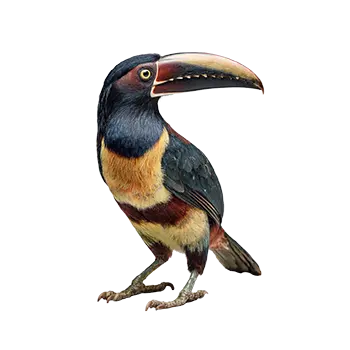

Space Requirements

Collared Aracaris are energetic, flight-oriented birds that require significantly more space than comparably sized parrots. While a parrot of similar body length might manage in a medium cage supplemented with out-of-cage time, an aracari's movement style is fundamentally different. These birds hop rapidly between perches and fly in short, direct bursts rather than climbing methodically along bars and surfaces. Their long tails and prominent bills add functional length that must be accommodated, and their flight pattern demands horizontal distance rather than vertical height alone.

The minimum enclosure size for a single Collared Aracari should be approximately four feet long, two feet wide, and three feet tall, though larger is always preferable. For a pair, which is the recommended social arrangement for this gregarious species, the enclosure should be at least six feet long to allow both birds to fly short distances and maintain comfortable personal space when desired. These dimensions represent a baseline for indoor cage housing; dedicated bird rooms and outdoor aviaries can and should be considerably more generous.

Bar spacing is a critical safety parameter. Aracaris have relatively small heads compared to their overall body length, and their slender necks can slip through bar gaps that might seem adequately narrow for a parrot of the same weight. Bar spacing should not exceed three-quarters of an inch, and half-inch spacing provides a safer margin. Horizontal bar orientation is preferable to vertical, as it gives the birds better grip when climbing along the cage walls, though aracaris spend far less time clinging to bars than parrots do.

The enclosure shape should prioritize length over height. A long, rectangular flight cage allows the bird to exercise its natural flight behavior, while a tall, narrow cage forces vertical climbing that does not align with the aracari's movement patterns. If space constraints limit options, choosing length over any other dimension provides the greatest welfare benefit. Corner cages and ornate round cages marketed for decorative purposes are functionally unsuitable for any toucan species.

Cage Types and Materials

Stainless steel cages represent the gold standard for aracari housing. Unlike powder-coated or galvanized cages, stainless steel is completely non-toxic, impervious to the mild acids in fruit that can degrade other finishes, and essentially permanent with proper care. The high initial cost of stainless steel is offset by its indefinite lifespan and the absence of concerns about coating deterioration that plague lesser materials. For a species that will be housed for fifteen to twenty years, the investment in stainless steel makes practical sense.

Powder-coated wrought iron cages are the most common alternative and can serve adequately if the coating is high-quality and regularly inspected for chips and flaking. Aracaris are less destructive to cage finishes than large parrots with crushing bite force, but their habit of rubbing fruit along bars and tossing wet food creates a persistently moist environment that accelerates coating breakdown. Any exposed metal beneath a damaged powder coat will rust quickly in these humid conditions. Owners choosing powder-coated cages should budget for eventual replacement and maintain vigilant inspection routines.

Galvanized wire and cages with zinc-coated components must be strictly avoided. Zinc toxicosis is a well-documented hazard in captive birds, caused by ingestion of zinc particles from cage hardware, and aracaris' food-handling habits increase their exposure risk. Even cage accessories like food dish clips, door latches, and swing hardware should be verified as zinc-free. When in doubt about a component's composition, stainless steel replacement hardware is widely available and inexpensive relative to the veterinary cost of metal poisoning.

Welded mesh flight enclosures offer an excellent option for owners with dedicated bird rooms or screened porch areas. These modular panel systems allow construction of large flight enclosures that can be customized to the available space and disassembled for cleaning or relocation. Mesh panel systems designed for aviary use typically come in stainless steel or coated wire options, and they provide a more open, airy environment than traditional bar cages while still maintaining secure containment.

Perch Selection and Placement

Perch selection for Collared Aracaris must account for their unique foot structure and resting behavior. Toucan feet are zygodactyl, with two toes pointing forward and two backward, and they grip perches differently than parrots. Aracaris prefer perches with diameters between three-quarters of an inch and one and a half inches, which allows their toes to wrap naturally without strain. Perches that are too thick force the toes into an unnaturally splayed position, while overly thin perches cause the bird to grip excessively, leading to foot fatigue and pressure sores over time.

Natural wood branches are the ideal perch material because they provide variable diameters along their length, textured surfaces that maintain foot health, and a more engaging gripping experience than uniform dowels. Safe wood species include manzanita, java wood, grape vine, and untreated fruit woods such as apple and pear. Branches should be cleaned and dried before installation but need not be perfectly straight or uniform. The irregularity of natural branches exercises different foot muscles and prevents the repetitive pressure points that cause bumblefoot on smooth, uniform surfaces.

Perch placement should create a clear flight path along the longest dimension of the enclosure. Position the primary perches at opposite ends of the cage at the same height, with enough clearance for the bird to fly between them without catching its tail on cage walls or accessories. A sleeping perch should be placed at the highest available point in the cage, as aracaris instinctively seek the highest roost for overnight rest. Avoid cluttering the cage interior with excessive perches, swings, and accessories that reduce functional flight space.

Rope perches and flexible spiral perches can serve as secondary perching options that add variety and gentle movement. Cotton rope perches should be inspected regularly for fraying, as loose threads can entangle toes and cause injury. Sisal rope perches are more durable but rougher on foot pads. Heated perches designed for birds can be beneficial in cooler climates or air-conditioned homes, as aracaris are tropical species that are sensitive to cold and may develop foot circulation problems in environments consistently below sixty-five degrees Fahrenheit.

Aviary Design Considerations

An outdoor aviary or dedicated indoor flight room represents the optimal housing arrangement for Collared Aracaris, providing the space for sustained flight, natural sunlight exposure, and environmental complexity that no standard cage can replicate. Outdoor aviaries for aracaris should be fully enclosed with a solid roof or covered section that provides shelter from rain, direct midday sun, and aerial predators. A minimum aviary footprint of eight feet by four feet by six feet tall accommodates a pair comfortably, though larger dimensions dramatically improve the birds' quality of life and behavioral repertoire.

Double-entry vestibule systems are essential for any aviary housing flighted birds. Aracaris are fast, agile flyers that will exploit an open door in an instant. A vestibule creates an airlock-style entry where the outer door is closed before the inner door is opened, preventing escapes during routine maintenance and feeding. The vestibule should be large enough for the keeper to enter with supplies and close the outer door behind them before engaging the inner door.

Climate control is a primary concern for this tropical species. Collared Aracaris are native to lowland and foothill forests where temperatures rarely drop below sixty degrees Fahrenheit, and they have limited tolerance for cold. Outdoor aviaries in temperate climates require a heated indoor retreat space that the birds can access freely when temperatures drop. Radiant panel heaters or ceramic heat emitters mounted safely out of reach provide reliable warmth without the fire risk of heat lamps. The heated section should maintain a minimum temperature of sixty-five degrees Fahrenheit during winter months, with thermostat control for consistency.

Planting within the aviary adds naturalistic complexity and environmental enrichment. Non-toxic tropical and subtropical plants such as hibiscus, ficus, and palms provide visual barriers, foraging opportunities, and perching surfaces. Live plants also help regulate humidity within the aviary, which benefits a species adapted to humid forest environments. Any plants included in the aviary must be verified as non-toxic to birds and should be established in heavy, tip-resistant containers or planted directly if the aviary has a soil floor.

Nesting and Sleeping Arrangements

Collared Aracaris have a distinctive communal roosting behavior that sets them apart from most other bird species kept in captivity. In the wild, family groups of up to six adults crowd together into a single tree cavity for the night, folding their tails over their backs and tucking their bills against their breast feathers in a compact arrangement that conserves body heat. This behavior persists in captivity, and providing an appropriate roosting box is essential for the birds' comfort and psychological security.

A roosting box for a pair of Collared Aracaris should have interior dimensions of approximately twelve inches long, eight inches wide, and ten inches tall, with an entrance hole roughly three inches in diameter. The box should be mounted as high in the enclosure as possible, as the birds will always select the highest available cavity for sleeping. Untreated plywood, natural wood planks, or commercially produced nest boxes designed for medium parrots can serve as the construction material. The interior should be left rough for grip, and a thin layer of wood shavings or aspen bedding on the floor provides cushioning and absorbs waste.

Cleaning the roosting box regularly is important because aracaris produce liquid, fruit-heavy droppings that accumulate quickly in an enclosed space. A removable bottom panel or a hinged inspection door simplifies this maintenance task. Some keepers maintain two roosting boxes and rotate them, allowing one to be cleaned and dried while the other is in use. The birds may resist using a freshly cleaned box for the first night or two, but consistent placement and familiar scent from bedding material usually restore acceptance quickly.

During breeding season, the roosting box may transition into a nesting site. Breeding pairs of Collared Aracaris typically use the same type of cavity for both sleeping and nesting, so a box that has been accepted as a roost often becomes the preferred nest site without modification. If breeding is not desired, the roosting box should still be provided year-round because removing it causes significant stress to birds that have become dependent on it for their nightly sleep routine. Owners not intending to breed should consult an avian veterinarian about hormonal management rather than removing the roosting cavity.

Substrate and Cage Floor Management

Managing the cage floor is one of the most labor-intensive aspects of aracari keeping because of the species' uniquely messy feeding and elimination habits. Collared Aracaris produce copious liquid droppings as a consequence of their high-fruit diet, and they fling food with remarkable range during feeding. The area beneath and around the enclosure will receive a constant shower of fruit fragments, liquid waste, and discarded food items, and the cage floor management system must account for this reality.

Grated cage bottoms with removable trays are the most practical floor configuration for indoor cages. The grate prevents the bird from walking through its own waste while allowing droppings and debris to fall into the tray below, where they can be collected and discarded. The tray should be lined with newspaper, butcher paper, or disposable cage liner paper for easy daily replacement. Avoid cedar and pine shavings in the tray, as the aromatic oils these woods emit can irritate the respiratory system of sensitive birds. If wood shavings are preferred for absorbency, kiln-dried aspen shavings are the safest option.

For aviaries and large flight enclosures, concrete or tile flooring that can be hosed down and disinfected provides the most hygienic solution. Bare earth or gravel floors are sometimes used in outdoor aviaries but create sanitation challenges, as organic waste accumulates in the substrate and can harbor bacteria, fungal spores, and parasites. If a natural floor is desired, a deep layer of easily replaceable pea gravel or smooth river rock over a drainage base allows waste to wash through during cleaning while providing a naturalistic appearance.

Drip guards, splash shields, and cage skirts help contain the mess that inevitably escapes the cage boundaries. Clear acrylic panels attached to the lower portion of the cage exterior catch flung food and deflected droppings before they reach the surrounding floor and walls. These shields should extend at least eight to twelve inches above the cage floor tray and wrap around at least the feeding area sides of the cage. Washable floor mats placed beneath and around the cage provide an additional layer of protection for the underlying flooring.

Sanitation products used in and around the enclosure must be bird-safe. Many household disinfectants contain volatile compounds, phenols, or ammonia that are toxic to birds. Veterinary-grade avian disinfectants, dilute white vinegar solutions, and enzymatic cleaners formulated for pet use are safe alternatives. Steam cleaning is an excellent chemical-free option for cage components, grates, and trays, killing bacteria and removing dried organic matter without leaving any chemical residue.

Location and Environmental Setup

Where the enclosure is placed within the home has a profound impact on the Collared Aracari's health and behavior. These are social, observant birds that thrive on visual contact with household activity but become stressed by chaotic or unpredictable environments. The ideal location is a well-lit room where the family spends time regularly, positioned against a wall or in a corner so that the bird has a sense of security from at least one or two sides rather than being exposed to movement from all directions simultaneously.

Lighting is one of the most important environmental parameters for a tropical species housed indoors. Natural sunlight filtered through window glass is beneficial but insufficient, as glass blocks the ultraviolet-B wavelengths that birds need for vitamin D3 synthesis and normal visual perception. A full-spectrum avian lighting fixture mounted above the enclosure, operating on a timer set to provide ten to twelve hours of light and twelve to fourteen hours of darkness, compensates for the UV deficit of indoor housing. The light should be positioned close enough to the enclosure for effective UV exposure but out of reach of the bird to prevent burns or electrical hazards.

Humidity management supports respiratory health and feather condition in this species adapted to humid tropical forests. Indoor environments, particularly those heated during winter or cooled by air conditioning during summer, often fall well below the fifty to sixty-five percent relative humidity range that aracaris prefer. A room humidifier operating near the enclosure, regular misting with clean water, or a shallow bathing dish within the cage helps maintain appropriate moisture levels. Hygrometers placed near the enclosure allow monitoring and adjustment of humidity throughout the year.

Noise and vibration sensitivity should influence placement decisions. Aracaris should not be housed immediately adjacent to televisions that produce sudden loud sounds, near exterior doors that slam, or in rooms with heavy foot traffic directly past the cage. While they are sociable and enjoy household interaction, sudden startling events can cause panic flights that result in injury within an enclosed space. A location that provides consistent, moderate activity without sharp acoustic surprises offers the best balance of social enrichment and physical safety.

Always consult a qualified professional before making any health-related decisions. This content is provided for informational reference only and should not replace professional guidance specific to your animal.