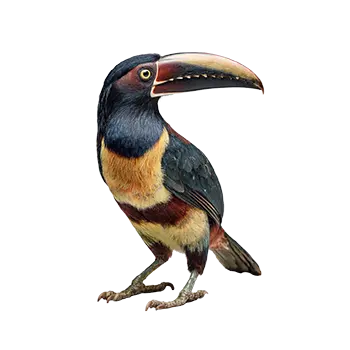

Selecting the right food and water dishes for a Collared Aracari requires understanding the species' unique feeding mechanics and the practical challenges of a fruit-based diet. Aracaris do not eat the way parrots eat. Rather than holding food in a foot and gnawing, they pick up a food item in the tip of their bill, tilt their head back, and toss the item into their throat with a quick flicking motion. This feeding style demands open, wide-mouthed dishes rather than the deep, narrow cups that suit parrots. Dishes should have a wide rim diameter of at least four to five inches and a relatively shallow depth of two to three inches to give the bird unobstructed access to its food.
Stainless steel is the optimal material for aracari food dishes. Fruit-based diets create an acidic, moisture-rich environment that degrades plastic over time, causing surface scratches that harbor bacteria and eventual material breakdown. Ceramic dishes are acceptable but can chip under impact, and an aracari that tosses its food with enthusiasm will regularly strike the dish rim with its bill. Stainless steel resists all of these stresses, cleans easily in a dishwasher, and does not absorb stains or odors from the colorful fruit that constitutes most of the diet.
Multiple feeding stations within the enclosure are preferable to a single dish. Positioning food dishes at different heights and locations encourages movement and foraging behavior, distributes feeding activity throughout the day, and reduces the territorial food guarding that can occur when a pair shares a single feeding point. At minimum, a separate fruit dish and pellet dish should be provided, with a third station for protein sources like insects or cooked egg. Each dish should be removable for twice-daily cleaning, as leftover fruit attracts insects and begins to ferment within hours in warm conditions.
Water dishes present an additional challenge because aracaris routinely dunk food items into their water before eating them, rapidly contaminating the water with organic debris. Heavy, tip-resistant water crocks with a capacity of at least sixteen ounces ensure the bird has adequate water volume even after dunking behavior reduces the clean water supply. Some keepers use two water sources: a clean drinking dish refreshed multiple times daily and a separate, larger bathing and dunking dish that the bird can use freely.