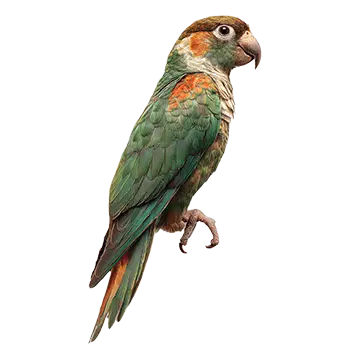

The dishes and feeding systems you choose for your Cape Parrot directly affect hygiene, convenience, and even the bird's willingness to eat and drink. Stainless steel bowls are the preferred standard for parrot feeding, offering durability, ease of cleaning, and resistance to the bacterial buildup that can develop in scratched plastic surfaces. A Cape Parrot's strong beak makes short work of flimsy plastic dishes, so investing in quality stainless steel from the outset saves money and prevents potential hazards.
Locking dish holders that attach securely to the cage bars are essential for Cape Parrots. These birds are notorious for flipping, dumping, and playing with unsecured dishes, turning feeding time into a cleanup project. Coop cups with bracket-mounted clamps or bolt-on systems keep dishes firmly in place while remaining easy for the owner to remove for refilling and washing. Provide separate dishes for pellets, fresh food, and water to maintain cleanliness and prevent cross-contamination.
Water bottle systems designed for parrots offer an alternative to open water dishes and can help keep water cleaner for longer periods. However, not all Cape Parrots take readily to bottle-style drinkers, and the nozzle mechanisms require regular disassembly and cleaning to prevent algae and bacterial growth. If using a water bottle, always provide an open water dish alongside it until you are certain the bird is drinking reliably from the bottle.
Foraging feeders that require the bird to work for its food transform routine meals into enrichment opportunities. Puzzle feeders, skewer-style fruit holders, and kabob-style hanging feeders encourage natural foraging behavior and slow down consumption, which is particularly beneficial for birds prone to eating too quickly. Rotate between standard bowls and foraging feeders to balance convenience with mental stimulation.