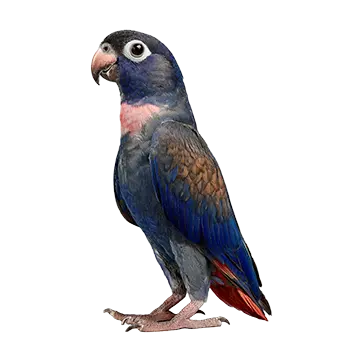

The Bronze-Winged Pionus is a stocky, medium-sized parrot native to the mountainous forests of South America, and its dietary requirements reflect both its build and its relatively sedate captive lifestyle. This species has a pronounced tendency toward weight gain when overfed or given unrestricted access to high-fat seeds and nuts. A nutritionally complete diet must deliver adequate protein for feather maintenance, controlled fat levels to prevent obesity, and a full spectrum of vitamins and minerals to support a lifespan that can reach forty years in well-managed captivity.
Vitamin A is a nutrient of particular importance for the Bronze-Winged Pionus. Like many Pionus species, individuals kept on seed-heavy diets frequently develop subclinical vitamin A deficiency long before obvious symptoms appear. The early signs are subtle — slight changes in feather texture, mild nasal discharge, or a gradual dulling of the plumage — and by the time clinical signs become unmistakable, significant damage to the respiratory epithelium may have already occurred. Incorporating beta-carotene-rich vegetables into the daily diet is the most effective preventive measure.
Calcium and phosphorus balance is another area that warrants attention. While Bronze-Winged Pionus are not as acutely prone to hypocalcemia as African Greys, inadequate calcium intake over months or years can lead to weakened bones, poor egg quality in breeding hens, and compromised overall health. The ideal dietary calcium-to-phosphorus ratio for parrots falls between 1.5:1 and 2:1, and achieving this ratio requires thoughtful selection of both commercial and fresh foods.
The relatively calm temperament of the Bronze-Winged Pionus means that its caloric expenditure in captivity is lower than that of more active species like conures or caiques. Owners who feed their Pionus the same quantities recommended for comparably sized but more energetic parrots often find their birds gaining weight steadily. Caloric intake should be calibrated to the individual bird's activity level, with regular weight monitoring serving as the most reliable feedback mechanism.