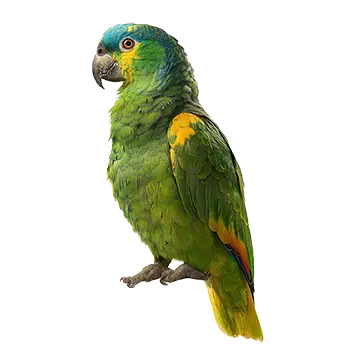

Remote monitoring cameras have become one of the most practical technology investments for Blue-Fronted Amazon owners. These parrots are social creatures that can experience distress during extended periods of solitude, and a camera provides the owner with real-time visibility into the bird's behavior, activity level, and general well-being during absences. Beyond convenience, a camera record can reveal behavioral patterns that are invisible during in-person observation, such as how the bird behaves when no one is home, whether it vocalizes excessively, how much time it spends eating versus resting, and whether it engages with toys or sits idle.
When selecting a camera for a bird room, resolution and frame rate matter less than audio quality, low-light capability, and two-way communication features. A Blue-Fronted Amazon's vocalizations carry important behavioral information, from contented chattering to distress calls, and a camera with a high-quality microphone captures these nuances far better than a video-only feed. Two-way audio allows the owner to speak to the bird remotely, which can provide comfort to a bird experiencing separation anxiety, though this feature should be used judiciously, as some birds become agitated when they hear their owner's voice but cannot locate the source.
Night vision or infrared capability is valuable for monitoring the bird during its dark sleep period without introducing visible light that would disrupt rest. Infrared night vision allows the owner to check on the bird's sleeping posture and behavior, which can reveal early signs of illness. A healthy sleeping Amazon typically rests with one foot tucked, feathers slightly fluffed, and head turned to rest its beak on its back feathers. Deviations from this pattern, such as sleeping on both feet, remaining on the cage floor, or sitting with feathers heavily fluffed, warrant closer observation and possibly veterinary attention.
Cloud storage and motion-triggered recording features allow the owner to review footage from earlier in the day without watching hours of continuous feed. Motion triggers can also send smartphone alerts when the bird becomes unusually active, which may signal excitement, fear, or an environmental disturbance such as a loud noise or a passing predator visible through a window. Cameras should be positioned where the bird cannot reach them, as a curious Amazon will dismantle, chew, or dislodge any device within beak range. Wall-mounted or ceiling-mounted placement, angled to capture the cage and the surrounding room, provides comprehensive coverage.