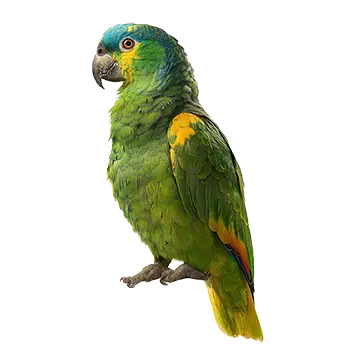

The Blue-Fronted Amazon is a stocky, muscular parrot with a metabolism that reflects its energetic temperament. In the wild, these birds range across woodlands and palm groves in South America, feeding on a broad spectrum of fruits, seeds, nuts, blossoms, and leaf buds. Replicating that nutritional breadth in captivity is the central challenge of feeding this species. A diet that falls short in variety or balance will eventually surface as feather problems, behavioral changes, or chronic illness, often years before the deficiency becomes clinically obvious.
Amazons as a group are prone to obesity, and the Blue-Fronted Amazon is no exception. Their hearty appetites and enthusiasm for calorie-dense foods make weight management a lifelong concern. A captive Blue-Fronted Amazon that is allowed to eat freely from a seed-heavy diet will almost certainly become overweight, and obesity in Amazons is closely linked to fatty liver disease, atherosclerosis, and shortened lifespan. Caloric planning is not optional for this species. It is a core part of responsible ownership.
Protein requirements for the Blue-Fronted Amazon are moderate compared to some other parrot families. Adults in maintenance condition do well with protein comprising roughly twelve to fourteen percent of total diet by weight. Breeding birds and juveniles need somewhat more, and molting birds benefit from a temporary protein boost to support feather keratin production. Legumes, cooked eggs, and formulated pellets are all reliable protein sources that avoid the excess fat that comes with relying on nuts or seeds for protein.
Vitamin A is a critical nutrient for all Amazon parrots. Deficiency is widespread in captive populations fed seed-based diets, because the seeds most commonly offered to parrots are poor sources of beta-carotene, the precursor the body converts to active vitamin A. Chronic vitamin A deficiency compromises the epithelial tissues lining the respiratory and digestive tracts, creating vulnerability to bacterial and fungal infections. The most effective prevention is a diet rich in orange and dark green vegetables, reinforced by a pellet formulation that includes adequate vitamin A levels.