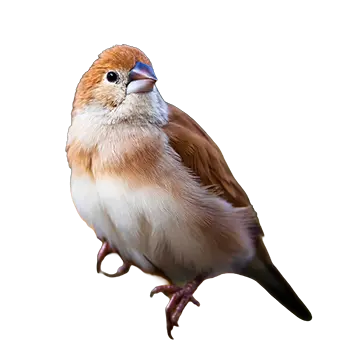

Food and Water Dishes

The selection of food and water containers for African Silverbills involves considerations that differ meaningfully from those for larger cage birds. The Silverbill's small size and ground-foraging habits dictate container dimensions, placement height, and access design. Open ceramic or stainless steel dishes work well for seed and fresh food, provided they are shallow enough for the bird to reach the bottom without effort and heavy enough to resist tipping. Lightweight plastic dishes slide and flip when birds land on the rim, scattering food and creating waste.

For seed, covered hopper-style feeders are a practical choice that keeps the seed clean and reduces contamination from droppings. These feeders dispense seed through a narrow trough as the birds consume it, maintaining a continuous supply without exposing the full volume to fouling. When selecting a hopper feeder, verify that the dispensing slot is wide enough for the seed types you use. Some hoppers designed for canary seed will jam when filled with larger millet varieties. Multiple feeding stations distributed around the enclosure prevent dominant birds from monopolizing a single food source, which is important in colony settings.

Water delivery deserves careful thought. Open water dishes are the simplest option but contaminate rapidly with seed husks, droppings, and feather dust. Tube-style water dispensers, sometimes called vacuum drinkers, keep the water supply enclosed and release water into a small trough as the birds drink. These dramatically extend the interval between water changes and ensure cleaner drinking water throughout the day. Glass tube dispensers are preferable to plastic because they resist biofilm buildup and are easier to sanitize. Check the tube daily for air locks or blockages that can cut off the water supply without visible indication.

Separate dishes should be maintained for fresh foods, egg food, supplements, and grit. Using the same container for different food types creates cross-contamination and makes it impossible to monitor consumption of individual diet components. Small ceramic ramekins or stainless steel condiment cups are appropriately sized for the quantities involved. Dishes used for moist foods like egg food and sprouted seeds should be washed after every use, as residue from these foods supports bacterial growth within hours at room temperature.

Lighting and Environmental Controls

Appropriate lighting is one of the most impactful accessories an African Silverbill keeper can invest in, yet it is frequently overlooked in favor of more visible purchases. Birds perceive a broader spectrum of light than humans, extending into the ultraviolet range, and full-spectrum lighting that includes UVA and UVB wavelengths supports vitamin D3 synthesis, calcium metabolism, natural color perception, and behavioral regulation. Without adequate UV exposure, captive finches can develop calcium deficiency even when dietary calcium is sufficient, because the metabolic pathway from ingested calcium to usable bone and eggshell calcium depends on vitamin D3 activation.

Full-spectrum avian bulbs are available in compact fluorescent and LED formats. LED full-spectrum bulbs have largely overtaken fluorescents in the avian market due to their longer lifespan, lower heat output, and flicker-free operation. Fluorescent lights, even those marketed as flicker-free, operate at a cycling frequency that birds can perceive, creating a strobe effect invisible to humans but potentially stressful for birds. When choosing an LED option, select bulbs with a color rendering index above ninety and a color temperature between 5000K and 6500K, which approximates midday natural sunlight.

The fixture should be positioned above the enclosure at a distance that provides UV exposure without overheating the cage. Most avian lighting manufacturers specify a recommended mounting distance, typically eight to twelve inches from the top of the cage, beyond which the UV output drops below useful levels. A timer is essential, as manual light management inevitably leads to inconsistency that disrupts the birds' circadian rhythms. Set the timer to provide ten to twelve hours of light during maintenance periods, extending to thirteen or fourteen hours if breeding stimulation is desired.

Beyond lighting, environmental humidity can be managed with a small room humidifier during dry winter months. African Silverbills are adapted to arid conditions and tolerate low humidity well, but the extreme dryness produced by central heating can cause dry, brittle feathers and irritated respiratory passages. A relative humidity between forty and sixty percent is comfortable for both the birds and their human housemates. Hygrometers placed near the enclosure provide ongoing monitoring without requiring electronic integration.

Travel Carriers and Hospital Cages

Every African Silverbill keeper needs a small travel carrier for veterinary visits, emergency evacuations, and temporary housing during cage cleaning or repairs. The carrier should be sized to comfortably hold the number of birds being transported without excess space that allows them to be thrown around during transit. A carrier approximately twelve inches long, eight inches wide, and eight inches tall is appropriate for transporting a pair. The bar spacing or ventilation holes must be small enough to prevent escape, and the carrier should have a secure latch that cannot be accidentally bumped open.

Dedicated small-bird carriers with opaque sides and a mesh or barred front panel reduce visual stress during transport. Birds that can see movement outside the carrier during a car ride become more agitated than those in a partially enclosed space. If using a clear-sided carrier, draping a light cloth over the top and sides while leaving the front partially uncovered provides a calming semi-darkness while maintaining airflow. Avoid using cardboard boxes for transport, as they provide no ventilation control and can be chewed through by stressed birds.

A hospital cage or isolation enclosure is an important accessory for managing sick or injured birds. This is a small, enclosed cage or aquarium with controlled heating that allows a sick bird to rest in warmth without the energy expenditure of maintaining body temperature. Commercial hospital cages include built-in heating elements and thermostats, but a simple alternative is a small cage placed partially on a heating pad set to low, with a thermometer monitoring the interior temperature. The target temperature for a sick finch is around eighty-five to ninety degrees Fahrenheit, significantly warmer than normal room temperature.

The hospital cage should be stocked with easily accessible food and water placed near a low perch, so a weakened bird does not need to fly to eat or drink. A towel or soft cloth draped over most of the cage reduces stimulation and encourages rest. Having this setup ready before an emergency arises saves critical time when a bird falls ill, as finches can deteriorate rapidly and the window for supportive care is often measured in hours rather than days.

Cleaning Supplies and Hygiene Products

Maintaining a clean enclosure requires a set of dedicated cleaning tools that are used exclusively for bird-related tasks and never cross-contaminated with household cleaning agents. A basic cleaning kit includes a small handheld brush or scraper for removing dried droppings from perches and bars, a set of bottle brushes sized to fit water tube dispensers, absorbent paper or cage liners, and a spray bottle filled with bird-safe disinfectant. Keeping these tools together in a designated caddy or basket near the enclosure encourages consistent use and speeds daily maintenance.

Bird-safe disinfectants are formulated to eliminate avian pathogens including bacteria, fungi, and common viruses without leaving toxic residues. These products typically use quaternary ammonium compounds, chlorhexidine, or stabilized chlorine dioxide as their active ingredients. They should be used according to the manufacturer's dilution instructions, as over-concentration does not improve efficacy and may leave harmful residues, while under-concentration fails to achieve the necessary kill rates. Rinse all surfaces with clean water after disinfection and allow thorough drying before returning the birds.

Cage liners simplify daily substrate management. Pre-cut paper liners sized to standard cage trays are available from avian supply companies, or plain newsprint and brown kraft paper can be cut to fit. Some keepers use paper towels for small cages, though the cost adds up in larger setups. Avoid cedar and pine shavings as cage substrates, as the aromatic oils in softwood shavings are respiratory irritants for birds. If a particulate substrate is preferred for aesthetic or moisture-absorption reasons, kiln-dried pine, hemp bedding, or corn cob granules are safer alternatives.

A portable handheld vacuum designed for pet messes is an invaluable accessory for managing the seed husks and feather dust that accumulate around any finch enclosure. Silverbills are efficient seed hullers that generate a constant stream of empty husks, which drift outside the cage and settle on surrounding surfaces. A quick daily pass with a small vacuum keeps the area around the enclosure tidy and reduces the airborne particulate load in the room, benefiting both the birds and any allergy-sensitive household members.

Grooming and Health Accessories

African Silverbills require minimal hands-on grooming compared to parrots, but certain grooming accessories should be available for the occasions when intervention is necessary. A small pair of avian nail clippers or human cuticle scissors handles the most common grooming task: trimming overgrown nails. Finch nails can grow excessively long when the bird's perch surfaces do not provide sufficient natural abrasion. Overgrown nails catch on fabric, nest material, and cage components, creating a risk of torn nails and dislocated toes. Trimming should remove only the tip, staying well clear of the quick, which is visible as a darker line within the translucent nail.

Styptic powder or a cornstarch-based clotting agent should be kept on hand whenever nail trimming is performed. Accidental cuts to the quick cause bleeding that, while rarely life-threatening in a calm bird, can be alarming and should be stopped promptly. A pinch of styptic powder applied to the cut end of the nail with gentle pressure stops bleeding within seconds. Cornstarch or flour serves as an emergency substitute if styptic powder is unavailable.

A small digital gram scale is one of the most useful health accessories a finch keeper can own. Weight is the single most sensitive indicator of health in small birds, and changes of even a fraction of a gram can signal the onset of illness before any behavioral symptoms appear. African Silverbills typically weigh between nine and twelve grams, and a loss of one gram represents a significant percentage of body mass. Weekly weighing, performed by placing the bird in a small container on the scale, establishes a baseline that makes deviations immediately apparent. Digital kitchen scales with tenth-of-a-gram resolution are accurate enough for this purpose.

A basic avian first aid kit rounds out the health accessories. This should include antiseptic wound spray formulated for birds, a small pair of tweezers for removing debris, cotton-tipped applicators, a magnifying glass for examining small injuries, and the veterinary clinic's emergency contact information. Finches are fragile, and the first aid kit exists to stabilize a bird long enough to reach professional veterinary care rather than to substitute for it. Knowing the location and hours of the nearest avian veterinarian before an emergency occurs is as important as any physical accessory.

Cage Covers and Night Accessories

A quality cage cover supports the African Silverbill's need for a consistent dark period each night. Ten to twelve hours of uninterrupted darkness is recommended for non-breeding birds, and the cover ensures that ambient household lighting, streetlights, and electronic device screens do not disrupt the rest cycle. Chronic sleep disruption leads to hormonal imbalances, stress, weakened immunity, and behavioral changes that compound over time.

Purpose-made cage covers are constructed from opaque, breathable fabric that blocks light while allowing adequate air circulation. They are typically tailored to specific cage dimensions, providing full coverage without pooling or bunching that could sag into the cage and startle the birds. Dark-colored fabrics block light more effectively than light colors, and tightly woven cotton or polyester blends are durable and washable. Avoid heavy fabrics that trap heat and moisture inside the cage, as this creates a stale, warm microenvironment that encourages bacterial growth.

If a commercial cover is not available for the cage size in use, a fitted sheet of dark cotton fabric works as an alternative, provided it is secured to prevent it from being pulled into the cage through the bars. Some keepers attach small clips or magnets to hold the cover in place. The cover should be removed gradually in the morning rather than pulled off abruptly, as a sudden flood of light can startle sleeping finches into panicked flight. Partially lifting the cover and allowing the birds to wake naturally over a few minutes is a gentler approach.

Night lights or dim red LED strips are sometimes used to prevent night frights, a phenomenon where birds startle in total darkness and thrash against cage walls, potentially injuring themselves. African Silverbills are less prone to night frights than some other finch species, but if the problem occurs, a very dim, warm-colored light source positioned outside the cage can provide enough ambient visibility to prevent panic without disrupting sleep quality. The light should be barely perceptible to human eyes and never bright enough to cast shadows within the cage.

Seed Guards, Catchers, and Organization

Seed scatter is an inevitable reality of keeping granivorous finches, and accessories that manage this mess reduce maintenance time and keep the surrounding area cleaner. Seed guards are panels of clear acrylic or fine mesh that attach to the lower portion of the cage exterior, forming a barrier that catches husks and spilled seeds before they reach the floor. Most commercially available seed guards are designed for standard cage dimensions and attach with clips or hook-and-loop strips. For custom or unusually sized cages, clear acrylic sheets can be cut to fit and attached with cable ties or magnetic strips.

Seed catchers that sit beneath the cage collect material that passes through the bottom grate and the seed guard. A fitted tray or a repurposed baking sheet lined with paper provides a simple, effective catcher that can be emptied daily. Some keepers place the entire cage on a large plastic mat or a section of easy-clean flooring, which defines the mess zone and protects carpeting or hardwood from moisture and seed oil stains.

Organizational accessories streamline daily care routines and reduce the time spent searching for supplies. A wall-mounted caddy or shelf near the enclosure can hold seed containers, supplement jars, cleaning spray, paper towels, and grooming tools in a single accessible location. Airtight containers for seed storage preserve freshness and prevent pantry moth infestations, which are a common problem when seed is stored in original paper or plastic bags. Clear containers allow quick visual assessment of remaining stock, and labeled lids prevent mix-ups between different seed types or supplement products.

For keepers with multiple enclosures, a rolling utility cart that moves between stations carries all necessary supplies and saves repeated trips to a central storage area. Each shelf of the cart can be organized by task, with feeding supplies on one level, cleaning supplies on another, and health accessories on a third. This kind of systematic organization may seem excessive for a pair of finches, but as collections grow and the number of daily tasks multiplies, efficient systems pay for themselves in time and consistency.

Always consult a qualified professional before making any health-related decisions. This content is provided for informational reference only and should not replace professional guidance specific to your animal.