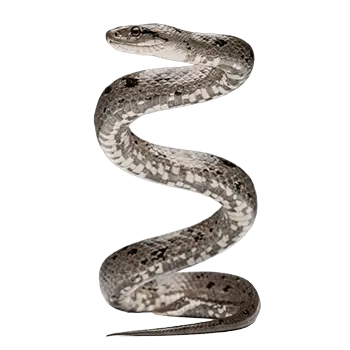

The Gray Rat Snake (Pantherophis spiloides) transitions from the neonatal phase into the juvenile stage at roughly three to four months of age, once the animal has established a reliable feeding pattern, completed several clean shed cycles, and reached approximately eighteen to twenty-two inches in total length. This transition is not marked by a single dramatic event but rather by a collection of gradual changes in body proportion, behavioral confidence, and metabolic demand that collectively signal the animal is moving beyond the fragile neonatal window into a more resilient phase of development.
Juvenile Gray Rat Snakes begin to exhibit more exploratory and assertive behavior within their enclosures compared to the relatively reclusive neonates they recently were. Where a hatchling may spend the vast majority of its time hidden beneath cover, a juvenile will increasingly venture into open areas of the enclosure, climb available branches and furnishings, and investigate its surroundings with sustained bouts of tongue-flicking. This behavioral shift reflects a growing confidence that comes with size — a juvenile that has doubled its hatching length is considerably less vulnerable to the predators that threaten tiny neonates, and its behavior adjusts accordingly.
Physically, juvenile Gray Rat Snakes retain the high-contrast blotched pattern characteristic of hatchlings, though the blotches may begin to darken and the background coloration may shift subtly as the animal progresses through successive sheds. The ontogenetic color change that gradually transforms juveniles into the more uniformly gray or brownish adults is a slow process that unfolds over the first two to three years of life. Body proportions begin to fill out during the juvenile phase, with the head appearing less disproportionately large and the body taking on a more robust, cylindrical cross-section as muscle mass increases along the dorsal and lateral surfaces.
Keepers should recognize that the juvenile stage is the period of fastest sustained growth in a Gray Rat Snake's life. Metabolic rates are high, appetite is typically voracious, and shedding frequency remains elevated compared to adults. This combination of factors means that husbandry errors — inadequate temperatures, poor hydration, undersized prey, dirty enclosures — have disproportionately severe consequences during this window. The nutritional deficits and health setbacks accumulated during a poorly managed juvenile phase can permanently affect the animal's adult size, body condition, and long-term health.