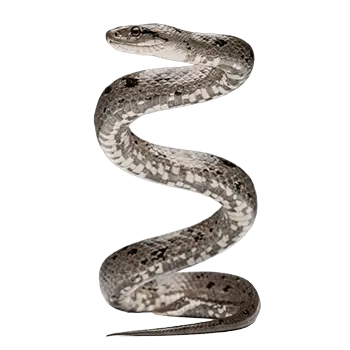

Reaching Full Maturity

Gray Rat Snakes (Pantherophis spiloides) reach full physical maturity between three and four years of age, at which point most individuals have attained a total length of three and a half to five feet, with exceptionally large specimens occasionally reaching six feet. The transition from sub-adult to adult is gradual rather than abrupt, marked by a deceleration in growth rate, the completion of the ontogenetic color change from the boldly blotched juvenile pattern to the more subdued gray or brownish adult coloration, and the achievement of reproductive capability. Males tend to reach maturity slightly earlier than females and are generally somewhat more slender in body build at comparable lengths.

The adult body plan of the Gray Rat Snake reflects its ecological niche as a semi-arboreal generalist predator of the eastern and central United States hardwood forests, farmlands, and rocky outcrops. The body is moderately muscular with a gently flattened ventral surface that aids in climbing, and the belly scales display a weakly keeled central ridge that provides traction on tree bark and rough surfaces. The head is moderately elongated and distinct from the neck, housing large eyes with round pupils that provide excellent vision in the low-light conditions of dawn and dusk when the species is most active.

Once an adult Gray Rat Snake has reached its full size, growth effectively ceases except for very minor seasonal fluctuations in weight associated with feeding cycles, breeding activity, and the brumation period. This metabolic stability means that the nutritional demands of the adult phase are substantially lower than those of the rapid-growth juvenile and sub-adult periods. Keepers who fail to adjust feeding frequency and prey size to match the reduced metabolic needs of a mature animal risk producing an obese snake with associated health consequences including hepatic lipidosis, cardiovascular strain, and reduced reproductive fitness.

Behaviorally, adult Gray Rat Snakes that have been properly socialized during their juvenile development tend to be calm, tractable animals that tolerate handling well and display minimal defensive behavior. They are widely considered among the best large colubrid species for intermediate-level keepers due to their manageable size, hardy constitution, and generally cooperative temperament. An adult Gray Rat Snake in good health and proper husbandry is a low-maintenance animal that can thrive for well over a decade with consistent, attentive care.

Adult Feeding & Nutrition

The dietary needs of an adult Gray Rat Snake are considerably simpler and less demanding than those of growing juveniles. A fully mature individual requires a single appropriately sized adult mouse or small rat every ten to fourteen days during the active season to maintain a healthy body weight without accumulating excess fat. The precise interval depends on the individual animal's metabolism, activity level, and the size of the prey item offered. A useful benchmark is body condition scoring: the snake's cross-section should appear gently rounded with the spine not visible and no deep lateral fat deposits bulging outward at the body's widest points.

Prey selection for adults should focus on quality and nutritional completeness rather than variety for its own sake. Commercially bred, frozen-thawed mice and rats provide a nutritionally complete diet that carries none of the injury risk associated with live prey and allows the keeper to maintain a convenient stock of food items in the freezer. Adult mice in the fourteen to twenty-two gram range are the staple prey size for most adult Gray Rat Snakes, though smaller females may do best on large hopper mice and larger males may require small rats or jumbo mice to achieve adequate caloric intake per meal.

Seasonal appetite fluctuations are a normal part of adult Gray Rat Snake biology and should not cause alarm in keepers accustomed to the voracious, year-round appetite of juveniles. Many adult Gray Rat Snakes reduce or cease feeding voluntarily during the late autumn and winter months, particularly if the enclosure temperature is allowed to drop slightly to simulate seasonal change. Males may also fast during the spring breeding season, prioritizing mate-seeking behavior over feeding. These natural fasting periods are metabolically appropriate for a temperate-zone species and do not require intervention unless accompanied by visible weight loss exceeding ten to fifteen percent of the animal's baseline body weight.

Obesity is the most significant nutritional disease of captive adult rat snakes and develops insidiously when keepers continue feeding at juvenile intervals or offer oversized prey items to a metabolically stable adult. An obese Gray Rat Snake develops visible fat pads along the lateral body, a rounded body shape that obscures the vertebral line, and difficulty navigating climbing structures that were previously used with ease. Internally, excess fat accumulates around the liver, kidneys, and reproductive organs, impairing function and shortening lifespan. Prevention through disciplined feeding schedules is far simpler and more effective than attempting to reverse established obesity through caloric restriction.

Permanent Enclosure Design

An adult Gray Rat Snake requires a permanent enclosure that accommodates its full body length, provides adequate climbing space, and supports a stable thermal and humidity gradient over the long term. The minimum recommended enclosure size for a single adult is 48 by 24 by 24 inches, though larger enclosures are always beneficial, particularly for specimens at the upper end of the size range. Front-opening terrariums with secure latching mechanisms are the preferred enclosure style for adults, as they provide easy access for routine maintenance, allow the keeper to approach the snake at its level rather than from above, and typically feature superior ventilation compared to modified storage containers.

The semi-arboreal nature of the Gray Rat Snake makes vertical space and climbing infrastructure essential components of the adult enclosure. Stout branches, cork bark rounds, and wooden shelving platforms positioned at various heights create a three-dimensional environment that encourages natural locomotion and provides the physical exercise necessary to maintain muscle tone and cardiovascular health. Branches should be at least as thick as the snake's body at its widest point to provide a secure perching surface. Anchor all climbing structures firmly to prevent collapse, as an adult Gray Rat Snake is a muscular animal capable of displacing poorly secured furnishings.

Substrate choices for the adult enclosure should balance humidity retention, ease of cleaning, and naturalistic appearance. Cypress mulch remains an excellent all-around option, providing good moisture retention, a natural appearance, and resistance to mold and bacterial growth when maintained at appropriate humidity levels. A substrate depth of two to three inches allows for burrowing behavior while remaining manageable for spot-cleaning. The entire substrate bed should be replaced monthly, or more frequently if the keeper detects ammonia odor or visible mold, with the enclosure interior wiped down with a reptile-safe disinfectant during the substrate change.

Hide structures should be provided on both the warm and cool sides of the enclosure and should be sized so that the snake can coil inside with its body touching the walls, which provides the tactile security that is important for this species' psychological well-being. An additional humid hide containing damp sphagnum moss, placed on the warm side, provides a microclimate for shedding and a retreat during periods of low ambient humidity. A large, sturdy water dish that the adult can soak in without tipping should be placed on the cool side of the enclosure and refreshed with clean water every one to two days.

Ambient temperature parameters for adults are consistent with those established during the juvenile phase: a warm-side temperature of 82 to 86 degrees Fahrenheit, a cool-side temperature of 72 to 76 degrees, and a localized basking spot up to 88 degrees if the snake utilizes one. Adult Gray Rat Snakes are somewhat more tolerant of minor temperature deviations than fragile neonates, but chronic exposure to temperatures outside the optimal range still degrades health over time. A quality thermostat connected to all heat sources, combined with regular verification using a digital thermometer, prevents the gradual equipment drift that leads to undetected temperature problems.

Behavioral Patterns & Enrichment

Adult Gray Rat Snakes exhibit a predictable set of behavioral routines that vary with time of day, season, and reproductive status. Under typical captive conditions with a consistent photoperiod, the animal will spend daylight hours resting in a hide or loosely coiled on a perching branch, becoming progressively more active in the late afternoon and remaining active through the evening hours. This crepuscular and nocturnal activity pattern reflects the species' wild ecology, where hunting activity peaks during the twilight hours when rodent prey emerges from daytime shelters and visibility still allows effective visual tracking.

Environmental enrichment is an important but frequently neglected aspect of adult snake husbandry. While snakes are not social animals that require companionship or interaction for mental health, they are cognitively capable organisms that benefit from environmental complexity and novelty. Rearranging enclosure furnishings every few weeks during substrate changes, introducing new climbing branches or hide structures on a rotating basis, and offering varied prey types at irregular intervals all provide low-cost enrichment that stimulates exploratory behavior and breaks the monotony of an unchanging captive environment.

Scent-based enrichment is particularly effective for Gray Rat Snakes, which rely heavily on chemosensory input to navigate and interpret their environment. Placing a clean item from outside the enclosure — a small stone from the garden, a piece of untreated wood, a paper towel that has been rubbed on a non-toxic plant — inside the enclosure provides a rich source of novel chemical information that the snake will investigate thoroughly with its tongue and vomeronasal organ. This type of enrichment engages the snake's primary sensory modality in a way that visual or tactile novelty alone cannot achieve.

Seasonal behavioral shifts in adult Gray Rat Snakes are often more pronounced than in juveniles and can include changes in activity level, feeding response, and social behavior. Males may become restless and pace the enclosure walls during the spring breeding season, even when no female is present, driven by hormonal cues associated with increasing photoperiod and temperature. Females that are not bred may still undergo a mild cycle of pre-ovulatory follicular development that temporarily reduces appetite and alters basking behavior. Keepers who are attuned to these seasonal rhythms can anticipate and accommodate them rather than interpreting normal seasonal variation as signs of illness.

Preventive Health & Wellness

Adult Gray Rat Snakes are robust animals with few species-specific health vulnerabilities, and the foundation of preventive health care is meticulous husbandry rather than medical intervention. Maintaining appropriate temperature and humidity gradients, providing clean water and a sanitary enclosure, feeding a nutritionally complete diet at appropriate intervals, and minimizing unnecessary stress collectively prevent the vast majority of health problems that captive colubrids encounter. When health issues do arise in well-maintained adults, they are more often related to aging, accidental injury, or exposure to pathogens through contaminated prey or contact with infected animals than to intrinsic constitutional weakness.

Annual veterinary examinations with a reptile-experienced practitioner are recommended for all adult Gray Rat Snakes, even in the absence of visible symptoms. A routine examination includes a thorough physical assessment of body condition, skin integrity, oral health, respiratory function, and cloacal condition. Annual fecal testing for internal parasites is a standard component of the wellness visit and can detect subclinical infections before they compromise the animal's health. Blood panels, while less commonly performed in snakes than in mammalian pets, can provide valuable baseline data on organ function and metabolic status, particularly for animals entering their second decade of life.

Dermatological conditions represent one of the more common categories of health concern in adult Gray Rat Snakes, primarily in the form of scale rot (ventral dermal necrosis) and blister disease, both of which are caused by prolonged contact with damp, contaminated substrate. Early signs include discolored or pinkish ventral scales, small fluid-filled blisters on the belly surface, and roughened or raised scale edges. Treatment involves moving the animal to a clean, dry enclosure with paper towel substrate, applying a veterinarian-recommended topical antiseptic to affected areas, and correcting the moisture and sanitation problems that allowed the condition to develop. Prevention centers on maintaining a clean substrate, ensuring adequate ventilation, and avoiding the combination of high humidity and stagnant air that creates a breeding ground for opportunistic bacteria.

Shed monitoring continues to be a useful diagnostic indicator throughout the adult years, though shedding frequency decreases to approximately every four to eight weeks in a mature animal that is no longer growing rapidly. Every shed should be collected and inspected for completeness, with particular attention to the spectacle caps, tail tip, and any areas where old skin tends to adhere. Consistently complete sheds confirm that humidity management is adequate, while repeated partial sheds signal a problem that may require enclosure modifications or veterinary attention. Retained shed that is not addressed promptly can constrict blood flow, particularly at the tail tip, leading to necrosis and tissue loss.

Long-Term Husbandry Considerations

Keeping an adult Gray Rat Snake is a long-term commitment that spans fifteen to twenty years under good captive conditions, and keepers should plan accordingly for the financial, spatial, and time demands that this commitment entails. The cost of maintaining a single adult rat snake is modest compared to many other pets — a monthly expense that primarily consists of frozen rodents, substrate, electricity for heating, and occasional veterinary care — but these costs accumulate over a decade or more and should be anticipated rather than discovered incrementally.

Enclosure placement within the home deserves thoughtful consideration for a long-term resident. The enclosure should be situated in a room with stable ambient temperatures away from direct sunlight, heating vents, and exterior walls that experience significant temperature swings between seasons. A room that maintains a baseline temperature of 68 to 74 degrees Fahrenheit year-round reduces the demands placed on the enclosure's supplemental heating system and provides a more forgiving environment in the event of a temporary heater malfunction. Proximity to high-traffic areas, loud televisions, and vibrating appliances should be minimized, though most adult Gray Rat Snakes acclimate well to the normal sounds and activity of a household after an adjustment period.

Backup planning for power outages and equipment failures is a responsible practice that many keepers defer until a crisis occurs. In temperate climates where winter power outages can drop indoor temperatures below the snake's tolerance range, having chemical hand warmers, insulated enclosure covers, or a portable generator available can mean the difference between a minor inconvenience and a life-threatening cold exposure event. Similarly, keeping a spare thermostat, a backup heat emitter, and an extra bag of substrate on hand eliminates the scramble to source replacement equipment on short notice when a component fails.

Succession planning is an uncomfortable but necessary consideration for any animal with a potential lifespan of two decades. Keepers should identify at least one person — a fellow hobbyist, a herpetological society member, or a reputable reptile rescue organization — who would be willing and able to assume care of the animal in the event that the keeper can no longer do so due to relocation, health issues, or other life changes. Documenting the animal's specific care requirements, feeding schedule, veterinary history, and behavioral quirks in a written care guide ensures continuity of husbandry regardless of who is providing it.

Record-keeping should continue throughout the adult years and becomes increasingly valuable as the animal ages. A comprehensive husbandry log that tracks feeding dates, prey items, shed dates, body weights, veterinary visits, and any behavioral or health observations creates a longitudinal picture of the animal's baseline norms. When an older adult begins to show the subtle changes associated with advancing age — reduced appetite, slower shedding, decreased activity — the ability to compare current behavior against years of documented baseline data allows the keeper and veterinarian to distinguish normal aging from emerging disease with much greater accuracy than memory alone permits.

Always consult a qualified professional before making any health-related decisions. This content is provided for informational reference only and should not replace professional guidance specific to your animal.