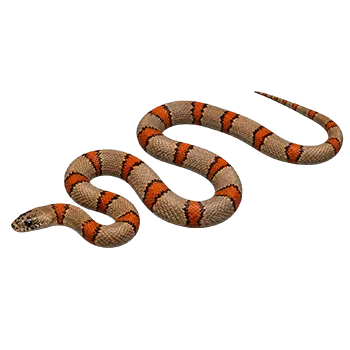

Growth Expectations & Physical Development

The juvenile phase of the Gray-Banded Kingsnake (Lampropeltis alterna) spans approximately the period from six months to two years of age, during which the snake transitions from a fragile neonate into a sturdy sub-adult approaching its adult proportions. At the start of this stage, a well-maintained juvenile typically measures fourteen to eighteen inches and weighs between fifteen and thirty grams. By the conclusion of the juvenile period, most individuals will have reached twenty-four to thirty inches in length and will weigh between sixty and one hundred grams, though growth rates vary considerably depending on feeding frequency, prey size, and individual genetic disposition.

Growth in this species is steady rather than explosive. Unlike some colubrid species that double or triple their length within the first year, Gray-Banded Kingsnakes grow at a measured pace that reflects their adaptation to an environment where food resources are often seasonal and unpredictable. Keepers accustomed to the rapid growth rates of corn snakes or California kingsnakes should calibrate their expectations accordingly and understand that slower growth in this species is normal and healthy, not a sign of inadequate husbandry.

Shedding frequency during the juvenile stage typically settles into a cycle of every four to six weeks under stable husbandry conditions. Each shed should come off cleanly in a single piece, with the spectacle scales, tail tip, and ventral surface all intact. The interval between sheds is a rough proxy for growth rate — more frequent sheds indicate faster growth, while longer intervals suggest the snake is growing more slowly. Both patterns are normal within the expected range, and keepers should focus on the quality of each shed rather than its precise frequency.

Physical maturation during this period includes gradual thickening of the body, increased muscle definition along the dorsal surface, and subtle intensification of the banded color pattern. Some juvenile Gray-Banded Kingsnakes will undergo a mild ontogenetic color shift during this stage, with the gray base color becoming slightly darker or the orange-red saddle bands becoming more saturated. These color changes are normal and contribute to the considerable natural variation that makes this species so prized among collectors.

Diet Progression & Feeding Management

Juvenile Gray-Banded Kingsnakes should be transitioned from pinky mice to progressively larger prey items as their body size increases. The general guideline is to offer prey that is no wider than one and a half times the widest point of the snake's body, which produces a modest but visible lump after ingestion without risking regurgitation. A typical juvenile in the twelve- to eighteen-inch range will be consuming fuzzy mice, while individuals approaching twenty inches and beyond can handle small hopper mice. Each prey size transition should be gradual, and the snake's response to the new size should be observed carefully for any signs of difficulty during ingestion or regurgitation afterward.

Feeding frequency during the juvenile stage should be reduced slightly from the neonatal schedule, settling into a rhythm of one appropriately sized prey item every seven to ten days. This schedule provides sufficient caloric input for continued growth without the metabolic stress of overly frequent feeding. Some keepers adopt a power-feeding approach to accelerate growth, but this practice is strongly discouraged for Gray-Banded Kingsnakes, as their naturally lean body type is poorly suited to rapid weight gain and the associated risks of hepatic lipidosis and shortened lifespan.

Juveniles that were initially reluctant feeders as hatchlings and required lizard-scented prey will often transition to accepting unscented rodent prey during this stage. The transition can be accomplished gradually by progressively reducing the intensity of the lizard scent over several feedings — first rubbing the prey item firmly against a lizard, then merely touching it briefly, and finally offering a completely unscented mouse. Most juveniles will complete this transition within four to six feeding cycles, though some particularly stubborn individuals may require a longer weaning period.

Water intake increases during the juvenile phase as the snake's metabolic demands grow. The water dish should be upgraded to a heavier, more stable vessel that accommodates the snake's increasing size without tipping. Fresh water should remain available at all times and should be changed daily or immediately upon contamination. Some juveniles will soak in their water dishes periodically, particularly during pre-shed periods, and this behavior is normal so long as it does not become excessive or constant, which can indicate mite infestation, overheating, or skin irritation.

Enclosure Upgrades & Environmental Enrichment

As juvenile Gray-Banded Kingsnakes grow, their enclosure must be upgraded to accommodate increased body length and activity levels while maintaining the sense of security that this naturally reclusive species requires. A juvenile measuring fifteen to twenty-four inches thrives in an enclosure approximately 24 by 12 by 12 inches, while individuals approaching thirty inches should be moved into a space measuring at least 30 by 12 by 12 inches. The transition between enclosure sizes should be made gradually, ideally by placing familiar hide objects and substrate from the old enclosure into the new one to carry over established scent cues that help the snake acclimate without prolonged stress.

Environmental enrichment for juvenile Gray-Banded Kingsnakes should emphasize the species' natural inclination toward crevice dwelling and nocturnal exploration. Flat rock formations, stacked slate pieces with narrow gaps, and cork bark tubes provide the tight-fitting hiding spaces that these snakes instinctively seek. Unlike many popular pet snake species that are content with open-bottomed half-log hides, Gray-Banded Kingsnakes strongly prefer hides with narrow entrance gaps that closely contact the snake's body on multiple surfaces simultaneously. Providing at least three hide options — one on the warm end, one on the cool end, and one in the mid-range gradient zone — ensures the juvenile can thermoregulate without sacrificing its sense of concealment.

The thermal gradient established during the hatchling phase should be maintained with minor adjustments. The warm end should remain at 85 to 88 degrees Fahrenheit and the cool end between 72 and 76 degrees. Nighttime temperature drops to 68 to 72 degrees across the enclosure continue to be beneficial and mirror the pronounced diurnal temperature cycling of the species' native Trans-Pecos habitat. All heat sources must remain thermostat-regulated, and surface temperatures should be verified periodically with an infrared temperature gun, as heat mat output can drift over time without visible indication.

Substrate options can be expanded during the juvenile stage as the risk of accidental ingestion during feeding diminishes. Aspen shavings are a popular and effective choice, providing good burrowing opportunity, moderate humidity buffering, and easy spot-cleaning. Alternatively, a naturalistic substrate mix of sand and soil in a roughly fifty-fifty ratio can be used to simulate the rocky desert floor of the snake's native range, though this requires more diligent cleaning to prevent bacterial growth in soiled patches. Regardless of substrate choice, avoid cedar and pine shavings entirely, as the aromatic oils in these wood products are toxic to reptiles and cause respiratory and neurological damage.

Lighting for juvenile Gray-Banded Kingsnakes should follow a consistent photoperiod of twelve hours of light and twelve hours of darkness during the active season. While this species is strictly nocturnal and does not bask under direct light, maintaining a regular light cycle supports circadian rhythm regulation and seasonal behavioral cues. Overhead lighting should be subdued rather than intense, as bright lighting causes stress and increased hiding behavior in a species adapted to emerge only under the cover of darkness.

Behavioral Changes & Handling

Juvenile Gray-Banded Kingsnakes undergo a notable behavioral maturation during this life stage that distinguishes them from the purely defensive, reclusive neonates they once were. While juveniles remain fundamentally secretive and nocturnal, they tend to develop greater tolerance for environmental disturbance and show less intense startle responses when their enclosure is opened for maintenance. Some individuals develop recognizable routines, emerging from their preferred hide at roughly the same time each evening to patrol the enclosure perimeter and investigate water and scent cues.

Handling tolerance in juvenile Gray-Banded Kingsnakes varies significantly between individuals, but most juveniles become noticeably calmer with consistent, patient interaction. Short handling sessions of five to fifteen minutes conducted three to four times per week are far more effective than infrequent, lengthy sessions in building the snake's confidence and reducing defensive responses. The keeper should always approach the snake calmly, using a snake hook to gently lift it from the enclosure before transitioning to hand support. This hook-first approach prevents the snake from associating an approaching hand with a prey item and reduces the likelihood of defensive or feeding strikes.

During handling, the juvenile should be allowed to move freely through the keeper's hands at its own pace. Gray-Banded Kingsnakes are not a species that relaxes into a loose coil on the handler's arm the way a ball python might; instead, they tend to be active, inquisitive movers that thread continuously through fingers and around wrists. This constant motion is normal behavior and not an indication of stress, provided the snake is moving smoothly rather than thrashing, musking, or attempting to flee at high speed. If the snake begins vibrating its tail rapidly, which is a common defensive behavior in kingsnakes, it should be calmly returned to its enclosure and given time to settle before the next handling session.

One behavioral trait that becomes more apparent during the juvenile stage is the species' sensitivity to environmental vibration. Gray-Banded Kingsnakes are attuned to substrate-borne vibrations, likely an adaptation for detecting approaching predators and lizard prey in their rocky desert habitat. Placing the enclosure in a low-traffic area away from speakers, appliances, and frequently slammed doors reduces chronic vibrational stress that can suppress appetite and increase defensive behavior. Keepers who notice unexplained feeding refusal or excessive hiding in an otherwise healthy juvenile should evaluate the enclosure's placement for potential vibration sources before investigating dietary or medical causes.

Health Monitoring & Common Juvenile Concerns

Routine health monitoring during the juvenile stage centers on tracking growth, feeding consistency, shed quality, and behavioral patterns over time. A feeding and growth log that records the date, prey type, prey size, acceptance or refusal, shed dates, and weekly body weight provides an objective dataset that reveals trends long before they become visually apparent. Weight gain during the juvenile stage should be gradual and consistent, with no extended plateaus lasting more than three to four weeks outside of seasonal cooling periods or pre-shed fasting.

Internal parasites are a common concern in juvenile Gray-Banded Kingsnakes, particularly those sourced from wild-caught parents or maintained in collections with other reptiles. The most frequently encountered parasites include flagellate protozoans such as Cryptosporidium, which causes chronic regurgitation and progressive weight loss, and various nematode species that colonize the gastrointestinal tract. An annual fecal float examination performed by a reptile-experienced veterinarian is the minimum standard of preventive care, with more frequent testing warranted if the snake is exhibiting unexplained weight loss, loose stools, or regurgitation.

Snake mites (Ophionyssus natricis) are an external parasite threat that juveniles are particularly vulnerable to because their smaller body size means a proportionally greater physiological burden from a given number of parasites. Mite infestations present as tiny black or red-brown dots moving on the snake's body, accumulating around the eyes, heat pits, and beneath scales. Infested juveniles often soak excessively in their water dish, where drowned mites can be observed as dark specks floating on the water surface. Treatment involves isolating the affected animal, stripping and disinfecting the enclosure completely, and applying a reptile-safe mite treatment according to veterinary guidance. Prevention focuses on quarantining all new animals for a minimum of thirty days before introducing them into an established collection space.

Respiratory health should be monitored closely throughout the juvenile stage. While juveniles are less susceptible to respiratory infections than fragile neonates, they remain at risk if enclosure conditions drift into excessively humid, cold, or poorly ventilated territory. Symptoms including audible respiration, excessive mucus production, open-mouth breathing, or persistent basking with the head elevated should prompt immediate veterinary consultation. Chronic low-grade respiratory issues that go untreated during the juvenile stage can cause lasting damage to lung tissue and predispose the animal to recurrent infections throughout its life.

Obesity, while less commonly discussed in kingsnake care than in species like ball pythons or boa constrictors, can affect juvenile Gray-Banded Kingsnakes that are fed too frequently or offered oversized prey. A healthy juvenile should have a body cross-section that is roughly rounded to slightly triangular, with no prominent dorsal spine visible but also no lateral fat rolls or a noticeably convex ventral surface. Maintaining a lean, athletic body condition during the juvenile phase establishes the metabolic foundation for a long, healthy life and reduces the risk of hepatic lipidosis and reproductive complications in adulthood.

Always consult a qualified professional before making any health-related decisions. This content is provided for informational reference only and should not replace professional guidance specific to your animal.