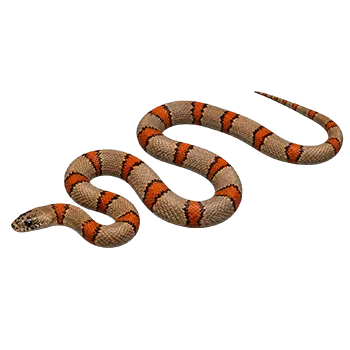

Adult Gray-Banded Kingsnakes (Lampropeltis alterna) reach their full size between three and four years of age, typically measuring thirty-six to forty-eight inches in total length with females occasionally exceeding males by a small margin. At this stage, the snake should be housed in a permanent enclosure that will serve as its long-term habitat for the remainder of its life. The minimum recommended enclosure size for a single adult is 36 by 18 by 18 inches, though larger enclosures of 48 by 18 by 18 inches are preferable and allow for more complex environmental design. Front-opening enclosures with sealed glass or acrylic doors are strongly preferred over top-opening tanks, as the overhead approach required by top-opening designs triggers a predator-avoidance response in this species and increases handling stress over time.
The interior layout of the adult enclosure should be designed to replicate the rocky crevice habitat of the Trans-Pecos and Chihuahuan Desert regions where this species naturally occurs. Stacked flagstone or slate pieces arranged to create narrow vertical and horizontal fissures provide the tight-fitting retreats that Gray-Banded Kingsnakes instinctively favor. Cork bark rounds and flats can supplement the rock formations, offering additional textural variety and hiding options. The enclosure should contain a minimum of three distinct hide areas positioned at different points along the thermal gradient, allowing the snake to select both its preferred temperature and its preferred level of concealment independently.
Ventilation in the adult enclosure deserves careful attention. Adequate air exchange prevents the buildup of stagnant, humid air that promotes respiratory infections and mold growth, while excessive ventilation can make it difficult to maintain appropriate humidity and temperature gradients. Screen-top enclosures provide excellent ventilation but are poor at retaining heat and humidity; PVC or sealed-panel enclosures with strategically placed ventilation strips or holes offer a better balance for this species. The keeper should aim for gentle, continuous air movement without drafts, which can be assessed by holding a thin strip of tissue near ventilation openings to verify airflow direction and intensity.
The substrate in the adult enclosure can be more naturalistic than the paper or towel substrates used during the hatchling and early juvenile stages. A blend of fine-grade coconut coir and play sand in a ratio of approximately sixty to forty creates a substrate that holds burrows moderately well, resists mold growth, and maintains the semi-arid feel appropriate for this species. Alternatively, pure aspen shavings work well and are the most popular single-material substrate among experienced Gray-Banded Kingsnake keepers. Regardless of the material chosen, substrate depth should be at least one to two inches to allow for light burrowing behavior, and the entire substrate bed should be replaced completely every four to six weeks with spot-cleaning of soiled areas in between.