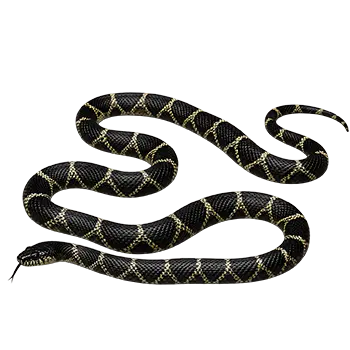

Defining the Juvenile Stage

The juvenile period for the Florida Kingsnake (Lampropeltis getula floridana) spans approximately four months of age through the onset of sexual maturity, which typically occurs between eighteen and thirty months depending on feeding regimen, genetics, and environmental conditions. During this extended phase, the animal undergoes the most dramatic physical transformation of its life, growing from a slender hatchling of approximately twelve inches to a robust sub-adult approaching two to three feet in length. Understanding the distinct needs of the juvenile period is essential because the husbandry decisions made during these months have a lasting impact on the animal's adult body condition, temperament, and reproductive fitness.

Juvenile Florida Kingsnakes are characterized by a high metabolic rate that fuels rapid skeletal and muscular growth. This elevated metabolism means that nutritional demands are proportionally greater during the juvenile stage than at any other point in the animal's life, and even brief disruptions in feeding consistency or environmental stability can produce measurable setbacks in growth rate and overall health. The keeper's primary objective during this period is to maintain the stable, optimized conditions that allow the animal to grow steadily without the metabolic stress caused by overfeeding, underfeeding, or fluctuating temperatures.

Behaviorally, juvenile Florida Kingsnakes occupy a transitional zone between the purely defensive posture of the neonate and the more settled disposition of the mature adult. Adolescent animals may exhibit periods of heightened defensiveness, particularly around shedding cycles, and their strong feeding response can result in misdirected strikes during cage maintenance or handling. These behavioral fluctuations are normal developmental phenomena, not signs of poor socialization or inherent temperament problems. Consistent, patient interaction during the juvenile phase is the single most effective strategy for producing a calm, well-adjusted adult.

Sexual determination becomes possible during the juvenile stage through probing or manual eversion of the hemipenes in males, procedures that should only be performed by experienced keepers or a veterinarian to avoid injury. Knowing the sex of juvenile animals is important for breeders planning future pairings and for keepers who house multiple animals, as it informs decisions about enclosure separation and growth management. Males and females may begin to show subtle differences in body proportion and tail length during this stage, with males typically developing slightly longer, more gradually tapering tails relative to body length.

Diet Progression & Nutritional Management

As juvenile Florida Kingsnakes grow, their prey size must increase proportionally to meet escalating caloric and nutritional demands. The general guideline is to offer prey items that are roughly equal in diameter to the widest point of the snake's midsection, progressing from pinky mice during early juvenilehood through fuzzy mice, hoppers, and eventually small adult mice as the animal approaches sub-adult size. Each transition to a larger prey size should be gradual, with the keeper observing digestion and defecation patterns closely after the first few meals at the new size to ensure the animal is processing the larger item without difficulty.

Feeding frequency for juveniles should be maintained at once every five to seven days for animals under twelve months of age, gradually extending to once every seven to ten days as the animal enters its second year. This schedule supports consistent growth without the risks associated with power feeding, a practice in which snakes are fed excessively large or frequent meals to accelerate growth. Power feeding places severe strain on the liver and kidneys, promotes obesity, and has been associated with shortened lifespan in colubrids. A well-fed juvenile Florida Kingsnake should have a smoothly rounded body cross-section without visible spine or ribs, but also without the sausage-like distension that indicates excessive body fat.

Prey should be offered pre-killed or thawed from frozen to eliminate the risk of injury from live rodent bites. While Florida Kingsnakes are aggressive constrictors that readily dispatch live prey, even a momentary lapse can result in a rodent bite that causes infection or scarring, and there is no nutritional advantage to live feeding that justifies this risk. Frozen-thawed prey should be warmed to approximately body temperature by placing it in a sealed bag immersed in warm water for ten to fifteen minutes before offering. Cold or partially thawed prey is less appetizing to the snake and more difficult to digest, occasionally leading to regurgitation.

Supplementation is generally unnecessary for juvenile kingsnakes fed a diet of whole rodents, as whole prey items provide a complete nutritional profile including calcium, phosphorus, fat-soluble vitamins, and trace minerals. However, keepers who source their own feeder rodents should ensure that the rodents themselves are well-nourished, as nutritionally depleted prey animals will in turn fail to meet the snake's needs. Commercially produced frozen rodents from reputable suppliers are typically gut-loaded and maintained on high-quality diets, making them the most reliable and consistent food source for growing kingsnakes.

Water consumption increases during the juvenile stage in proportion to body size and metabolic rate. The water dish should be upgraded to a larger, heavier vessel as the animal grows, both to accommodate increased drinking volume and to prevent tipping. Juvenile kingsnakes will sometimes soak in their water dishes for extended periods, particularly during pre-shed cycles, and the dish should be large enough to allow full-body immersion without overflowing. Soiled water should be replaced immediately, and the dish itself should be scrubbed and disinfected at least once per week.

Enclosure Upgrades & Habitat Design

The hatchling enclosure will need to be upgraded at least once during the juvenile period, and many keepers find that two upgrades are necessary to keep pace with the animal's growth. As a general rule, the enclosure's longest dimension should be at least equal to the snake's total body length, with adequate width and height to allow natural movement patterns. A juvenile Florida Kingsnake of eighteen to twenty-four inches does well in a 20-gallon long aquarium or an equivalent-sized PVC enclosure, while animals approaching thirty inches and beyond should be transitioned to a 30- to 40-gallon setup or a purpose-built PVC or melamine enclosure with similar floor space.

The transition from paper towel substrate to a more naturalistic bedding material is appropriate during the juvenile stage, once the animal has demonstrated consistent, well-aimed feeding strikes that reduce the risk of substrate ingestion. Cypress mulch and coconut coir are the two most commonly recommended substrates for Florida Kingsnakes, as both retain moisture effectively, resist mold growth when maintained properly, and allow the animal to exhibit natural burrowing behavior. Aspen shavings are another popular choice and work well in drier setups, though they are less effective at maintaining humidity and will mold quickly if they become wet. Cedar and pine shavings must be avoided entirely, as the aromatic oils they contain are toxic to reptiles and can cause respiratory distress and neurological damage.

Furnishings during the juvenile stage should strike a balance between enrichment and practicality. At minimum, the enclosure should contain two hide boxes, one positioned on the warm end and one on the cool end, so the snake can thermoregulate without sacrificing its sense of security. Hides should be snug enough that the snake's body contacts the walls and ceiling when coiled inside, as an overly spacious hide fails to provide the tactile reassurance that promotes stress reduction and normal behavior. As the snake grows, hides must be replaced with larger versions to maintain this snug fit.

Climbing opportunities are a worthwhile addition to the juvenile enclosure, despite the Florida Kingsnake's primarily terrestrial habits. Sturdy branches, cork bark tubes, and commercially available reptile climbing structures provide physical enrichment and exercise that contribute to healthy muscle development. Juvenile kingsnakes are more actively exploratory than adults and will readily utilize vertical space when it is available. Ensure that all climbing structures are stable and cannot collapse onto the animal, and that the enclosure lid or door is fully secure, as elevated perches bring the snake closer to potential escape points.

Sanitation protocols become increasingly important as the juvenile snake grows and produces larger, more voluminous waste. Spot-cleaning should be performed within twenty-four hours of each defecation, and a full substrate change with enclosure disinfection should be conducted every three to four weeks. A dilute chlorhexidine solution or a reptile-safe disinfectant is appropriate for enclosure cleaning, and all surfaces must be thoroughly rinsed and dried before fresh substrate is added and the snake is returned. Inadequate sanitation promotes bacterial and fungal growth that can lead to scale rot, blister disease, and respiratory infections, all of which are far more easily prevented than treated.

Behavioral Development & Handling

The juvenile period is the most formative window for shaping the long-term temperament of a Florida Kingsnake through regular, positive handling interactions. Animals that receive consistent handling during this stage almost universally develop into calm, manageable adults, while those that are left largely undisturbed may retain heightened defensive tendencies that become more problematic as the snake's size and strength increase. The goal is not to desensitize the animal through flooding or forced restraint, but to build a gradual association between human contact and the absence of threat.

Handling sessions during the juvenile stage can be extended from the three-to-five-minute sessions appropriate for hatchlings to ten to fifteen minutes, conducted three to four times per week. The snake should be lifted from its enclosure with a smooth, confident motion, scooping from beneath rather than grasping from above. Once in hand, allow the animal to explore by threading through your fingers at its own pace. Juvenile kingsnakes are curious and active handlers, often moving continuously rather than settling into a coiled resting position, and this exploratory behavior should be encouraged rather than restricted. Avoid handling for forty-eight hours before and after feeding to prevent regurgitation and to ensure the snake does not associate handling with food.

One behavioral phenomenon commonly observed in juvenile Florida Kingsnakes is a temporary regression in handleability around the six-to-ten-month mark, sometimes referred to colloquially as the teenage phase. During this period, animals that had previously become relatively calm may suddenly resume striking, musking, or rapid tail vibration when approached. This regression correlates with hormonal changes associated with the early stages of sexual maturation and is almost always temporary. Maintaining the regular handling schedule through this period without escalating force or frequency is the most effective approach, as the behavior typically resolves within a few weeks to a couple of months.

Juvenile kingsnakes also begin to display more sophisticated predatory behavior during this stage, and their feeding response becomes noticeably more acute. Keepers should be aware that any movement near the enclosure, particularly if accompanied by warmth or scent, may trigger a strike response, even outside of scheduled feeding times. This heightened feeding response is not a sign of hunger or underfeeding but rather reflects the species' evolved predatory efficiency. Using a snake hook to gently touch the animal before lifting it from the enclosure helps distinguish handling events from feeding events in the snake's perception and significantly reduces the incidence of misdirected feeding strikes.

Growth Monitoring & Body Condition

Systematic growth monitoring is a fundamental aspect of juvenile Florida Kingsnake husbandry that provides objective data for evaluating the effectiveness of the overall care regimen. Monthly weighing on a digital gram scale is the minimum recommended frequency, though biweekly measurements yield a more granular growth curve that makes it easier to detect subtle deviations from the expected trajectory. Length measurements, taken by gently guiding the snake along a measuring tape or flexible seamstress tape, should be recorded at least monthly to complement weight data and provide a more complete picture of proportional development.

A healthy juvenile Florida Kingsnake should gain weight in a roughly linear fashion during its first year, with growth tapering gradually during the second year as the animal approaches its adult size. Typical growth expectations vary based on feeding schedule, prey size, and individual genetics, but a well-managed juvenile can be expected to reach approximately twenty-four to thirty inches and sixty to one hundred grams by the end of its first year. Significant deviations from these benchmarks, whether substantially above or below, warrant a review of feeding practices and environmental parameters.

Body condition scoring provides a qualitative complement to quantitative weight and length data. A juvenile in ideal body condition has a smoothly rounded cross-sectional profile when viewed from the head end, with no visible spine or rib outlines but also no pronounced lateral bulging or dorsal flattening that would indicate obesity. The neck should taper gradually from the head without abrupt narrowing, and the tail should taper evenly without the sudden thinning that suggests muscle wasting. Assessing body condition becomes more intuitive with experience, and comparing the animal in hand to reference photographs of known-condition animals can be helpful for newer keepers.

Growth irregularities during the juvenile phase have a variety of potential causes, and identifying the underlying factor is essential for corrective action. Suboptimal temperatures are the most common culprit, as a thermal gradient that is too cool suppresses metabolism and digestion, leading to reduced appetite and slowed growth even when prey is offered on schedule. Internal parasites, particularly nematodes and coccidia, can also produce growth stunting by diverting nutrients away from the host. Chronic stress from an insecure enclosure, excessive handling, or proximity to perceived threats such as household pets or vibrations from heavy foot traffic can suppress appetite and growth through sustained elevation of corticosterone, the primary stress hormone in reptiles.

Common Juvenile Health Concerns

Juvenile Florida Kingsnakes are generally hardy animals, but several health conditions occur with enough frequency during this life stage to warrant specific discussion. Scale rot, also known as ulcerative or necrotic dermatitis, is a bacterial skin infection that develops when the ventral scales are chronically exposed to damp, unsanitary substrate. The condition presents as discolored, pinkish, or reddish patches on the belly scales that may progress to raised blisters, open ulcers, and eventual tissue necrosis if left untreated. Prevention centers on maintaining clean, dry substrate and ensuring that the enclosure does not develop stagnant areas of trapped moisture, particularly under water dishes or hide boxes.

Respiratory infections remain a concern during the juvenile period, especially in collections where multiple animals are housed in the same room or rack system. The causative agents are typically gram-negative bacteria such as Pseudomonas, Aeromonas, or Klebsiella species, which are normal inhabitants of the snake's environment but become pathogenic when the immune system is compromised by cold temperatures, excessive humidity, poor ventilation, or concurrent illness. Symptoms include audible respiratory sounds during breathing, mucus accumulation in or around the nares, open-mouth breathing, and lethargy. Veterinary treatment usually involves a course of injectable antibiotics selected based on culture and sensitivity testing, along with correction of the environmental factors that precipitated the infection.

Internal parasites warrant ongoing vigilance through the juvenile period. Even animals that tested clean as hatchlings can acquire parasites through contaminated prey items, particularly if live or wild-caught feeders are used, or through indirect contact with infected cage furnishings or substrate. Annual fecal examinations are the minimum recommended screening frequency, with more frequent testing indicated for animals that show unexplained weight loss, irregular shedding, or changes in fecal consistency. Cryptosporidium serpentis deserves particular attention because it is highly contagious, difficult to treat, and often fatal in colubrids, making quarantine and testing protocols essential for any new additions to a collection.

Regurgitation in juvenile kingsnakes is a serious event that demands immediate attention, as repeated regurgitation can rapidly lead to esophageal damage, dehydration, and death. Common causes include handling too soon after feeding, prey items that are too large, inadequate warm-side temperatures that prevent proper digestion, and bacterial infections of the gastrointestinal tract. When regurgitation occurs, all feeding should be suspended for a minimum of ten to fourteen days to allow the digestive tract to heal, after which feeding should resume with a prey item approximately half the size of the one that was regurgitated. If regurgitation recurs after this recovery period, veterinary evaluation for underlying gastrointestinal disease is warranted.

Always consult a qualified professional before making any health-related decisions. This content is provided for informational reference only and should not replace professional guidance specific to your animal.