
The Adult Stage Defined

The Florida Kingsnake (Lampropeltis getula floridana) reaches full sexual maturity and is considered an adult between two and three years of age, though growth in length and girth may continue at a slower pace for another year or two before plateauing entirely. Adult specimens typically measure between three and four and a half feet in total length, with occasional individuals exceeding this range depending on genetics and lifetime nutrition. Females tend to be slightly heavier-bodied than males of equivalent length, a difference that becomes more pronounced during the reproductive season when gravid females put on substantial weight.

The adult stage represents the longest and most stable period in the Florida Kingsnake's life, often spanning a decade or more when husbandry conditions are optimized. Metabolic rate slows relative to the juvenile period, shedding frequency decreases to roughly every six to eight weeks under normal conditions, and the animal's temperament generally stabilizes into the calm, tractable disposition for which the species is prized. This stability can foster complacency in keepers who assume that an established adult requires less attention or monitoring than a growing juvenile, an assumption that, if left unchecked, can allow subtle health and environmental problems to develop unnoticed over months or years.

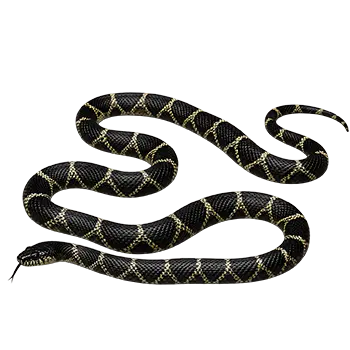
Adult Florida Kingsnakes display the subspecies' characteristic coloration with some individual variation. The dorsal pattern consists of broad, cream to bright yellow crossbands on a chocolate-brown to nearly black background, with ventral surfaces typically showing a checkered pattern of yellow and dark brown. Pattern intensity may shift subtly over time, with some individuals becoming slightly more faded or uniformly colored as they age. These gradual changes are cosmetic and do not indicate health problems, though sudden color changes, particularly darkening or reddening of the ventral scales, should always be evaluated as potential signs of dermal infection or thermal injury.

Maintaining detailed husbandry records remains as important during the adult phase as it was during the more demanding juvenile period. A monthly log of weight, feeding dates, prey size, shedding dates, and any behavioral or physical observations creates a longitudinal baseline against which future deviations can be quickly identified. The value of these records compounds over years, providing context that can help a veterinarian diagnose problems more efficiently and allowing the keeper to distinguish normal seasonal fluctuations in appetite and activity from genuinely concerning changes.

Long-Term Enclosure Design

An adult Florida Kingsnake requires a permanent enclosure that provides adequate floor space, appropriate thermal gradients, and opportunities for natural behavior. The minimum recommended enclosure size for a single adult is a 40-gallon breeder-style aquarium or its equivalent in PVC or melamine construction, which typically provides approximately 36 by 18 inches of floor space. Larger enclosures of 48 by 24 inches or greater are preferable when space permits and allow for more elaborate habitat design, increased environmental complexity, and a more pronounced thermal gradient that gives the snake greater control over thermoregulation.

PVC and melamine enclosures with front-opening doors have become the preferred housing option among serious kingsnake keepers because they retain heat and humidity more effectively than glass aquariums with screen tops, they eliminate the overhead approach required by top-opening enclosures, and they provide a more secure and visually calming environment for the snake. Glass aquariums remain functional but require modification to address their inherent heat and humidity loss through screen lids, typically involving partial covering of the screen with aluminum foil or acrylic panels while maintaining adequate ventilation.

The substrate for an adult enclosure should support the animal's natural burrowing instincts while maintaining appropriate humidity and facilitating easy cleaning. Cypress mulch remains one of the best all-around substrate choices, offering excellent moisture retention, natural antimicrobial properties, and a texture that Florida Kingsnakes readily burrow into. A substrate depth of two to three inches allows for meaningful burrowing behavior. Coconut coir and a cypress-coconut blend are equally effective alternatives. Regardless of substrate type, full enclosure cleanouts should be performed monthly, with spot-cleaning of fecal deposits and urate patches conducted as they appear.

Hide boxes remain essential furnishings for adult kingsnakes, even for long-term captive individuals that appear confident and relaxed. The basic two-hide setup, one on the warm end and one on the cool end, should be maintained throughout the animal's life. Supplementary furnishings such as cork bark flats, artificial foliage, and sturdy climbing branches provide environmental enrichment that encourages physical activity and exploratory behavior. Water dishes for adults should be heavy ceramic or stoneware vessels large enough for the snake to soak its entire body. Soaking is a normal behavior that increases in frequency during pre-shed periods and should be facilitated rather than discouraged.

Adult Diet & Weight Management

The dietary needs of an adult Florida Kingsnake differ substantially from those of a growing juvenile, and failure to adjust feeding practices as the animal matures is one of the most common husbandry errors in long-term kingsnake keeping. Adult kingsnakes require significantly less frequent feeding than juveniles because their metabolic rate has slowed, growth has ceased or nearly ceased, and caloric expenditure is limited to basic maintenance, thermoregulation, and periodic reproduction. An adult Florida Kingsnake should be fed one appropriately sized adult mouse or small weaned rat every ten to fourteen days, a schedule that maintains healthy body condition without promoting obesity.

Obesity is the single most prevalent nutritional disorder in captive adult kingsnakes and carries serious long-term health consequences including hepatic lipidosis, which is fatty degeneration of the liver, reduced reproductive success, impaired respiratory function due to fat deposits around the lungs, and shortened lifespan. An obese kingsnake exhibits visible fat deposits along the sides of the body, a dorsal midline that appears sunken between ridges of lateral fat, and a body cross-section that is distinctly round or even flattened rather than subtly triangular. Correcting established obesity requires a carefully managed reduction in feeding frequency, extending intervals to every three to four weeks while monitoring weight loss to ensure it proceeds gradually rather than precipitously.

Prey variety, while not strictly necessary for nutritional completeness when feeding whole rodents, can provide enrichment through novel scent and texture experiences. Occasional offerings of chicks, quail, or reptilinks, which are commercially produced sausage-style prey items formulated for reptiles, can stimulate feeding interest in animals that have become indifferent to their routine diet. Any novel prey item should be introduced cautiously, offered alongside the regular prey type for the first several feedings to ensure acceptance and digestive tolerance before being incorporated into the rotation.

Seasonal appetite fluctuations are normal in adult Florida Kingsnakes and should not prompt immediate corrective action unless accompanied by other signs of illness. Many adults experience a natural reduction in appetite during the cooler months, even in thermostatically controlled enclosures, reflecting an endogenous circannual rhythm inherited from wild populations that experience seasonal temperature and photoperiod changes in their native Florida habitat. A healthy adult that refuses food for two to four weeks during late autumn or winter, while maintaining stable body weight and normal behavior, is exhibiting a normal physiological response rather than a clinical problem.

Behavioral Enrichment & Handling

Adult Florida Kingsnakes that have been regularly handled since the juvenile stage are typically calm, tractable animals that tolerate extended handling sessions and adapt readily to novel environments. These characteristics make them excellent educational display animals and rewarding long-term companions. However, maintaining this temperament requires ongoing interaction. Adults that are left unhandled for extended periods of weeks or months may become more defensive and reactive when handling resumes, though the regression is usually less severe and more quickly resolved than would be seen in an animal with no prior handling history.

Handling sessions for adults can be extended to twenty to thirty minutes or longer, limited primarily by the snake's demeanor and the keeper's schedule. Adult kingsnakes are active handlers that explore their surroundings with obvious curiosity, investigating surfaces, crevices, and warm areas with sustained interest. This exploratory drive makes them engaging animals to interact with but also demands vigilance on the keeper's part, as a kingsnake that discovers a gap behind furniture, an unsecured cabinet, or a warm appliance vent will attempt to enter it with considerable determination. Handling in a controlled, clutter-free space reduces the risk of the snake disappearing into an inaccessible location.

Environmental enrichment within the enclosure deserves greater attention during the adult stage than it often receives. Because adults are less active than juveniles, there is a tendency among keepers to view the enclosure as merely a holding space rather than a functional habitat. Periodic rearrangement of furnishings, introduction of novel scent items such as shed skins from non-predatory species or clean leaf litter from the animal's native range, and occasional supervised exploration outside the enclosure provide mental stimulation that contributes to the animal's psychological well-being. Studies on environmental enrichment in captive reptiles increasingly suggest that cognitively stimulated animals display more diverse behavioral repertoires, feed more reliably, and may experience better immune function.

The adult Florida Kingsnake's ophiophagous instincts remain fully intact throughout its life, and this has practical implications for keepers who maintain multiple snakes. Adults should never be housed together, even temporarily, as cannibalism attempts can occur rapidly and without warning, even between animals of similar size. During handling sessions involving multiple snakes, thorough hand-washing between animals is essential to prevent the transfer of snake scent that could trigger a predatory response. Storage of feeding tools, shed skins, and soiled substrate in shared spaces should also be managed to minimize cross-contamination of scent cues.

Seasonal Cycling & Photoperiod

Adult Florida Kingsnakes benefit from a seasonal environmental cycle that mimics, in modified form, the natural annual fluctuations they would experience in the wild across peninsular Florida. Even for keepers who do not intend to breed their animals, implementing a mild seasonal cycle promotes natural hormonal rhythms, supports healthy appetite regulation, and provides the animal's physiology with the periodic metabolic downshift that appears to contribute to long-term health and longevity. A complete brumation protocol is not necessary for non-breeding animals, but a subtle adjustment in temperature and photoperiod during the winter months is widely considered beneficial.

A practical seasonal cycle for non-breeding adult Florida Kingsnakes involves gradually reducing daytime warm-side temperatures by four to six degrees Fahrenheit over a two-week period in late October or November, bringing the warm end down to approximately 80 to 82 degrees while the cool end drops to 68 to 72 degrees. Nighttime temperatures across the enclosure can be allowed to fall to 65 to 68 degrees. Photoperiod should be shortened from the twelve to fourteen hours of light provided during spring and summer to eight to ten hours, using a timer on the enclosure lighting to ensure consistency. These changes should be reversed gradually over another two-week period in late February or March.

During the cooler period, most adult Florida Kingsnakes will voluntarily reduce their food intake, and some will refuse food entirely for several weeks. This is a normal response to the environmental cues and should not be combated by offering food more frequently or by returning temperatures to summer levels prematurely. Water must remain available at all times, and the animal should be observed regularly to ensure that it remains alert and responsive, with clear eyes and no signs of respiratory distress, weight loss beyond normal seasonal variation, or other indicators of illness.

Keepers who do not implement any seasonal variation whatsoever may notice that their adult kingsnakes develop a pattern of irregular appetite fluctuations throughout the year that can be difficult to predict or manage. These erratic feeding patterns often represent the animal's endogenous circannual rhythm attempting to assert itself in the absence of external environmental cues, and they are more disruptive and harder to manage than the predictable, structured fasting period produced by a controlled seasonal cycle. Providing even a modest seasonal signal gives the animal's physiology a framework around which to organize its metabolic activity, resulting in more predictable feeding behavior, more consistent shedding cycles, and better overall vitality during the active season.

Preventive Health & Veterinary Care

Preventive veterinary care for adult Florida Kingsnakes should include an annual wellness examination by a reptile-experienced veterinarian, even in the absence of apparent illness. The annual visit provides an opportunity for a thorough physical assessment including oral examination, palpation of the coelomic cavity for masses or organ enlargement, evaluation of muscle tone and body condition, and collection of a fecal sample for parasitological screening. Establishing this routine creates a longitudinal health record that allows the veterinarian to detect gradual changes that might not be apparent from a single examination in isolation.

Included-body disease, while primarily associated with boid snakes, has been documented in kingsnakes and other colubrids and warrants awareness among Florida Kingsnake keepers. This fatal retroviral disease is transmitted through direct contact and possibly through mite vectors, making quarantine protocols for new acquisitions and rigorous mite prevention measures essential components of any multi-animal collection's biosecurity plan. There is no treatment or vaccine for included-body disease, and affected animals inevitably decline, making prevention through strict hygiene and quarantine the only viable strategy.

Dermatological conditions remain among the most commonly encountered health problems in adult kingsnakes. Scale rot, which tends to develop in enclosures with chronically damp or soiled substrate, manifests as discoloration and softening of the ventral scales that can progress to open lesions if the underlying environmental cause is not corrected. Retained shed, while less common in adults than in juveniles if humidity is properly managed, can still occur and should be addressed promptly through increased humidity, warm soaking, and gentle manual assistance with stuck shed segments, particularly retained eye caps. Burns from unregulated heat sources are unfortunately common in adult kingsnakes due to their tendency to rest in direct contact with heat-emitting surfaces, reinforcing the critical importance of thermostatic control on all heat sources.

Dental health is an often-overlooked aspect of adult kingsnake care. While snakes lack the type of dental disease familiar to mammalian medicine, stomatitis, which is an infection of the oral mucosa commonly known as mouth rot, can develop following injury from prey strikes, retained prey teeth, or systemic immune suppression. Signs include swelling or redness along the gum line, cheesy or caseous discharge within the mouth, reluctance to feed, and asymmetric jaw movement. Mild cases may respond to topical antiseptic treatment and environmental optimization, but moderate to severe stomatitis requires systemic antibiotic therapy prescribed by a veterinarian and carries a guarded prognosis if not addressed promptly.

Always consult a qualified professional before making any health-related decisions. This content is provided for informational reference only and should not replace professional guidance specific to your animal.