
Recognizing Terminal Decline

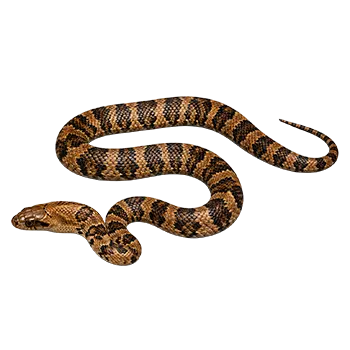
The distinction between manageable senior decline and irreversible terminal deterioration in a False Water Cobra (Hydrodynastes gigas) is one of the most difficult assessments a keeper will face, and it requires honest evaluation of the animal's condition against objective benchmarks rather than hopeful interpretation of ambiguous signs. Terminal decline is characterized not by any single symptom but by a convergence of worsening indicators that no longer respond to environmental correction or veterinary intervention. The animal's trajectory — the direction and rate of change over weeks and months — is ultimately more informative than its condition on any given day.

Persistent anorexia that extends beyond any previous fasting period in the animal's history and does not correlate with seasonal cycling, shedding, or identifiable environmental stressors is one of the most common early indicators of terminal decline. A False Water Cobra that has refused food for six to eight weeks despite optimal enclosure conditions, appropriate prey offerings, and veterinary evaluation to rule out treatable causes has likely entered a phase where the body's organ systems are no longer functioning at a level that supports normal appetite and digestion. Weight loss accompanying this anorexia will be progressive and visible — the dorsal spine becomes increasingly prominent, the musculature along the body wall wastes, and the tail thins to reveal the underlying vertebral column.

Reduced or absent voluntary movement is another hallmark of terminal decline. A species defined by its high activity level and inquisitive nature, the False Water Cobra that spends entire days and nights in a single position without moving to thermoregulate, soak, or explore is demonstrating a profound loss of the behavioral engagement that defines its quality of life. The water feature that was once a center of activity may go unused for days at a time. The warm basking zone may be abandoned in favor of whatever location the snake happened to settle in, regardless of its thermal suitability. This behavioral shutdown reflects systemic failure rather than simple fatigue or seasonal variation.

Neurological signs, while less common than metabolic decline, may appear in the terminal phase and are particularly distressing to observe. Disorientation, loss of coordination, head tremors, inability to right itself when turned over, and abnormal body postures such as stargazing — holding the head and anterior body in a fixed, upward-pointing position — can indicate central nervous system involvement from disease, organ failure, or neoplasia. These signs rarely reverse and generally indicate a condition that has progressed beyond the reach of available treatment, though a veterinary consultation remains appropriate to confirm the assessment and discuss the most humane path forward.

Palliative Husbandry & Comfort Care

When a False Water Cobra enters the terminal phase, the focus of husbandry shifts from optimization and enrichment to the singular goal of maximizing physical comfort during the animal's remaining time. This transition requires the keeper to set aside the instinct to fix, correct, and improve, and instead to accept the animal's condition while doing everything possible to ensure that its remaining days are free from unnecessary discomfort and distress.

The enclosure should be simplified to eliminate any features that could cause injury to an animal with diminished coordination and strength. Climbing structures, elevated shelves, and any furnishings with sharp edges or narrow spaces where a weakened snake could become wedged should be removed. The water feature should be made shallower or replaced with a wide, low-sided dish that allows the snake to soak without the risk of becoming too exhausted to exit. A snake that could once enter and leave a deep basin with ease may now lack the muscular strength to pull itself up and over a rim, and drowning in a water feature is a preventable tragedy that no keeper should face.

Substrate should be the softest, most forgiving option available. A deep layer of dampened paper towels, soft fleece fabric, or fine coconut fiber provides cushioning for ventral scales that may be compromised by pressure sores, reduces the friction involved in any movement the snake does make, and maintains the moisture contact that supports skin hydration in an animal that may no longer actively seek out water. The substrate should be checked and changed frequently — at least daily — as a terminally declining snake may lose sphincter control and soil its resting area without moving.

The thermal environment should be maintained at the warmer end of the species' preferred range, as a weakened animal benefits from the metabolic support that elevated temperatures provide. A warm-side temperature of 86 to 88 degrees Fahrenheit directly beneath or adjacent to the snake's primary resting location ensures that the animal can maintain a core body temperature conducive to immune function and pain modulation without the effort of actively thermoregulating across a gradient. The enclosure should be kept dimly lit and positioned in a quiet area of the home, away from household traffic, television noise, and other sources of vibration and disturbance that add sensory stress to an animal with no capacity to escape or manage that stress.

Pain Recognition & Management

Pain assessment in reptiles is an inherently challenging discipline because snakes lack the vocalizations, facial expressions, and body language that make pain recognition relatively intuitive in mammalian companion animals. The absence of obvious pain behavior does not equate to the absence of pain — the neuroanatomical structures and nociceptive pathways required for pain perception are well-documented in reptiles, and the scientific consensus firmly supports the position that snakes experience pain in a manner that, while potentially different in qualitative character from mammalian pain, is nonetheless real and ethically significant.

Behavioral indicators of pain in a terminally declining False Water Cobra include sustained immobility in a single position — particularly if the position appears atypical, such as the body being held elevated above the substrate or twisted into an unnatural posture — flinching or withdrawal responses when gently touched in areas that previously tolerated contact, an exaggerated or return of defensive behaviors in an animal that had been calm during handling for years, and persistent anorexia in the presence of otherwise optimal conditions. Changes in respiratory pattern, including shallow, rapid breathing or open-mouth respiration in the absence of respiratory infection, may also indicate pain or distress.

Pharmacological pain management for terminally ill reptiles has advanced considerably in recent decades but remains limited compared to the options available in companion mammal medicine. Meloxicam, a non-steroidal anti-inflammatory drug, is the most commonly prescribed analgesic for reptiles and is effective against inflammation-mediated pain from conditions such as arthritis-like spinal changes, soft tissue swelling, and neoplasia-related pressure on surrounding structures. Tramadol, an opioid analgesic, is used for more severe pain and can be administered orally or via injection. Dosing for both medications must be calculated specifically for the species and individual, as reptilian metabolism processes pharmaceuticals at rates and through pathways that differ significantly from mammalian models. Self-medicating a snake with drugs formulated for humans, dogs, or cats is dangerous and should never be attempted.

Non-pharmacological comfort measures complement medical pain management and should not be overlooked. Maintaining the enclosure at the upper end of the thermal range supports the snake's metabolic processing of pain-modulating compounds, both endogenous and pharmaceutical. Minimizing handling to only what is strictly necessary — medication administration, substrate changes, and gentle welfare checks — reduces the physical stress of being lifted, repositioned, and supported by hands that, however gentle, impose forces on a body that may be experiencing pain from internal disease processes. The goal of pain management in the terminal phase is not cure but relief, and the effectiveness of pain management efforts should be continuously reassessed through behavioral observation and veterinary consultation.

When & How to Consider Euthanasia

The decision to euthanize a terminally declining False Water Cobra is among the most emotionally difficult choices a keeper will make, and it deserves careful, clear-eyed consideration grounded in the animal's welfare rather than the keeper's reluctance to face loss. Euthanasia is not a failure of care — it is, in many cases, the final and most important act of care a keeper can provide, sparing the animal from prolonged suffering that serves no therapeutic purpose. Delaying this decision out of emotional avoidance while the animal continues to decline does not constitute compassion, however understandable the impulse may be.

The appropriate timing for euthanasia varies by case, but a framework for the decision can be built around a set of quality-of-life criteria assessed objectively and regularly. When the animal can no longer engage in voluntary movement, has ceased eating for a prolonged period without recoverable cause, shows signs of unmanaged pain, has lost the ability to maintain basic physiological functions such as defecation and thermoregulation, and veterinary evaluation confirms that no treatment is likely to restore meaningful function, the cumulative weight of these factors points toward euthanasia as the most humane option. No single criterion is dispositive — a snake that has stopped eating but still moves, soaks, and responds to stimuli may have weeks of comfortable life remaining — but the convergence of multiple declining indicators is the signal that the time has come or is approaching.

Humane euthanasia for reptiles must be performed by a licensed veterinarian using methods approved by the American Veterinary Medical Association. The accepted method for snakes involves intravenous or intracoelomic injection of a barbiturate overdose, typically pentobarbital sodium, which produces rapid loss of consciousness followed by cessation of cardiac and respiratory function. Due to the persistence of spinal reflexes in reptiles after brain death, the body may exhibit involuntary muscle contractions for a period after the injection that can be distressing to observe but do not indicate consciousness or suffering. The veterinarian should explain this phenomenon to the keeper in advance so that it does not cause unnecessary alarm during an already difficult moment.

Methods that are not considered humane and should never be used include freezing, decapitation without prior anesthesia, drowning, and carbon dioxide exposure without pre-sedation. These methods either fail to achieve rapid unconsciousness, inflict unnecessary pain, or both. The keeper's responsibility is to ensure that the animal's death, when it comes, is as swift, painless, and dignified as the care that preceded it throughout its life.

Aftercare & Remains

Following euthanasia or natural death, the keeper must decide how to handle the animal's remains. The available options include cremation, burial, and in some cases, preservation or donation to a scientific or educational institution. Each option carries practical, legal, and emotional considerations that are best resolved in advance of the animal's death rather than in the immediate aftermath when grief may impair decision-making.

Cremation through a pet cremation service is the most common option for reptile keepers in urban and suburban environments. Services range from communal cremation, in which the animal's remains are cremated alongside other pets and the ashes are not returned individually, to private cremation, in which the remains are cremated alone and the ashes returned to the keeper in an urn or container. The keeper should confirm in advance that the cremation service accepts reptiles, as some facilities serve only companion mammals. Cost varies by region and by the type of service selected, but the choice between communal and private cremation is typically a matter of personal preference regarding whether retaining individual ashes is meaningful to the keeper.

Home burial is a practical option for keepers with access to private property, but local ordinances governing animal burial vary by municipality and should be verified before proceeding. General best practices include selecting a location away from water sources, burying the remains at a depth of at least three feet to prevent disturbance by scavenging animals, and placing the remains in a biodegradable container rather than plastic. For keepers who value marking the burial site, a garden stone, planted shrub, or other natural marker provides a lasting memorial without the regulatory complications that may accompany more formal structures.

Donation of the remains to a university zoology department, natural history museum, or veterinary teaching hospital is an option that some keepers find comforting because it ensures that the animal continues to contribute to knowledge and education after death. Preserved specimens, skeletal preparations, and tissue samples support comparative anatomy research, veterinary training, and taxonomic study. Institutions that accept such donations typically provide specific instructions for preservation and transport, and contacting the relevant department or curator before the animal's death ensures a smooth process. Regardless of the disposition method chosen, allowing oneself adequate time and space to process the loss is important. The bond between a keeper and a long-lived, behaviorally complex species like the False Water Cobra can span fifteen to twenty years, and the grief that accompanies the end of that relationship is natural, valid, and deserving of acknowledgment.

Grief, Reflection & Moving Forward

The death of a long-term captive animal is a genuine loss that merits the same emotional acknowledgment that any meaningful relationship's end deserves. Reptile keepers sometimes face a unique social challenge in this regard — the wider culture often undervalues bonds with non-mammalian pets, and well-meaning friends or family members may minimize the significance of losing a snake in ways they would never do for a dog or cat. This dismissal does not diminish the reality of the bond or the legitimacy of the grief, and keepers should feel no obligation to justify or downscale their emotional response to satisfy others' expectations about which animals are worth mourning.

Reflection on the animal's life and the care it received can be a constructive part of the grieving process. Reviewing records, photographs, and notes from across the animal's life provides an opportunity to appreciate the full arc of the relationship — from the alert, defensive hatchling that struck at every hand, through the vigorous adult that commanded its enclosure with a personality that was impossible to ignore, to the quieter senior years when the rhythms of care became deeply familiar. This retrospective often reveals how much the keeper learned and grew alongside the animal, and many keepers find that the skills, patience, and observational acuity developed through years of caring for a demanding species like the False Water Cobra have enriched their capabilities in ways that extend far beyond reptile keeping.

For keepers considering whether to acquire another False Water Cobra or a different species after the loss, there is no prescribed timeline for when this decision should be made. Some keepers find that preparing an enclosure and caring for a new animal provides purpose and forward momentum during the grieving period, while others need weeks or months before they are ready to reinvest emotionally in a new animal. Both responses are entirely normal, and the decision should be driven by the individual's readiness rather than external pressure or a sense of obligation to fill the empty enclosure quickly.

The knowledge accumulated through years of keeping a False Water Cobra has value beyond personal practice. Sharing husbandry insights, health management strategies, and behavioral observations with the broader reptile keeping community — through online forums, local herpetological societies, or mentorship of newer keepers — ensures that the experience gained through caring for this individual animal benefits others and contributes to the collective knowledge base that supports the welfare of the species in captivity. In this way, the legacy of a well-kept animal extends beyond its own life, shaping the care that future False Water Cobras receive in the hands of keepers who benefit from the lessons learned.

Always consult a qualified professional before making any health-related decisions. This content is provided for informational reference only and should not replace professional guidance specific to your animal.