
Permanent Enclosure Design

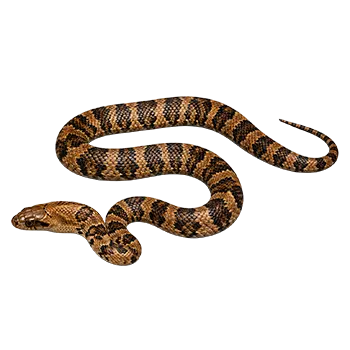
An adult False Water Cobra (Hydrodynastes gigas) requires a spacious, thoughtfully designed enclosure that accommodates the species' size, activity level, and semi-aquatic lifestyle for the remainder of its life. The minimum recommended enclosure dimensions for a single adult are six feet long by two and a half feet deep by two and a half feet tall, though larger enclosures are always preferable for this highly active species. Custom-built PVC enclosures, modified stock tanks, and large front-opening terrariums designed for monitors and tegus are all popular choices among experienced keepers. The enclosure material should be waterproof or water-resistant, as the substantial water feature required for this species inevitably introduces moisture that can damage untreated wood or corrode metal frames over time.

The water feature is the centerpiece of any well-designed adult False Water Cobra enclosure. A built-in pool or heavy-duty plastic basin large enough for the snake to fully submerge and stretch out in the water should occupy approximately one-quarter to one-third of the enclosure floor space. In the wild, Hydrodynastes gigas inhabits marshes, flooded grasslands, and the margins of rivers and lakes, spending a significant portion of its time in or near water. Replicating this access in captivity supports natural behavior, provides a critical thermoregulatory option, and facilitates clean, complete shedding. Water should be changed every one to two days or whenever soiled, and the basin itself should be scrubbed and disinfected weekly to prevent biofilm accumulation and bacterial colonization.

The terrestrial portion of the enclosure should include multiple hide structures distributed across both the warm and cool zones, climbing opportunities in the form of sturdy branches or shelves, and a deep substrate layer of three to four inches. Cork bark flats and tubes, commercially available reptile caves, and custom-built hide boxes all serve the purpose of providing enclosed retreats where the snake can rest securely. Climbing structures should be firmly anchored to prevent collapse under the weight of a five-to-seven-foot colubrid, and any branches used should be free of sharp projections that could injure the snake's ventral scales. The combination of aquatic access, terrestrial hides, and vertical space creates the environmental complexity that promotes natural behavior patterns and reduces the chronic stress associated with barren, featureless enclosures.

Lighting in the adult enclosure should provide a consistent photoperiod of twelve hours of light and twelve hours of darkness under normal conditions, with seasonal adjustments if the keeper plans to cycle the snake for breeding. A standard fluorescent or LED light fixture mounted above the enclosure provides adequate illumination without generating excessive heat. While False Water Cobras do not have a strict ultraviolet light requirement in the same way that diurnal lizard species do, emerging research suggests that low-level UVB exposure may offer metabolic benefits to colubrids including improved vitamin D synthesis and enhanced immune function. Providing a low-output UVB tube, such as a 2.0 or 5.0 rated bulb positioned so the snake can choose to bask under it or retreat from it, is a reasonable supplemental measure.

Adult Diet & Nutritional Maintenance

Feeding an adult False Water Cobra is relatively straightforward compared to many other large snake species, thanks to the species' enthusiastic appetite and broad dietary tolerance. Adult males typically thrive on a diet of appropriately sized rats offered every ten to fourteen days, while adult females, which tend to be slightly smaller, may do well on medium rats at similar intervals. The prey item should produce a modest but visible lump in the snake's midsection — large enough to constitute a meaningful meal but not so large that the snake struggles to swallow or appears distended after feeding. Overfeeding is a more common problem than underfeeding among captive False Water Cobras because the species' eagerness to eat can tempt keepers into providing more food than the animal's reduced adult growth rate actually requires.

Dietary variety remains beneficial throughout the adult phase and can be achieved by rotating between rodent prey, whole fish, and occasional alternative items such as reptilinks or quail chicks. Whole prey items are nutritionally superior to fillets or parts because they provide the complete spectrum of vitamins, minerals, and roughage — including calcium from bones and fiber from fur or feathers — that a processed or partial prey item lacks. Fish used for feeding should be species that are low in thiaminase, an enzyme that breaks down vitamin B1 and can cause deficiency over time if thiaminase-rich fish are fed as a staple. Tilapia, trout, and salmon are suitable options, while goldfish, smelt, and certain minnow species should be avoided or used only sparingly.

Obesity is the single greatest dietary risk for adult False Water Cobras in captivity. A captive adult snake with unlimited access to high-calorie rodent prey and minimal energy expenditure can accumulate unhealthy fat deposits within its coelomic cavity, placing strain on the liver, kidneys, and cardiovascular system. Signs of obesity include a persistently round body cross-section with no visible muscular definition, excessive fat pads visible along the lateral body wall, and sluggish or reluctant movement. Prevention centers on feeding appropriately sized prey at the correct interval and resisting the impulse to feed every time the snake displays food-seeking behavior, which this highly food-motivated species does frequently and should not be interpreted as genuine hunger.

Supplementation is generally unnecessary for adult False Water Cobras maintained on a varied whole-prey diet, as whole rodents and fish provide a complete nutritional profile. However, if the snake is maintained exclusively on a single prey type for logistical reasons, occasional dusting of prey items with a reptile-specific calcium and multivitamin powder can help bridge any micronutrient gaps. Vitamin D3 supplementation is warranted only if the snake receives no UVB exposure, as snakes synthesize this vitamin through the same photochemical pathway as other vertebrates when UVB light is available.

Behavioral Characteristics & Enrichment

Adult False Water Cobras are among the most behaviorally engaging snake species available in the reptile hobby. Their high activity level, pronounced curiosity, and broad behavioral repertoire — including hooding, swimming, climbing, burrowing, and active foraging — set them apart from the more sedentary species that dominate the pet snake market. A well-kept adult will spend its active periods investigating every corner of its enclosure, patrolling the perimeter, soaking in the water feature, and responding to external stimuli with an alertness that many keepers describe as almost mammalian in quality.

Environmental enrichment for adult False Water Cobras should go beyond the provision of basic hiding spots and a water bowl. Rearranging enclosure furnishings every few weeks provides novel spatial challenges that stimulate exploratory behavior. Introducing new scent stimuli — a branch from a different tree species, a piece of cork bark from a new source, or a substrate sample from a different enclosure — engages the snake's acute chemosensory system and provides the kind of olfactory novelty that captive snakes rarely experience. Some keepers scatter-feed by placing prey items in different locations within the enclosure rather than presenting them at the same spot every time, which encourages natural hunting and foraging behaviors.

Handling an adult False Water Cobra requires respect, confidence, and consistent technique. Most well-socialized adults tolerate handling with relative composure, though the species retains a level of alertness and reactivity that exceeds the docility of popular beginner species like corn snakes or king snakes. A hook or tap-training cue should precede every handling event to distinguish interaction from feeding. Supporting the snake's body with both hands, allowing it to move freely through the handler's grip, and avoiding sudden movements near the head all contribute to calm handling sessions. Handlers should remain aware that even well-socialized adults may hood and hiss if startled, and an unexpected defensive strike from a five-to-seven-foot rear-fanged colubrid, while rarely medically significant, is painful and best avoided through careful, predictable handling behavior.

The species' intelligence and behavioral complexity make it poorly suited to the minimalist housing approaches that work adequately for less active snake species. An adult False Water Cobra confined to a small, barren tub with a single hide and a water bowl will not thrive in the same way that a ball python or rosy boa might tolerate similar conditions. Behavioral signs of chronic understimulation include repetitive perimeter pacing, nose-rubbing against enclosure walls and closures, reduced feeding interest despite good health, and an increase in defensive behavior during handling. These signs should be interpreted as environmental deficiencies requiring correction rather than inherent personality flaws in the animal.

Thermal Regulation & Seasonal Cycling

Adult False Water Cobras require the same fundamental thermal gradient established during the juvenile phase — a warm-side temperature of 85 to 88 degrees Fahrenheit with a basking spot near 90 degrees, and a cool side of 75 to 78 degrees — but the larger volume of an adult enclosure presents distinct challenges for achieving and maintaining this gradient consistently. The heating system must be scaled to the enclosure size, and in many cases, a combination of heat sources is more effective than relying on a single device. A radiant heat panel or ceramic heat emitter positioned over the warm end to establish the ambient gradient, supplemented by a focused basking lamp to create a localized hot spot, is a common and effective configuration for enclosures in the six-foot range.

All heat sources should be regulated by high-quality proportional thermostats that continuously modulate output to maintain target temperatures. Simple on-off thermostats produce temperature fluctuations that, while not immediately harmful, create a less stable thermal environment than proportional regulation. Thermostat probes should be positioned at the substrate surface level on the warm side, as this is where the snake's body contacts the heat zone during basking. Verifying the thermostat's accuracy with an independent digital thermometer or infrared temperature gun on a monthly basis catches calibration drift before it results in temperatures that are dangerously high or therapeutically low.

Seasonal cycling — a deliberate reduction in temperature and photoperiod during winter months to simulate the natural seasonal variation experienced in the species' South American range — is optional for adult False Water Cobras that are not being bred but may offer health benefits for long-term captive maintenance. A mild cooling period during which the warm side drops to 80 to 82 degrees, the cool side to 70 to 72 degrees, and the photoperiod is reduced from twelve hours to ten hours for a period of six to eight weeks can support natural hormonal rhythms and may enhance immune function. During any cooling period, feeding frequency should be reduced or suspended entirely, and the snake should have access to clean water at all times.

Humidity management in adult enclosures requires ongoing attention, particularly in climate-controlled indoor environments where air conditioning in summer and central heating in winter can drive ambient humidity well below the 60 to 75 percent target range. The large water feature required for this species contributes meaningfully to ambient humidity through surface evaporation, but supplemental misting may still be necessary in particularly dry conditions. Sustained low humidity compromises skin health, increases shedding difficulty, and predisposes the snake to respiratory issues. Conversely, chronically excessive humidity combined with poor ventilation creates conditions favorable to bacterial and fungal skin infections, making balance and monitoring essential.

Safety Considerations & Venom Profile

The False Water Cobra is classified as a rear-fanged (opisthoglyphous) colubrid, possessing enlarged posterior maxillary teeth connected to Duvernoy's glands that produce a mild venom. This venom is delivered through a chewing action rather than a rapid injection, meaning that a brief defensive strike is unlikely to introduce venom into a bite wound. Prolonged bites in which the snake holds on and chews, however, can result in localized pain, swelling, and mild inflammation at the bite site. Systemic envenomation is exceedingly rare in human bite cases and typically limited to individuals who allowed the snake to chew for an extended period. While the venom is not considered medically significant for the vast majority of healthy adults, individual sensitivity varies, and any bite from this species should be thoroughly washed, monitored for progressive swelling or unusual symptoms, and evaluated by a medical professional if concerning reactions develop.

Keeping an adult False Water Cobra carries a greater responsibility than keeping a non-venomous species of comparable size, and this responsibility extends to all members of the household and any visitors who may interact with the animal. The enclosure must be secured at all times with locks or closures that cannot be defeated by children, uninformed houseguests, or the snake itself. Clear labeling on the enclosure identifying the species as a rear-fanged venomous colubrid is a prudent safety measure, particularly in households with multiple people or in collections where maintenance may be performed by someone other than the primary keeper.

Legal regulations surrounding rear-fanged colubrid species vary significantly by jurisdiction. Some municipalities, counties, and states classify any species possessing venom-producing structures as a venomous reptile subject to permitting requirements, enclosure standards, and liability provisions. Others exempt rear-fanged colubrids from venomous snake regulations entirely, while still others apply a middle ground that requires notification or registration but not a full venomous reptile permit. It is the keeper's responsibility to research and comply with all applicable local, county, state, and federal regulations before acquiring a False Water Cobra and to stay current with regulatory changes that may affect the legality of keeping the species.

In the event of a bite that involves prolonged chewing contact, the recommended first-aid response is to gently disengage the snake by pushing its head forward rather than pulling it backward, which can drive the rear fangs deeper into the tissue and cause additional laceration. Once the snake is disengaged and secured, wash the bite wound thoroughly with soap and water, apply a clean bandage, and monitor for progressive swelling, redness spreading beyond the immediate bite area, or any systemic symptoms such as nausea or dizziness. Documenting the species name and the duration of the bite for medical professionals is helpful, as many emergency physicians are unfamiliar with rear-fanged colubrid envenomation and may benefit from accurate information provided by the keeper.

Routine Health Maintenance & Veterinary Care

Adult False Water Cobras should receive a comprehensive veterinary examination annually, even in the absence of any visible health concerns. An annual wellness visit allows a reptile-experienced veterinarian to assess body condition, perform oral and cloacal examinations, collect blood samples for baseline hematology and biochemistry panels, and conduct fecal screening for internal parasites. Establishing a baseline of normal values for the individual animal during periods of good health is invaluable, because it allows meaningful comparison when abnormal results appear during illness, enabling faster and more accurate diagnosis.

Shedding frequency in healthy adults typically slows to once every six to ten weeks, reflecting the reduced growth rate compared to juveniles. Each shed should produce a complete, intact skin in a single piece, including the spectacle (eye cap) coverings. Retained spectacles are a particular concern because they can accumulate across multiple shed cycles, creating a layered opacity over the cornea that impairs vision and may predispose the eye to infection. If retained spectacles are suspected — the shed skin lacks clear, intact eye cap impressions — a veterinary examination is recommended for safe removal rather than attempting at-home treatment, which carries a high risk of damaging the corneal surface.

Dental health is an underappreciated aspect of long-term colubrid maintenance. False Water Cobras possess numerous small, recurved teeth that can become damaged, broken, or infected through normal wear, particularly in animals that frequently strike at hard enclosure surfaces or cage furniture. A tooth abscess presents as localized swelling along the jaw, reluctance to feed, and sometimes visible pus or discharge at the affected tooth site. Routine oral inspection during handling — gently encouraging the snake to gape by touching the rostral scales with a soft tool — allows keepers to detect dental issues before they progress to the point of affecting the animal's ability to eat.

Long-term organ health is a consideration that becomes increasingly relevant as a False Water Cobra progresses through its prime adult years. Hepatic lipidosis, or fatty liver disease, is a common consequence of chronic overfeeding in captive snakes and may develop insidiously over years before clinical signs such as reduced appetite, weight loss, or abnormal coloration become apparent. Renal disease, while less common, can develop in snakes maintained with chronically inadequate hydration or in environments where uric acid excretion is impaired. Both conditions are far easier to prevent through proper diet, hydration, and environmental management than to treat once established, underscoring the importance of maintaining high husbandry standards throughout the animal's adult life rather than allowing gradual decline once the novelty of keeping the species fades.

Always consult a qualified professional before making any health-related decisions. This content is provided for informational reference only and should not replace professional guidance specific to your animal.