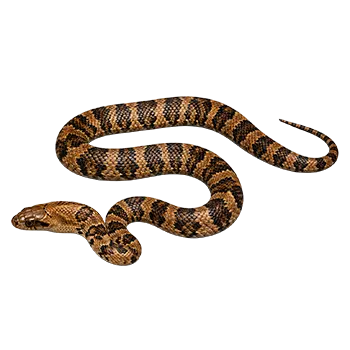

Successful captive breeding of the False Water Cobra (Hydrodynastes gigas) begins months before any pairing takes place, with a deliberate conditioning period that prepares both sexes physiologically for reproduction. Both males and females should be in optimal body condition — well-muscled, neither underweight nor obese — and free of any active health issues before entering a breeding cycle. A pre-breeding veterinary examination including fecal screening and bloodwork confirms that the animals are healthy enough to withstand the physical demands of courtship, copulation, and in the female's case, the substantial metabolic investment of egg production.
Seasonal cycling is the primary environmental trigger used to stimulate reproductive behavior in captive False Water Cobras. Beginning in late autumn, ambient temperatures in the enclosure should be gradually reduced over a period of two to three weeks. The warm side drops from its normal 85 to 88 degrees Fahrenheit to approximately 78 to 80 degrees, and the cool side descends to 68 to 72 degrees. The photoperiod is simultaneously reduced from twelve hours of light to eight to ten hours. This cooling period, which simulates the dry or cool season experienced in the species' native South American range, typically lasts six to eight weeks. Feeding is reduced and eventually suspended entirely during the coolest phase, as the lowered temperatures do not support efficient digestion.
During the cooling period, both animals should have continuous access to clean water for drinking and soaking. The water feature serves a dual purpose during this phase — it provides hydration and also offers a microhabitat with slightly more stable temperatures than the ambient air, allowing the snake to moderate the depth of its cooling experience. Some keepers choose to reduce the size of the water feature during the cooling period to lower ambient humidity, which can complement the temperature reduction in simulating dry-season conditions. Monitoring body weight weekly during the cooling period ensures that neither animal loses more than ten to fifteen percent of its pre-cooling body mass, which would indicate that the fast should be ended and normal temperatures restored.
The transition out of the cooling period should mirror the gradual approach used to enter it. Over a period of two to three weeks, temperatures are incrementally raised back to normal operating ranges and the photoperiod is extended to twelve to fourteen hours. Feeding is resumed with small meals that allow the digestive system to restart without the shock of a large, rich meal after weeks of fasting. Males typically resume feeding and display renewed activity levels quickly after warming, while females may take slightly longer to return to baseline feeding behavior as their physiological resources begin redirecting toward follicular development.